RocheDB v0.6.0: A Leap Towards Measurable Data Locality
The release of RocheDB v0.6.0 marks a significant stride for the ring-oriented NoSQL document and vector database written in Nim. While still in technical preview, this version prioritizes transforming the project from conceptual demonstrations to verifiable data locality behavior. The core theme driving this release is the principle that if data locality is a fundamental aspect of the database model, it must be rigorously tested as an invariant, not merely presented as an abstract idea.
This release introduces five key areas of improvement:
- Safer read filters
- Foundations for topology remapping
- Locality validation workloads
- Simplified operational configuration
- Practical use-case recipes
Enhancing Data Locality Guarantees
RocheDB's architecture is built around a ring topology, which naturally lends itself to predictable data placement and access patterns. However, the challenge has always been to ensure these patterns hold true under real-world conditions. Version 0.6.0 tackles this head-on with the introduction of locality validation workloads. These are not just theoretical exercises; they are designed to measure and assert data locality as a concrete, verifiable property of the database's operation. This focus means developers can now rely on more predictable performance characteristics, especially in distributed environments where data placement directly impacts latency and throughput.
Think of it less like a traditional distributed database where data can end up anywhere and more like a highly organized library. In this library, books on similar topics are intentionally shelved together to make finding related information faster. RocheDB v0.6.0 is building the systems to ensure that the librarian (the database) is not just saying books are shelved together, but is actively checking and rerouting if a book strays from its designated section.
Foundations for Topology Remapping
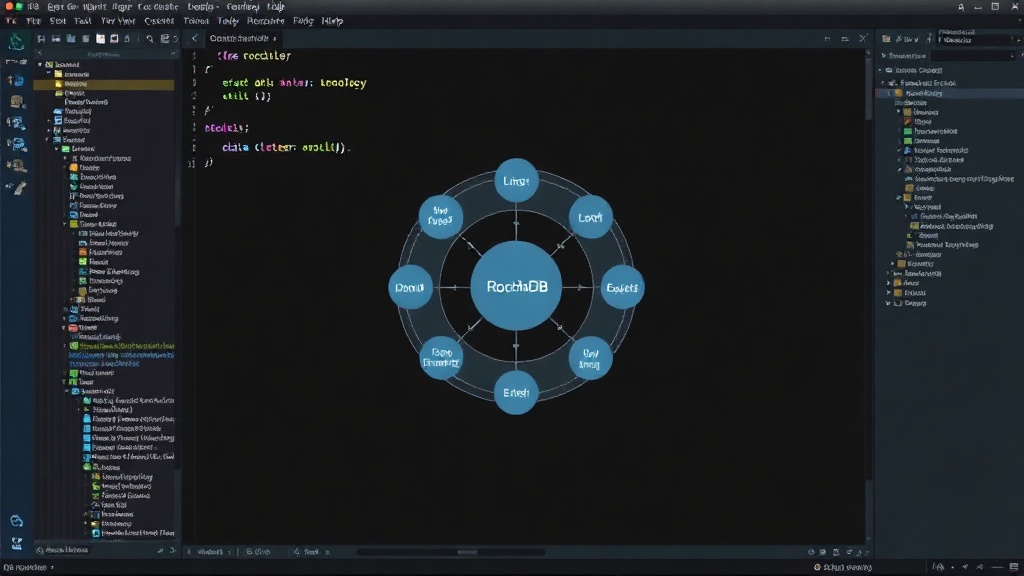
A robust distributed database needs to adapt to changing network conditions and cluster sizes. Topology remapping is crucial for this adaptability. RocheDB v0.6.0 lays the groundwork for this capability. While full-fledged dynamic remapping might be a future feature, the foundational work in this release enables the database to better understand and react to changes in its own structure. This is vital for maintaining data locality and ensuring consistent performance as nodes are added or removed from the cluster.
This means that as your application scales or your infrastructure evolves, RocheDB can more gracefully handle the internal reorganization required to keep data close to where it's needed. The initial implementation focuses on the internal mechanisms that will support more advanced remapping strategies in the future, allowing for a more resilient and self-healing distributed system.
Safer Query Boundaries and Operational Simplicity
Beyond the core locality features, v0.6.0 introduces safer read filters. This enhancement helps prevent unintended data exposure or incorrect query results by providing clearer boundaries for data access. For operations teams, the release brings easier configuration, simplifying the deployment and management of RocheDB instances. This includes more straightforward ways to define cluster parameters, data storage paths, and network settings, reducing the operational overhead associated with running the database.
The inclusion of practical use-case recipes further aids adoption. These examples demonstrate how to leverage RocheDB's features for specific scenarios, providing developers with ready-to-adapt templates and best practices. This pragmatic approach lowers the barrier to entry and accelerates the integration of RocheDB into new projects.
Looking Ahead
RocheDB remains a technical preview, but v0.6.0 represents a critical step towards production readiness. By emphasizing measurable locality and building essential features like topology remapping foundations and safer query filters, the project is maturing rapidly. Developers looking for a NoSQL database with a unique ring-oriented approach and a strong focus on data placement will find this release particularly compelling. The continued development suggests a future where data locality is not just a design principle but a guaranteed operational characteristic.