
The Reverse Avalanche Oscillator: A Curious Circuit
Security researchers are constantly seeking new ways to probe the physical underpinnings of electronic devices. Traditional side-channel attacks often focus on power consumption or electromagnetic emissions. However, a peculiar circuit design, dubbed the "reverse avalanche oscillator" by its discoverer, offers a novel approach to hardware security analysis. This circuit, detailed in a recent Hacker News discussion, exhibits unusual behavior that can be leveraged for security purposes, particularly in the realm of fault injection and device probing.
At its core, the reverse avalanche oscillator is a variation on the avalanche transistor phenomenon. In a standard avalanche transistor, a high voltage applied to the collector junction causes a breakdown, leading to a rapid increase in current. This breakdown is often destructive if not managed. The "reverse" aspect likely refers to a specific configuration or application of this breakdown effect that differs from typical oscillator designs. While the exact schematics and operational details are not fully elaborated in the initial discussion, the concept hinges on exploiting the controlled breakdown of a semiconductor junction to generate a specific, repeatable electrical event.
Exploiting Semiconductor Breakdown for Security
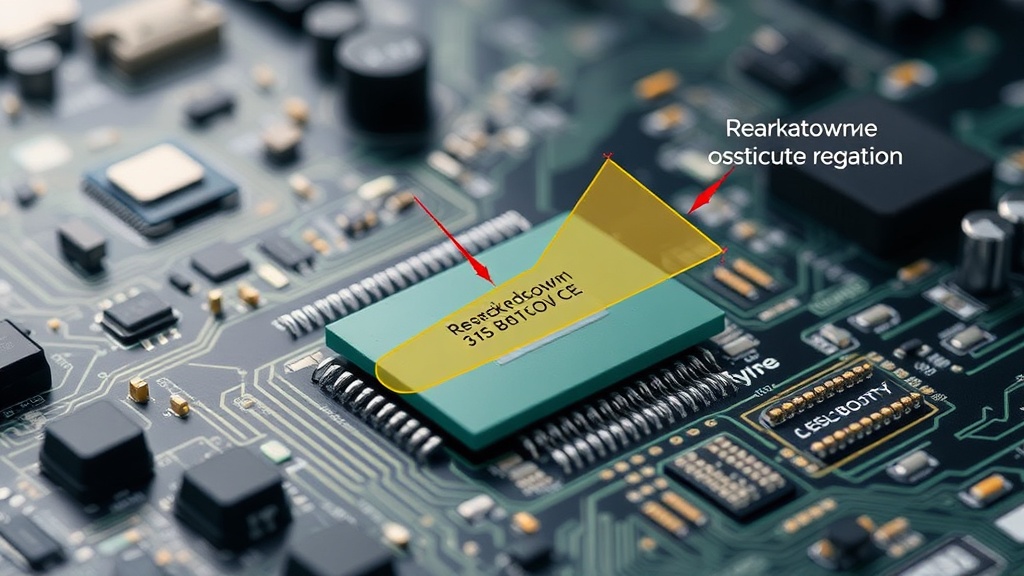
The utility of such a circuit for security researchers lies in its potential for precise fault injection. By carefully controlling the timing and magnitude of the breakdown event, an attacker could introduce transient errors into a target device's operation. This could manifest as bit flips in memory, incorrect instruction execution, or corrupted data. Such faults can be used to bypass security mechanisms like secure bootloaders, tamper detection systems, or cryptographic operations.
Think of it less like a sledgehammer and more like a highly precise scalpel. Instead of broadly disrupting a system, the reverse avalanche oscillator aims to induce a single, targeted glitch. This precision is crucial for sophisticated attacks where a brute-force approach would be easily detected or would simply render the device inoperable. The ability to reliably trigger these breakdown events means researchers can systematically explore a device's vulnerabilities without resorting to more invasive or destructive techniques.
The Unanswered Question: Scalability and Practicality
What remains to be fully explored is the practical scalability and generalizability of this technique. While the concept is intriguing, its application likely depends on the specific architecture and fabrication process of the target device. Can this oscillator be miniaturized to fit within the tight confines of modern integrated circuits? How sensitive is its operation to variations in manufacturing, temperature, or voltage supply? The discussion on Hacker News hints at the potential for this to be a hardware-level vulnerability, but the exact conditions under which it becomes a practical threat are still in the research phase.
Furthermore, the effectiveness of the reverse avalanche oscillator as a fault injection tool may vary significantly across different types of microcontrollers, ASICs, and FPGAs. Some devices might have built-in countermeasures against such glitches, while others may be more susceptible. The development of this oscillator represents a significant step in understanding how subtle electrical phenomena can be weaponized for security testing, but it also opens up a new frontier of research into how to detect and mitigate such attacks.
Beyond Fault Injection: Other Potential Applications
While fault injection is a primary application, the unique electrical characteristics of the reverse avalanche oscillator might lend themselves to other security research areas. For instance, understanding its precise timing and current draw could inform the development of more sophisticated side-channel analysis techniques. By precisely controlling the timing of a known electrical event, researchers might be able to create highly specific triggers for observing other, more subtle, side-channel leakage.
The ability to generate a sharp, well-defined pulse from a semiconductor breakdown event could also be useful in characterization studies. Researchers might use it to probe the response times of other components, test the resilience of signal integrity, or even as a timing reference in certain experimental setups. The core idea is that by understanding and controlling a fundamental, albeit unusual, semiconductor behavior, new avenues for interaction with hardware are opened up.
The Road Ahead for Hardware Security
The emergence of concepts like the reverse avalanche oscillator underscores the evolving landscape of hardware security. As defenses become more robust, attackers and researchers are forced to look for more esoteric and fundamental vulnerabilities. This particular circuit design, born from a deep understanding of semiconductor physics, represents a creative exploitation of material properties. Its development suggests that even seemingly simple circuit configurations can have profound implications for device security.
For developers and security professionals, this is a call to look beyond the software layers and consider the physical realities of the silicon they are working with. Understanding the potential for controlled physical phenomena to disrupt or reveal information is becoming increasingly critical. As research into such circuits progresses, we can expect to see new tools and techniques emerge for both offensive and defensive hardware security testing.