
Debugging the Black Box: Retrace Offers New Visibility into AI Agent Execution
Developing and deploying AI agents, particularly those with complex decision-making processes or multi-step workflows, presents a unique set of debugging challenges. Unlike traditional software where execution paths are deterministic and observable through standard logging and debuggers, AI agents often operate with a degree of stochasticity and emergent behavior. Understanding why an agent took a specific action, or failed to take a desired one, can be a significant hurdle. This is the problem Retrace aims to solve with its newly launched platform.
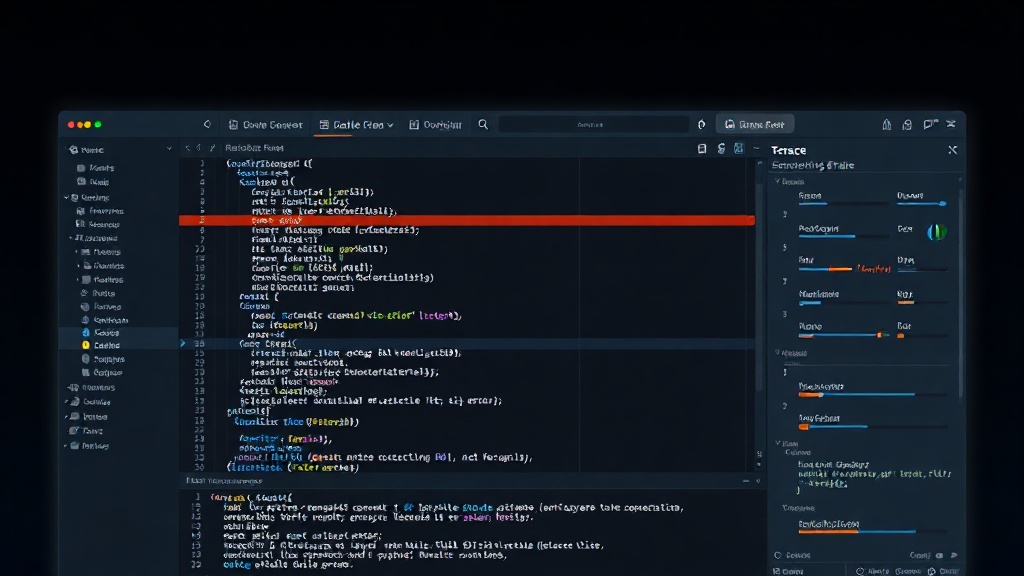
Retrace introduces a novel approach to AI agent debugging by enabling developers to replay and fork past execution runs. This functionality provides a critical layer of observability that has been largely missing in the rapidly evolving AI agent development landscape. The platform allows developers to step back through the agent's decision-making process, examine intermediate states, and pinpoint the exact moment where an undesirable outcome occurred.
The core value proposition of Retrace lies in its ability to transform AI agent development from a trial-and-error process into a more systematic, debuggable discipline. By providing a replay mechanism, developers can effectively rewind time on an agent's execution. This means that if an agent produced an incorrect output or entered an infinite loop, developers can load that specific execution instance and trace its steps backward. This is akin to having a VCR for your AI, allowing you to pause, rewind, and inspect every frame of its operation.
Replay and Fork: Key Features for Deeper Insight
Retrace's functionality can be broken down into two primary, interconnected features: replaying runs and forking runs.
Replaying Runs: When an AI agent executes, Retrace captures the sequence of states, inputs, outputs, and internal decisions made by the agent. This data is stored and indexed, creating a historical log of the agent's behavior. Developers can then access this log and select a specific past run to replay. During replay, the agent's execution is reconstructed step-by-step, allowing developers to inspect variables, function calls, and intermediate data structures at each point. This granular visibility helps in identifying logical errors, data misinterpretations, or unexpected emergent behaviors that lead to performance degradation or incorrect actions.
Forking Runs: Perhaps more powerfully, Retrace allows developers to 'fork' a run. This means that at any point during a replayed execution, a developer can diverge from the original path and explore alternative decision branches. This is incredibly useful for 'what-if' scenarios. For instance, if an agent made a suboptimal decision at step three, a developer can fork the run at that point and try a different action or input to see if it leads to a better outcome. This allows for rapid experimentation and hypothesis testing without needing to re-initiate the entire agent's workflow from scratch. It’s like taking a divergent path in a choose-your-own-adventure book, but with the ability to see where each new path leads.
These features are crucial because AI agents often interact with external environments, APIs, or user inputs that are not easily controlled or simulated in a traditional debugging setup. Replaying and forking allow developers to isolate the agent's internal logic from external variables, making it easier to debug the core AI components.
The Need for Observability in AI Agent Development
The rise of large language models (LLMs) has democratized the creation of sophisticated AI agents capable of performing complex tasks, from writing code and managing schedules to interacting with web services. However, these agents are not always predictable. They can hallucinate, get stuck in loops, or fail to adhere to instructions due to the inherent probabilistic nature of LLMs and the complexity of chaining multiple tools or API calls.
Traditional debugging tools, designed for deterministic code, fall short. Developers often resort to extensive print statements or manual log analysis, which quickly becomes unmanageable for complex agent interactions. Retrace addresses this gap by providing a purpose-built debugging environment for AI agents. It brings software engineering best practices for debugging to the AI development lifecycle.
The ability to replay and fork is more than just a convenience; it's a necessity for building robust and reliable AI systems. It allows teams to:
- Identify Root Causes: Pinpoint the exact sequence of events or faulty logic that led to an error.
- Validate Agent Behavior: Ensure agents are acting as intended under various conditions.
- Optimize Performance: Experiment with different parameters or decision paths to improve efficiency and accuracy.
- Onboard New Developers: Provide a clear, step-by-step record of agent execution for learning and understanding.
What remains to be seen is how well Retrace scales to agents that involve extremely long execution chains or massive amounts of state data. The performance implications of capturing, storing, and replaying such extensive logs will be a key factor in its adoption by large enterprises managing complex AI deployments.
Implications for the AI Development Ecosystem
Retrace's launch signals a maturing of the AI development tooling ecosystem. As AI agents move from research labs into production environments, the demand for robust engineering practices and tooling will only increase. Platforms like Retrace are essential for bridging the gap between the experimental nature of AI research and the practical demands of building production-ready applications.
For developers, this means a more predictable and manageable workflow. Instead of spending days sifting through logs or re-running experiments hoping for a different outcome, they can now systematically debug their agents. For founders building AI-powered products, this translates to faster iteration cycles, reduced development costs, and ultimately, more reliable and trustworthy AI agents. This enhanced debugging capability can significantly de-risk AI development projects, making them more attractive to investors and end-users alike.
The ability to fork runs also opens up new avenues for prompt engineering and agent design. Developers can quickly test variations of prompts or tool usage within a controlled replay environment, accelerating the fine-tuning process. This is particularly valuable for agents that rely heavily on prompt engineering to guide their behavior.
As the field progresses, we can expect to see more tools emerge that focus on the operational aspects of AI, including monitoring, testing, and debugging. Retrace is positioning itself as a foundational piece of this emerging MLOps for Agents stack.