
Understanding Pass-the-Hash (PtH)
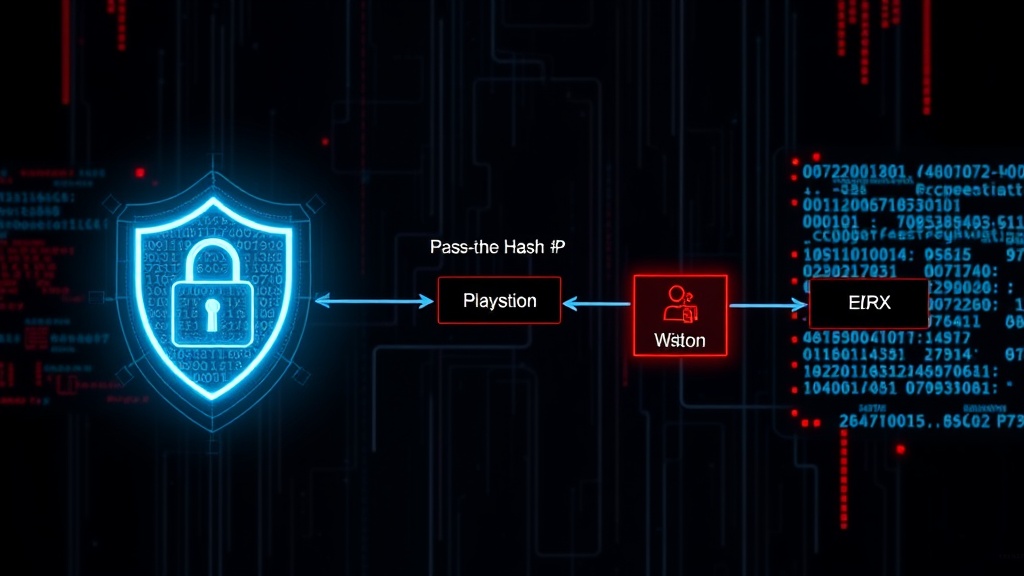
Pass-the-Hash (PtH) remains a potent attack vector, often underestimated by defenders. Instead of cracking passwords, attackers leverage stolen NTLM hashes to authenticate to systems. This technique bypasses the need for brute-force password cracking, significantly accelerating lateral movement within a network. A single compromised hash can unlock access to multiple machines, making it a cornerstone of many red team engagements.
The core concept of PtH is simple: an attacker obtains a user's NTLM hash, often through credential dumping tools like Mimikatz or by intercepting network traffic. This hash is then used directly to authenticate to other systems on the network without ever needing the plaintext password. Tools like pth-winexe or Impacket's wmiexec.py can utilize these hashes to execute commands or access resources on target machines. This is akin to having a master key that opens many doors, rather than needing to pick the lock on each one individually.
The effectiveness of PtH hinges on the prevalence of NTLM authentication, which is still common in many Windows environments, especially for legacy applications or specific network configurations. While modern systems increasingly favor Kerberos, NTLM's persistence makes PtH a persistent threat. Defenders must focus on preventing hash exposure and limiting the privileges associated with accounts whose hashes might be compromised.
The Mechanics of Kerberoasting
Kerberoasting is another prevalent attack method that targets the Kerberos authentication protocol. This technique focuses on obtaining the Service Principal Name (SPN) accounts, which are typically service accounts running applications like SQL Server, IIS, or custom services. These accounts often have strong passwords but are vulnerable because their Kerberos service tickets can be requested by any user on the network.
An attacker first identifies potential SPN accounts within the Active Directory environment. Once identified, they can request a Kerberos service ticket for that SPN account from a Domain Controller. This ticket is encrypted with the hash of the service account's password. The attacker then takes this encrypted ticket offline and attempts to crack the password hash using tools like Hashcat or John the Ripper. If the service account has a weak password, it can be cracked relatively quickly, granting the attacker access to the services running under that account and potentially further network privileges.
The surprising detail here is not the technique itself, but its continued effectiveness. Many organizations implement robust password policies for user accounts but neglect to secure service accounts adequately. These accounts, often overlooked, become prime targets. A successful Kerberoasting attack can lead to domain administrator privileges if the compromised service account is highly privileged or if its credentials grant access to sensitive systems.
Practical Attack Scenarios and Mitigation
In a real-world red team scenario, an attacker might start by gaining initial access to a low-privilege user workstation. From there, they would use tools like Mimikatz to dump credentials, looking for NTLM hashes. If a user's hash is obtained, they would use PtH tools to move laterally to other machines, escalating privileges as needed. Simultaneously, they would scan for SPN accounts to initiate a Kerberoasting attack. This multi-pronged approach, leveraging both PtH and Kerberoasting, allows attackers to efficiently map out and compromise a target network.
For defenders, mitigation strategies are crucial. To combat Pass-the-Hash, implement credential protection technologies like Credential Guard, enforce the principle of least privilege, and restrict NTLM usage where possible. Regularly audit accounts for suspicious logon activity and monitor for the use of tools that dump credentials. For Kerberoasting, the primary defense is to use strong, complex passwords for all service accounts and to regularly rotate them. Additionally, limit the privileges granted to service accounts to only what is absolutely necessary. Monitoring for unusual Kerberos ticket requests and failed decryption attempts can also provide early warning signs.
What nobody has addressed yet is the long-term strategic impact of these techniques becoming widely known and automated. As more sophisticated tools emerge, the barrier to entry for performing these attacks lowers, potentially enabling less skilled actors to achieve significant network compromise. This necessitates a proactive and evolving defense strategy that moves beyond basic patching and includes continuous threat hunting and security awareness training for IT staff.
Why These Techniques Persist
Pass-the-Hash and Kerberoasting persist because they exploit fundamental aspects of Windows authentication that are difficult to eliminate entirely without significant architectural changes. NTLM, while older, is deeply embedded in Windows networking. Kerberos, while more secure, introduces complexity that can be mishandled, particularly with service accounts. The allure for attackers is clear: these methods offer high rewards for relatively low effort compared to other attack vectors.
The ease of execution, coupled with the potential for rapid lateral movement and privilege escalation, makes them indispensable tools in a red team's arsenal. For organizations, understanding these attacks is not just about technical knowledge; it's about recognizing the human and procedural elements that enable them – weak password hygiene, inadequate service account management, and insufficient network segmentation. Addressing these underlying issues is key to building a more resilient security posture against these persistent threats.