
The phrase "We need real-time analytics" echoes through many data engineering departments. It’s a common request, often born from a desire for more immediate insights into business operations. However, this demand frequently stems from a misunderstanding of what "real-time" truly entails and the significant architectural overhead it requires. The gap between a sales VP’s definition of "real-time"—meaning faster than overnight batch jobs—and a CTO’s vision of sub-second event streaming can represent a six-month infrastructure overhaul.
The critical insight for most organizations is that true real-time is rarely necessary. Instead, "fast enough" analytics, achievable with significantly less complexity and cost, often satisfies business needs. This often involves pre-aggregation and caching techniques, offering a more pragmatic approach than full-blown streaming architectures.
Understanding the Spectrum of Data Freshness
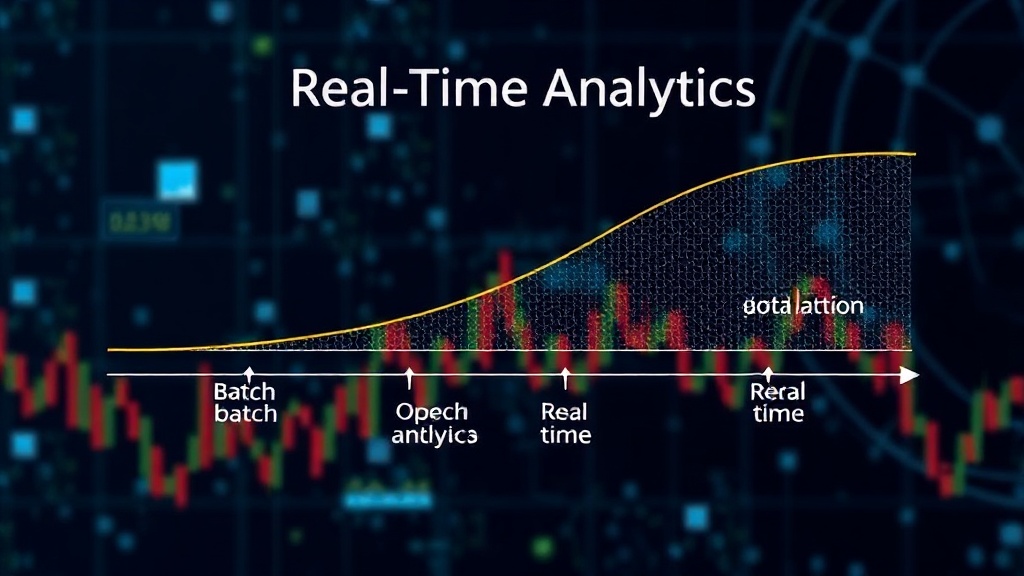
Real-time analytics is best understood as a spectrum of data freshness, defined by the latency between an event occurring and its visibility in analytical systems. This spectrum ranges from near-instantaneous event streams to daily batch updates.
At the extreme end is True Real-Time, characterized by sub-second latency. This requires a robust streaming architecture, often employing technologies like Kafka, Flink, or Spark Streaming. Use cases include fraud detection, high-frequency trading, and live monitoring of critical systems where immediate action based on data is paramount. The infrastructure for this is complex, demanding specialized skills and significant investment in hardware and maintenance.
Next is Near Real-Time, with latency ranging from seconds to a few minutes. This can often be achieved with micro-batching or optimized query layers on frequently updated data stores. Applications here include live dashboards for website traffic, social media monitoring, or operational metrics for active services. While still demanding, it’s generally less complex than true real-time.
Further along the spectrum is Fast Enough Analytics. This typically involves data refreshed every few minutes to a few hours. The key here is that the data is fresh enough to inform timely business decisions, but without the architectural strain of streaming. This is where pre-aggregation, materialized views, and efficient caching become powerful tools. Many business intelligence dashboards, sales performance reports, and marketing campaign analytics fall into this category. The benefit is a dramatically simpler infrastructure, lower operational costs, and faster development cycles.
Finally, there’s Batch Analytics, where data is updated daily or even less frequently. This is suitable for historical trend analysis, long-term strategic planning, and financial reporting where immediate data visibility is not a critical factor. Traditional data warehouses and ETL processes often serve this purpose effectively.
When Does True Real-Time Analytics Make Sense?
The decision to invest in a true real-time analytics pipeline should be driven by tangible business value and the cost of inaction. Consider scenarios where even a few minutes of delay could lead to significant financial loss or operational failure. For instance:
- Financial Trading: High-frequency trading platforms rely on sub-millisecond data to execute trades profitably. A delay of seconds means missed opportunities or significant losses.
- Fraud Detection: Identifying and blocking fraudulent transactions in real-time prevents financial theft and protects customers. Waiting for batch processing would render this capability useless.
- Critical Infrastructure Monitoring: In sectors like power grids or air traffic control, immediate detection of anomalies or failures is crucial for safety and operational continuity.
- Live Gaming and Ad Bidding: Dynamic pricing and real-time bidding in online advertising, or dynamic game state updates in multiplayer games, require immediate data processing to be effective.
These use cases demand low latency because the business value is directly tied to the immediacy of the data. The cost of a missed fraudulent transaction or a delayed trade often far outweighs the investment in a complex real-time infrastructure.
The Case for "Fast Enough": Pragmatism Over Purity
For the vast majority of business applications, the complexity and cost of implementing and maintaining true real-time systems are not justified. The infrastructure required for sub-second latency involves:
- Specialized Technologies: Message queues (Kafka, Pulsar), stream processing engines (Flink, Spark Streaming), and specialized databases designed for time-series or event data.
- Complex Architectures: Designing for fault tolerance, exactly-once processing, and scalability in a streaming environment is significantly more challenging than batch processing.
- High Operational Overhead: Continuous monitoring, tuning, and maintenance of these distributed systems require skilled personnel and significant resources.
- Development Challenges: Building and debugging applications that handle out-of-order events, late arrivals, and state management adds considerable complexity for development teams.
Instead, many teams can achieve their goals with a "fast enough" strategy. This typically involves optimizing data pipelines for speed and employing techniques like:
- Pre-aggregation: Calculating and storing summary statistics for common queries during the data loading process. This means dashboards query pre-computed results rather than raw data.
- Materialized Views: Similar to pre-aggregation, but often managed by the database itself, automatically refreshing at defined intervals.
- Caching: Implementing caching layers at various points in the data stack, from the database to the application layer, to serve frequently accessed data quickly.
- Optimized Querying: Using columnar databases, efficient indexing, and query optimization techniques to speed up analytical queries on frequently updated, but not necessarily streamed, data.
Consider a typical e-commerce dashboard. While seeing a sale the exact millisecond it occurs might be interesting, knowing that sales are up 15% over the last hour, or that a particular product is trending in the last 10 minutes, is often sufficient for making operational decisions like adjusting inventory or staffing. This level of freshness can be achieved with data updated every 1-5 minutes, using a well-tuned data warehouse and caching.
The Chatroom Example: A Pragmatic Real-Time Application
Building a real-time chatroom, as demonstrated in Source 2, offers a concrete example of where real-time is essential, but the architecture is manageable. Here, the core requirement is that messages sent by one user are delivered to other connected users with minimal delay. Technologies like Socket.IO, running on Node.js with Express and MongoDB for persistence, are well-suited for this. This stack enables WebSocket communication, which provides persistent, bidirectional connections between the server and clients, facilitating instant message delivery. While this is a form of real-time communication, it's event-driven and focused on message delivery, not complex analytical processing on high-volume event streams. The architecture is relatively straightforward compared to a large-scale, generalized real-time analytics platform.
The deployment on Google Cloud Run, using Docker, further simplifies the operational aspect. This approach highlights that "real-time" in application development often means responsive communication, which can be achieved without the deep complexity of streaming analytics infrastructure.
Conclusion: Measure Twice, Build Once
Before embarking on a real-time analytics project, it is crucial to precisely define the business requirements and the acceptable latency. Ask: What is the actual cost of delay for each specific insight? What actions will be taken based on this data, and how quickly do those actions need to be performed?
Often, the perceived need for "real-time" masks a simpler requirement for faster, more responsive data delivery. By carefully evaluating the use cases and understanding the trade-offs, organizations can choose architectures that balance performance with complexity and cost. For many, the optimal solution lies not in chasing sub-second latency, but in achieving a "fast enough" analytics pipeline that delivers timely, actionable insights without unnecessary architectural strain.