
The Illusion of Read-Only Safety
The term "read-only" for database access often conjures an image of safety, a benign query executing without altering production data. However, this perception is dangerously incomplete. While read-only operations do not mutate data, they are far from harmless. They consume the same finite, critical resources as write operations: CPU, memory, I/O, and network bandwidth. For applications leveraging Postgres, especially those integrating with AI workloads, treating read-only access as inherently safe can lead directly to production outages.
Consider the typical application workload. It establishes connections to the database, executes queries, processes results, and then releases the connection. This cycle is carefully managed, often with connection pools, to ensure the database can handle the expected load. Now, introduce AI-driven database traffic. This traffic, even if strictly read-only, can manifest in ways that overwhelm the system. Exploratory joins, wide-ranging aggregates, synchronized schedules for data fetching, and concurrent retries all place a significant burden on the database.
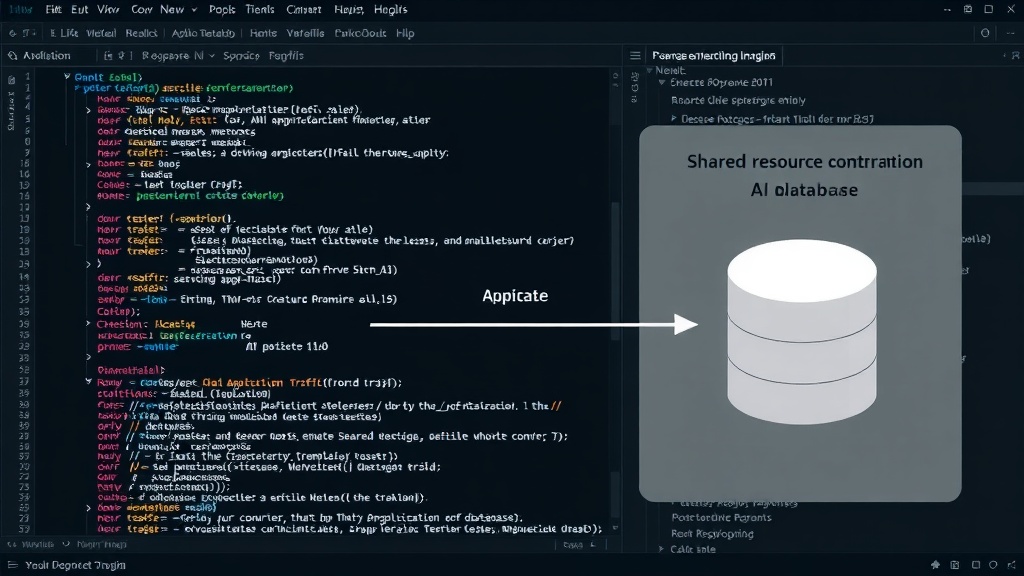
These operations, while not modifying data, are still resource-intensive. They contend for the same CPU cycles, memory allocations, I/O operations, and replica capacity as the application's core functions. The crucial distinction is that "read-only" describes authority over mutations, not workload safety. An AI model or a data processing pipeline might issue queries that are technically read-only but are so broad, so frequent, or so poorly managed that they starve the primary application of necessary resources. This contention can lead to query timeouts, increased latency, and ultimately, application unresponsiveness or outright failure.
Treating AI Database Traffic as a Separate Workload Class
The fundamental problem lies in conflating different types of database traffic. An application's read and write operations are typically designed with a specific performance profile and business criticality in mind. AI workloads, on the other hand, can be more experimental, less predictable, and potentially far more resource-hungry due to the nature of data exploration and model training/inference. Therefore, they must be treated as a distinct workload class.
This separation requires a multi-faceted approach to resource management and access control. The first step is to establish a dedicated, least-privilege database role for AI traffic. This role should only possess the permissions strictly necessary for the AI workload, preventing accidental or malicious data modification and limiting the scope of potential harm. This is akin to giving a guest access to your house but only to the living room, not the master bedroom or the safe.
Crucially, this dedicated role needs its own, bounded connection pool. This pool acts as an admission controller, regulating the number of concurrent connections and limiting the overall resource footprint of the AI workload. It's not merely about reusing connections; it's about setting hard limits on how much of the database's capacity the AI traffic can consume. This pool should enforce various limits:
- Acquisition Limits: Control how many connections can be requested simultaneously.
- Statement Limits: Restrict the complexity or duration of individual queries.
- Lock Limits: Prevent AI queries from holding database locks for extended periods, which can block essential application operations.
- Row Limits: Cap the number of rows a query can return, preventing massive data dumps that strain both the database and the application.
- Byte Limits: Similar to row limits, this caps the total data transferred for a query.
Leveraging Replicas and Enforcing Timeouts
For read-heavy AI workloads, routing suitable queries to a read replica is a common strategy. However, this is not a silver bullet. A replica still consumes resources and has its own capacity. It is not "free" capacity. Furthermore, replicas can lag behind the primary database. Therefore, it's essential to route reads to a replica with an explicit freshness contract. This means understanding and communicating the acceptable level of data staleness for the AI workload. If real-time data is critical for the AI's function, a lagging replica is not a viable solution and could lead to incorrect AI outputs or operational issues.
To prevent runaway queries from consuming resources indefinitely, it is vital to propagate deadlines and cancellation signals to Postgres. Modern database drivers and connection pooling libraries allow for query timeouts and cancellations. When an AI query exceeds its allocated budget or time limit, it should be aggressively cancelled, freeing up resources for critical application tasks. This is analogous to an air traffic controller diverting planes that have exceeded their fuel limits to a less busy runway.
Moreover, concurrency management is key. AI workloads often involve retries or scheduled tasks. These need to be capped and implemented with jitter to avoid synchronized bursts of activity that can overwhelm the database. If the AI workload consistently exhausts its allocated budget of connections, CPU, or memory, the system should be configured to reject or defer new work rather than allowing it to degrade overall performance. The connection pool, acting as an admission controller, is the frontline defense here.
The Real Cost of "Free" Reads
The misconception that read-only access is benign is a costly one. It leads to inadequate resource allocation, poor access controls, and ultimately, production instability. By recognizing AI database traffic as a distinct workload class, developers and operations teams can implement the necessary safeguards. This includes using dedicated roles, bounded connection pools, strict resource limits, smart replica routing with freshness guarantees, and robust timeout mechanisms.
Failing to do so means treating the database like an infinite resource. It is not. It is a shared, finite system where poorly managed AI queries can bring down the entire application, regardless of whether they modify data. The future of AI integration depends on understanding and managing these resource implications proactively.
The surprising detail here is not that read-only access consumes resources, but that the very concept of "read-only" has been so widely misinterpreted as equivalent to "safe." This misinterpretation is now directly impacting application stability as AI workloads become more prevalent.