Internal Security Hardening for react-hook-lab CI/CD
The maintainers of the open-source project react-hook-lab have pushed a maintenance update focused on fortifying their automated CI/CD (Continuous Integration/Continuous Deployment) tooling. This update, while internal, significantly enhances the security posture of their release summary generation process. The core change involves moving sensitive AI prompts out of the main codebase and into a more secure, environment-variable-driven system leveraging GitHub Secrets.
This move addresses a common challenge in open-source projects that rely on automation for tasks like generating release notes or community updates. Previously, AI prompts, which can contain specific instructions and context for LLM-driven tasks, were likely embedded directly within the repository. This presents a security risk: any exposure of the repository could inadvertently expose these sensitive prompts, potentially leading to misuse or providing insights into the project's internal workings that could be exploited.
Secure Environment Loading with GitHub Secrets
The primary architectural shift in this update is the adoption of GitHub Secrets for managing the AI prompts. Instead of hardcoding prompts directly into scripts within the repository, the project now stores these prompts in a GitHub repository secret named SECRET_AI_PROMPT. This is a critical security best practice. GitHub Secrets provide an encrypted store for sensitive information that can be accessed by GitHub Actions workflows but are not exposed in the repository's public or private files.
This approach is akin to storing your house keys in a locked safe instead of under the doormat. The safe (GitHub Secrets) requires specific authorization (the GitHub Actions workflow) to access, whereas the doormat (repository code) is accessible to anyone who can see the house (the repository). For developers working with AI models that generate content, especially for public-facing releases, keeping the instructions for those models secure is paramount. It prevents unauthorized parties from influencing the output or understanding the proprietary logic behind content generation.
Dynamic Templating and Runtime Parsing
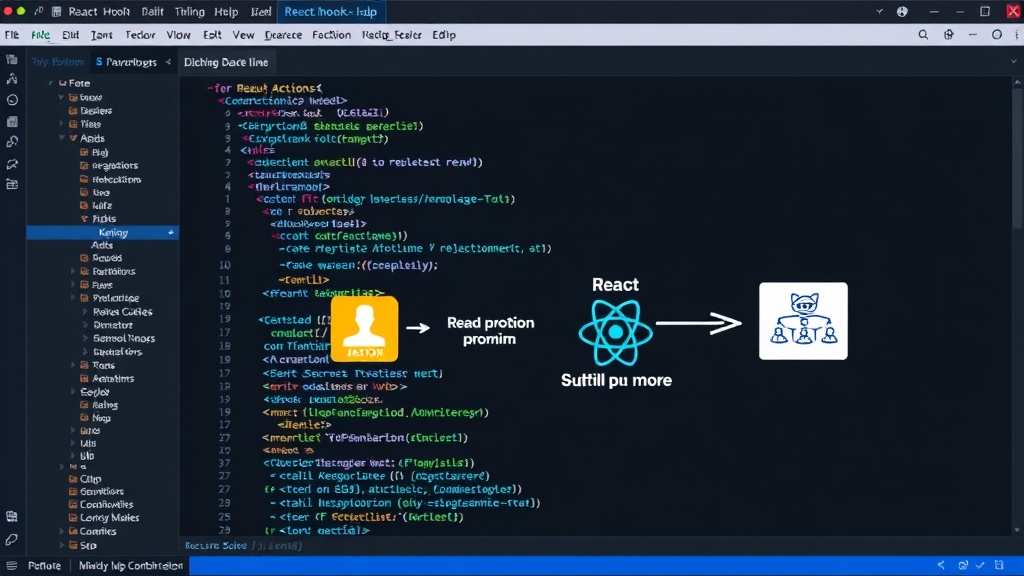
Complementing the secure loading of prompts, the update also introduces dynamic templating. The publishing scripts within react-hook-lab's CI/CD pipeline are now designed to load, validate, and parse the AI prompt template at runtime. This means that the AI prompt isn't just a static string; it can be a structured template that the script processes. This allows for more sophisticated and flexible prompt engineering. For instance, the script can inject specific details about code changes, version numbers, or other relevant metadata directly into the prompt before it's sent to the AI model.
This dynamic injection is crucial for generating accurate and contextually relevant release summaries. Imagine a template like: "Generate a release summary for version {version}. Highlight the following changes: {changes}." The publishing script would then fetch the current version and a list of code changes, populate these placeholders in the prompt, and then send the complete, context-rich prompt to the AI. This approach ensures that the AI has all the necessary information to produce a high-quality summary, and it does so without requiring manual intervention or exposing sensitive details within the codebase.
The validation step is also key. Before parsing, the script likely checks the integrity and format of the prompt template. This prevents malformed prompts from causing errors in the AI generation process. This layered approach—secure storage, dynamic loading, validation, and parsing—creates a robust system for AI-assisted content generation within the CI/CD pipeline.
Implications for Open-Source Automation
This internal maintenance update by react-hook-lab serves as a valuable case study for other open-source projects. As more projects integrate AI for tasks ranging from code generation to documentation and release notes, the security of the prompts and the integrity of the automation pipelines become critical concerns. Hardcoding sensitive information, including AI prompts, directly into code repositories is a practice that should be avoided.
The pattern of using environment variables and secrets management tools like GitHub Secrets is a mature and widely adopted solution for securing sensitive data in automated workflows. For developers and maintainers, this update reinforces the importance of treating AI prompts as sensitive credentials or configurations that require secure handling. It's not just about the AI model itself, but the precise instructions given to it, which can represent significant intellectual property or operational logic.
What remains to be seen is how other projects will adapt their AI integrations. As AI models become more capable, the complexity and sensitivity of the prompts will likely increase. This necessitates a proactive approach to security, ensuring that the automation that drives these AI integrations is as secure and resilient as the core application logic itself. The react-hook-lab team's decision to prioritize this internal security hardening signals a growing awareness of these challenges within the developer community.