
Introducing Glaze: AI-Powered Mac App Creation
Raycast, a popular productivity tool for macOS, has unveiled Glaze, a new feature that allows users to build their own Mac applications simply by describing what they want in natural language. This move democratizes app development, lowering the barrier to entry for individuals who may not have traditional coding skills.
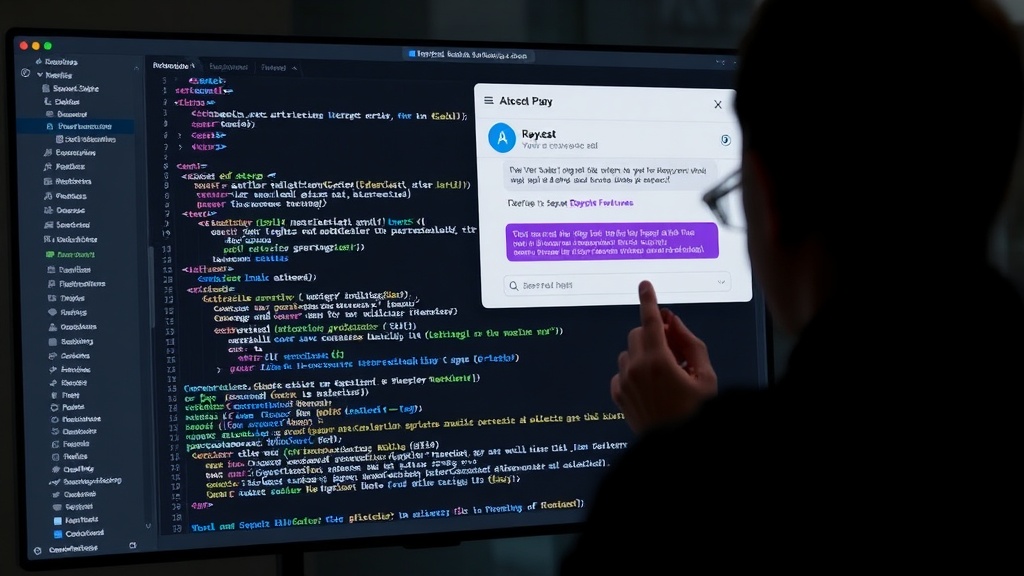
Glaze integrates directly into the Raycast ecosystem, meaning users can access and manage their AI-generated apps within the familiar Raycast interface. The core concept is straightforward: users chat with an AI, detailing the functionality, UI elements, and behavior of their desired application. The AI then translates these instructions into a functional Mac app.
This approach transforms app development from a code-centric discipline into a conversational process. Instead of writing lines of Swift or Objective-C, users engage in a dialogue with Glaze, iterating on their app's design and features until it meets their specifications. This is particularly significant for power users who often find themselves wishing for specific tools or workflows that don't currently exist or are too cumbersome to implement with existing methods.
How Glaze Works
The process begins with a prompt. A user might say, "I want an app that monitors my CPU usage and displays it in the menu bar. It should also show a notification if the temperature exceeds 80 degrees Celsius." Glaze's AI parses this request, identifying the necessary components: menu bar integration, CPU monitoring, temperature thresholds, and notification triggers.
The AI then generates the underlying code and UI elements. Users can provide feedback, refining the app's appearance or functionality. For instance, they might request a different color scheme for the CPU usage indicator, or ask for the notification to be more persistent. Glaze iterates based on this feedback, presenting updated versions of the app for review.
This iterative development cycle is crucial. It mimics the agile development process used by professional software teams but makes it accessible to a single user. The ability to quickly prototype and modify applications without needing to understand the intricacies of macOS development frameworks like AppKit or SwiftUI is Glaze's primary strength.
Target Audience and Use Cases
Glaze is primarily aimed at Raycast users, who are typically developers, designers, and productivity enthusiasts. These individuals often require custom tools to streamline their workflows or automate specific tasks. Glaze empowers them to create these niche applications without needing to hire developers or dedicate significant time to learning traditional programming.
Consider a graphic designer who frequently needs to resize images to specific dimensions for social media. Instead of using a general-purpose image editor with many unnecessary features, they could use Glaze to build a single-purpose app. The prompt might be: "Create an app that takes an image file, resizes it to 1080x1080 pixels, and saves it as a JPG with 80% quality." This app would then be accessible directly from Raycast, making the task incredibly efficient.
Another use case could be for a data analyst who needs a quick way to fetch and display specific metrics from an internal API. Glaze could generate an app that queries the API upon launch and presents the data in a clean, readable format. This bypasses the need for complex scripting or setting up dedicated dashboards for simple, ad-hoc data retrieval.
Implications for App Development
Glaze represents a significant shift in how personal productivity tools can be created. It moves beyond pre-built extensions and templates, offering genuine custom application development powered by AI. This could lead to a proliferation of highly specialized, user-generated Mac applications tailored to individual needs.
The success of Glaze will likely depend on the AI's ability to accurately interpret user intent and generate robust, performant code. Challenges may include handling complex logic, integrating with third-party services, and ensuring the generated apps are secure and stable. However, for many common tasks, Glaze could prove to be an incredibly powerful tool.
The surprising aspect here is not that AI can generate code, but that a tool like Raycast, known for its extension ecosystem, is pivoting to enable full application generation within its platform. This suggests a future where productivity suites become development environments for their users, rather than just hosts for pre-built solutions.
The Future of Personalized Software
Glaze by Raycast is more than just a new feature; it's a glimpse into a future where software creation is conversational and personalized. It challenges the traditional model of software development by empowering users to become creators of their own tools. For anyone who has ever thought, "I wish there was an app for that," Glaze offers a direct path to making that wish a reality, right within their existing workflow.
This democratization of app creation could foster innovation at the individual level, leading to a more diverse and tailored software landscape on macOS. As AI continues to advance, tools like Glaze will likely become more sophisticated, capable of generating even more complex and powerful applications.