
Beyond Single-Line Prompts: The Three Layers of Context
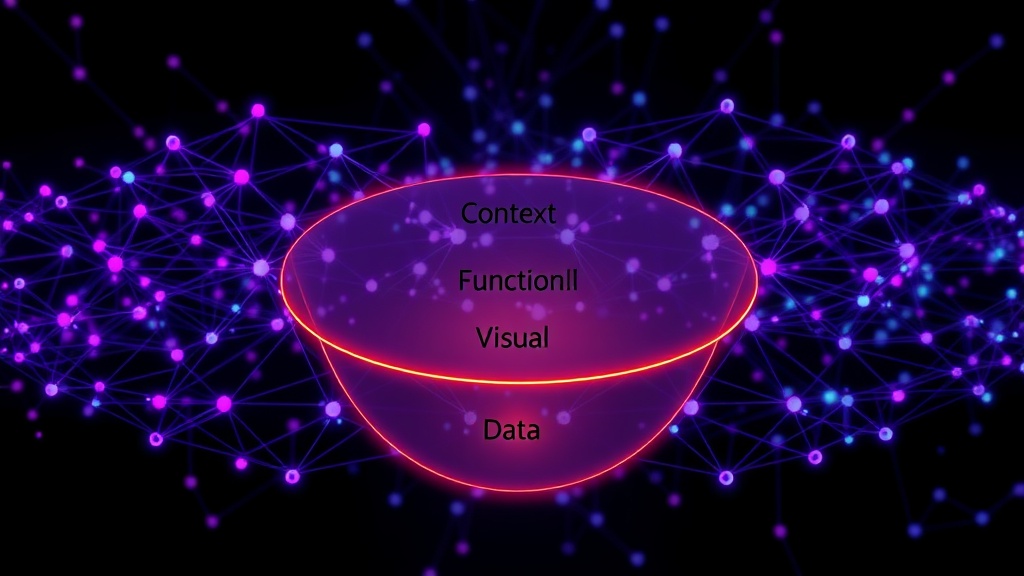
In the rapidly evolving landscape of AI development, the ability to effectively communicate with and guide AI models is paramount. Ravi Mehta, in his tutorial, introduces a structured approach to 'context engineering' designed to move developers beyond rudimentary one-line prompts. This methodology, which can be mastered in approximately 40 minutes, breaks down the complex task of providing AI with relevant information into three distinct, actionable layers: functional, visual, and data context. This layered system is crucial for building AI products that are not only responsive but also deeply understanding of user intent and operational requirements.
The core idea is that a single prompt, no matter how well-crafted, often fails to capture the full spectrum of information an AI needs to perform optimally. Think of it less like giving a single instruction to a highly intelligent assistant and more like providing a comprehensive briefing document that covers the 'what,' 'how,' and 'why' of a task. By systematically layering these different types of context, developers can ensure their AI applications have a more robust understanding, leading to more accurate, nuanced, and useful outputs.
Layer 1: Functional Context
Functional context is the bedrock of effective AI interaction. It defines the purpose, behavior, and constraints of the AI model or system. This layer answers questions like: What is the AI supposed to do? What are its capabilities and limitations? What are the desired outputs and formats? What are the ethical guidelines or brand voice it must adhere to?
For instance, if you are building an AI chatbot for customer service, the functional context would include its role (e.g., handling FAQs, troubleshooting basic issues), its tone (e.g., friendly, professional, empathetic), and specific rules (e.g., do not provide medical advice, escalate to a human agent after three failed attempts). This layer acts as the AI's job description. Without clear functional context, the AI might misunderstand its role, leading to irrelevant or even harmful responses. Mehta emphasizes that this is not just about defining the task but also about setting the operational parameters within which the AI must function.
Layer 2: Visual Context
Visual context leverages the increasing capabilities of AI models to understand and interpret images, screenshots, and other visual information. This layer is crucial for AI applications that interact with or process visual data, such as image recognition, design assistance, or user interface analysis. It allows the AI to 'see' what the user sees or what is relevant to the task at hand.
Examples of visual context include providing a screenshot of a UI element that needs to be described or modified, an image for an AI to generate a caption for, or a diagram that the AI needs to analyze. For a developer building a tool that helps users design websites, visual context could be a screenshot of a competitor's site that the user wants to emulate or a wireframe they've sketched. This layer moves beyond textual descriptions and allows for a more direct and intuitive form of communication, especially for design-oriented or visually complex tasks.
Layer 3: Data Context
Data context refers to the structured or unstructured information that the AI needs to process to perform its task accurately. This is perhaps the most traditional form of context, encompassing databases, datasets, documents, and user-provided data. It provides the factual basis and specific details upon which the AI will operate.
For a data analysis AI, this would be the dataset it needs to analyze. For a content generation AI, it could be a set of keywords, a research paper, or previous articles to inform its writing style and topic coverage. Mehta highlights that data context can range from small snippets of text to large files. The key is to provide the AI with the relevant information that enables it to generate informed and accurate responses. This might involve feeding it specific user preferences, historical data, or current market trends.
Integrating the Layers for Enhanced AI Products
The true power of Mehta's system lies in the integration of these three layers. By systematically considering and providing functional, visual, and data context, developers can create AI applications that exhibit a far deeper understanding and a more sophisticated level of performance. A functional context might define that an AI should summarize a document, while data context provides the document itself, and visual context could be a screenshot of a particular section the user wants to focus on.
Consider an AI assistant designed to help developers debug code. The functional context would define its role: identify bugs, suggest fixes, and explain errors. The data context would be the code snippets, error logs, and project documentation. The visual context might be a screenshot of the IDE showing the problematic code block. When all three are provided, the AI can offer much more targeted and effective assistance than if it were only given the code snippet (data context) without knowing its purpose or the user's specific debugging goal (functional context) or the visual layout of the error (visual context).
This structured approach is not just about improving the output of a single prompt; it's about architecting the entire interaction model for an AI product. It allows for more complex workflows, personalized user experiences, and a greater degree of control over AI behavior. By mastering these three layers, developers can elevate their AI products from simple tools to indispensable partners in complex tasks.
What nobody has addressed yet is how to dynamically adjust these context layers in real-time as a user's needs or the AI's understanding evolves within a single, extended session. Currently, context is often static or requires explicit re-prompting. Developing mechanisms for fluid, adaptive context management could unlock even more sophisticated AI interactions.