
The Hidden Cost of Bloated Retrieval in RAG Pipelines
Last year, a promising AI startup spun out of Oxford faced a critical performance bottleneck. Their research question-answering product, built on a Retrieval Augmented Generation (RAG) pipeline, was crippled by response times averaging 90 seconds per query. This glacial pace was driving users away before they could even see an answer. The immediate, and often incorrect, instinct in such scenarios is to scale up the language model itself. However, the real culprit lay not in the model's generative capabilities, but in the inefficient orchestration of the retrieval layer.
The core issue was that the retrieval system was performing an excessive amount of work on every single query. This included generating and processing bloated embeddings, lacking any form of caching to store and reuse previous results, and suffering from redundant API calls that compounded as the document set grew. Essentially, the system was repeatedly doing work it had already done, or didn't need to do at all, leading to a massive performance drag.
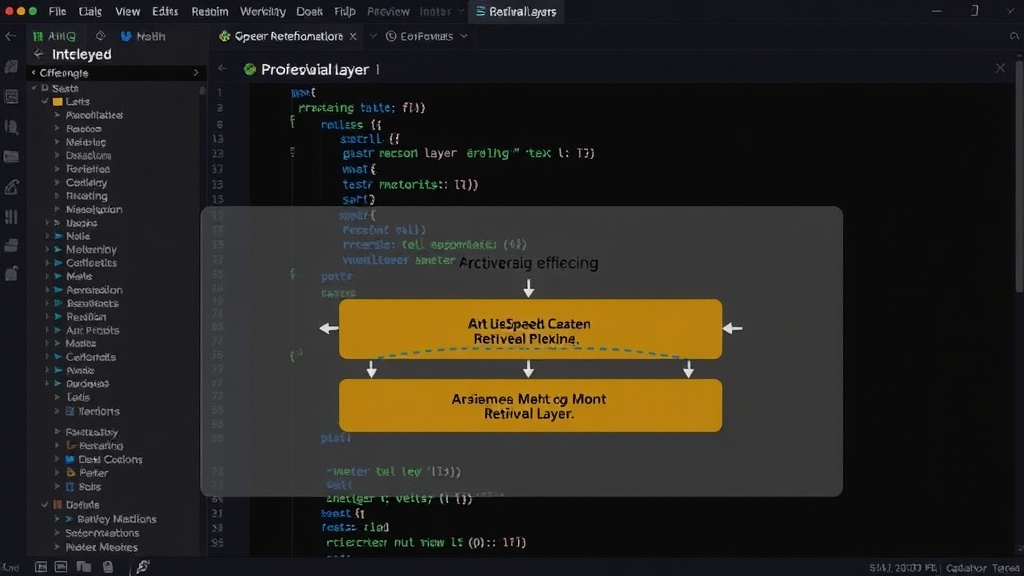
Streamlining Retrieval for Dramatic Performance Gains
The solution involved a rigorous stripping-down of the retrieval layer. By identifying and eliminating unnecessary computations, redundant calls, and inefficient data handling, the system's performance was dramatically improved. The result was a reduction in response time from a crippling 90 seconds to a mere 4 seconds. This optimization also led to a substantial cost reduction, estimated at around 95%, primarily because the pipeline stopped performing repetitive tasks.
This experience underscores a common pattern observed in AI performance challenges: the model, while crucial for generation, is frequently not the primary source of latency or inefficiency. Instead, the surrounding infrastructure, particularly the data retrieval and pre-processing stages, often presents the most significant opportunities for optimization. In this case, the startup's RAG pipeline was like a chef with a state-of-the-art oven but a disorganized pantry, fumbling for ingredients and wasting time on every order.
Improving Accuracy with a New Vector Database
Beyond the speed optimization, a separate initiative focused on enhancing the accuracy of the retrieved information. The team rebuilt the retrieval mechanism on Weaviate, a specialized vector database. While this change wasn't primarily driven by a need for speed, it was instrumental in resolving accuracy issues within the retrieved documents. This highlights the dual importance of both efficient retrieval for speed and robust vector database selection for the quality and relevance of the information fed to the language model.
The lesson here is clear: developers and organizations building RAG systems must pay as much attention to their retrieval strategy as they do to their choice of language model. Optimizing the retrieval pipeline involves more than just selecting an embedding model; it requires careful consideration of caching strategies, query optimization, data indexing, and the underlying vector database infrastructure. Neglecting these aspects can lead to systems that are not only slow and expensive but also deliver inaccurate or irrelevant results, undermining the entire purpose of RAG.
The Broader Implications for RAG Development
This case study serves as a potent reminder that performance gains in AI systems, especially those employing RAG, often come from optimizing the data pipeline rather than simply scaling up the model. Developers frequently encounter performance bottlenecks that are not inherent to the LLM but are instead artifacts of inefficient data handling, redundant computations, and poor architectural choices in the retrieval phase. The ability to quickly and accurately retrieve relevant information is as critical as the model's ability to generate coherent text.
The success at this startup was achieved by focusing on fundamental software engineering principles applied to the AI stack: eliminating redundancy, implementing caching, and choosing the right tools for specific jobs (like Weaviate for vector search). These optimizations not only slashed response times but also drastically cut operational costs. For any team deploying RAG, a thorough audit of the retrieval pipeline should be a mandatory first step before considering more complex or expensive model-based solutions. It’s about making sure the engine isn’t being starved by a clogged fuel line.
What is not yet fully clear is how these optimization strategies scale with extremely large document sets or highly dynamic data sources. While this case demonstrates success with a growing document set, the theoretical limits and practical challenges of maintaining such optimized retrieval performance in petabyte-scale, real-time data environments remain an open area for exploration and development.