The RAG Reality Check
Most Retrieval-Augmented Generation (RAG) implementations follow a predictable pattern: chunk documents into fixed sizes (often 512 tokens), embed them with a standard model like text-embedding-3-small, set a top-k retrieval value (typically 5), and inject the results into the LLM context. This approach is sufficient for basic demonstrations, but it quickly falters under production pressures. In real-world scenarios, fixed-size chunking can split critical clauses in legal documents, drown essential information in noise with overly large chunks of API documentation, or fail to capture conversational nuances in customer tickets that require overlapping context rather than rigid segmentation. The cumulative latency from embedding, vector search, and LLM processing often pushes query times beyond a second, unacceptable for interactive applications.
Recognizing these limitations, one team rebuilt their retrieval layer from the ground up, focusing on what truly impacts performance metrics. Their approach moves beyond the simplistic "semantic search + hope" paradigm to a tunable, measured retrieval pipeline that achieves 95% recall@10.
Chunking: One Size Fits None
The foundational step in RAG is chunking, the process of dividing large documents into smaller, manageable pieces for embedding and retrieval. The common practice of using a fixed token count (e.g., 512) proves problematic because document structures and content types vary wildly. Legal contracts, technical manuals, and conversational logs each have unique requirements for segmentation. A fixed window can arbitrarily break sentences, isolate critical definitions, or fail to preserve the flow of dialogue. This leads to fragmented information being retrieved, reducing the LLM's ability to generate accurate and contextually relevant responses.
To address this, the team moved towards a more adaptive chunking strategy. Instead of a universal token limit, they recognized the need for context-aware segmentation. This involved analyzing the inherent structure of different document types. For instance, code documentation might benefit from chunking based on function or class definitions, while conversational data requires preserving turn-based context with appropriate overlap. This shift from a rigid, one-size-fits-all approach to a flexible, content-aware method is crucial for maintaining semantic integrity and improving retrieval accuracy.
Beyond Top-K: Introducing Bayesian Search
The default retrieval mechanism in many RAG systems is a simple k-Nearest Neighbors (k-NN) search, often implemented as Top-K retrieval. This method retrieves the K most similar document chunks based on vector embeddings. While straightforward, it has inherent limitations:
- Fixed Output: It always returns a fixed number of results, regardless of their actual relevance or the query's specificity.
- Potential for Noise: If the top K results are not highly relevant, they can still contaminate the LLM's context.
- Lack of Confidence Scoring: It doesn't provide a measure of confidence for each retrieved item.
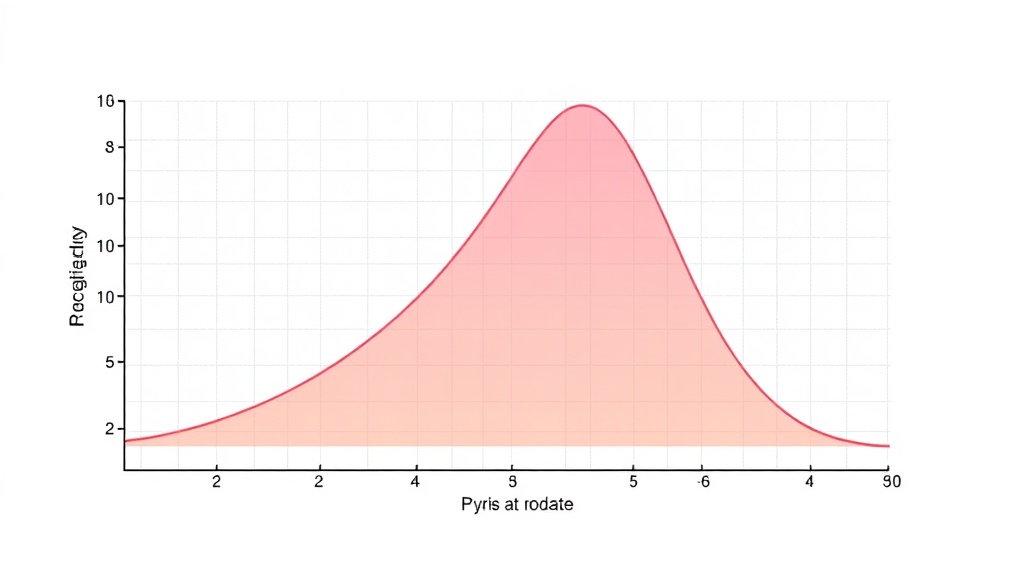
To overcome these issues, the team implemented a Bayesian search approach. This method treats retrieval as a probabilistic problem. Instead of just finding the top K most similar items, Bayesian search estimates the probability that a given document chunk is relevant to the query. This is achieved by maintaining a probability distribution over potential matches and updating it as more information is gathered. Think of it less like a brute-force scan for the closest points, and more like an intelligent detective systematically narrowing down suspects based on accumulating evidence and probabilities.
This probabilistic framework allows for a more nuanced retrieval process. The system can dynamically adjust the number of results based on the confidence scores, ensuring that only highly relevant chunks are passed to the LLM. It also enables tunable parameters that balance precision and recall, allowing the system to be optimized for specific use cases. For example, if high precision is paramount (e.g., in financial reporting), the system can be configured to require higher confidence scores, potentially returning fewer but more accurate results. Conversely, for exploratory tasks, recall might be prioritized.
The Synergy of Chunking and Retrieval Optimization
The true power of this optimized RAG pipeline lies in the synergy between intelligent chunking and advanced retrieval. By first ensuring that document chunks are semantically coherent and contextually appropriate, the subsequent retrieval step has a higher probability of success. When coupled with a probabilistic search mechanism like Bayesian search, the system can more effectively identify and rank the most relevant pieces of information.
This combination directly addresses the latency problem. A more accurate retrieval means fewer irrelevant chunks are processed by the LLM, reducing the computational load and the time taken for generation. Furthermore, the Bayesian approach can potentially reduce the number of embedding computations or vector search operations needed by intelligently pruning the search space. The team reported a significant 40% reduction in latency, achieved through this meticulous optimization of both chunking and retrieval strategies, alongside a remarkable recall@10 of 95%.
This engineered RAG system moves beyond the limitations of off-the-shelf solutions, offering a robust, tunable, and high-performing retrieval layer. It demonstrates that significant gains in both accuracy and speed are achievable by treating RAG as an engineering problem requiring first-principles solutions rather than a simple plug-and-play component.