The Alerting Void in Solid Queue
Rails 8 has embraced Solid Queue as its default Active Job backend. This database-backed solution offers a compelling alternative to Redis-heavy setups, providing built-in job management through Mission Control Jobs. However, a significant oversight has emerged: Solid Queue lacks native alerting capabilities. This absence forces developers into suboptimal scenarios. Either they discover job failures through customer complaints, a reactive and damaging approach, or they resort to integrating heavyweight Application Performance Monitoring (APM) tools like Datadog or New Relic. For many small to mid-sized Rails applications, these options are overkill, representing unnecessary complexity and cost simply to monitor background job health.
This gap leaves a crucial aspect of application reliability unaddressed. Mission Control provides a dashboard, a visual interface to observe jobs, but it functions as a passive window. Developers must proactively and consistently check it, a practice prone to human error and oversight. Without automated notifications, prolonged periods of job failure can go unnoticed, directly impacting user experience and business operations. The situation is akin to having a sophisticated sprinkler system that only tells you it's broken when the lawn is visibly dead.
To solve this, developer Michiya built QueuePulse. It’s designed to integrate seamlessly with Solid Queue, reading directly from its existing database tables. This approach eliminates the need for new migrations, additional services, or agent processes. QueuePulse acts as an intelligent observer, monitoring the state of Solid Queue's jobs and providing timely alerts when issues arise.
How QueuePulse Works
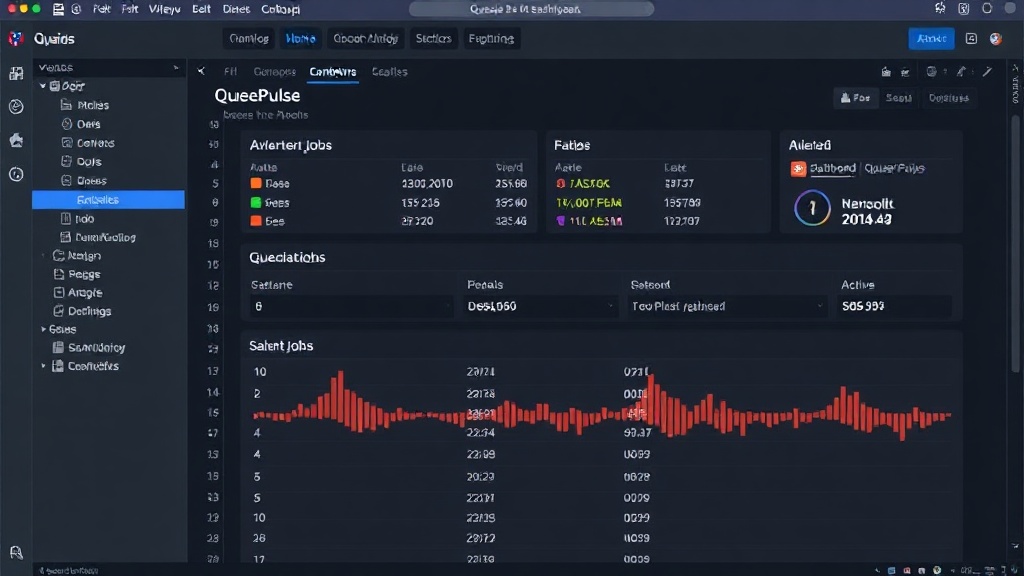
QueuePulse operates by querying Solid Queue's database tables. It focuses on identifying jobs that are stuck, failed, or have been in a pending state for an unusually long time. The system is configurable, allowing users to define what constitutes a critical issue. For instance, developers can set thresholds for how long a job can remain in a `failed` state before an alert is triggered, or how long a job can sit in `waiting` before it’s flagged as potentially problematic.
The core of QueuePulse’s functionality lies in its ability to detect anomalies. It doesn’t require complex setup or infrastructure changes. By leveraging the data already present in Solid Queue’s tables, it provides a lightweight yet powerful monitoring solution. The tool is designed to be unobtrusive, ensuring that the monitoring process itself does not introduce performance overhead to the application or the job processing system.
Alerting mechanisms are flexible. Developers can choose to receive notifications via common channels such as Slack, email, or other webhook-enabled services. This ensures that critical information reaches the right people at the right time, enabling prompt intervention. The goal is to shift from a reactive posture, where problems are discovered after they impact users, to a proactive one, where potential issues are identified and addressed before they escalate.
The Problem with Reactive Monitoring
Relying on customer complaints to discover job failures is a recipe for disaster. It means users are actively experiencing problems, potentially leading to frustration, churn, and damage to the brand’s reputation. By the time a customer reports an issue, the problem may have been ongoing for hours or even days, affecting a significant portion of the user base. This reactive approach is fundamentally unsustainable for any business that depends on reliable background processing.
On the other hand, adopting a full-fledged APM suite like Datadog or New Relic solely for background job monitoring presents its own set of challenges. These tools are powerful but come with a substantial cost and complexity. Integrating and configuring them can be a significant undertaking, and the subscription fees can be prohibitive for smaller operations. For applications where background job health is a concern but not the *sole* critical metric, these solutions represent a misallocation of resources. They are like using a sledgehammer to crack a nut; effective, but vastly overpowered and expensive for the specific task.
QueuePulse aims to hit the sweet spot. It provides the essential alerting functionality that Solid Queue lacks, without the overhead of a full APM solution. It addresses the specific need for reliable background job monitoring in a targeted and efficient manner. This allows developers to maintain application health and user satisfaction without incurring unnecessary costs or complexity.
QueuePulse's Technical Approach
The implementation of QueuePulse is intentionally straightforward. It's a Ruby gem that can be easily added to a Rails application. The gem interacts with the Solid Queue tables directly. Key tables such as `solid_queue_jobs` and potentially `solid_queue_blocks` are queried to assess job status and identify any potential bottlenecks or failures.
The configuration allows developers to specify parameters like the maximum age of a `failed` job before triggering an alert, or the maximum duration a `waiting` job can exist. This granular control ensures that alerts are relevant and actionable, minimizing alert fatigue. For example, a short-lived `failed` status might be acceptable, but if a job remains in that state for more than 15 minutes, it warrants investigation.
The choice to read directly from existing tables is a significant design decision. It means QueuePulse doesn't require any changes to the application's database schema or running separate worker processes for monitoring. This simplicity is key to its adoption, particularly for developers who are already managing the complexity of background job systems.
Future Considerations
While QueuePulse offers a vital alerting solution, the lack of built-in historical metrics in Solid Queue remains an area for potential future development. For deeper performance analysis and trend identification, having access to historical data on job execution times, failure rates over time, and processing throughput would be invaluable. This could enable more sophisticated anomaly detection and capacity planning.
Furthermore, as Solid Queue evolves, ensuring compatibility and exploring deeper integrations could enhance QueuePulse’s capabilities. The current approach is robust, but future versions of Solid Queue might offer hooks or events that QueuePulse could leverage for even more efficient monitoring.
The broader implication is the ongoing need for specialized tools to complement core framework features. While Rails 8’s adoption of Solid Queue is a positive step towards a more integrated development experience, the ecosystem around it continues to mature. Tools like QueuePulse highlight how community-driven development can fill critical gaps, providing targeted solutions that enhance the overall reliability and manageability of applications.