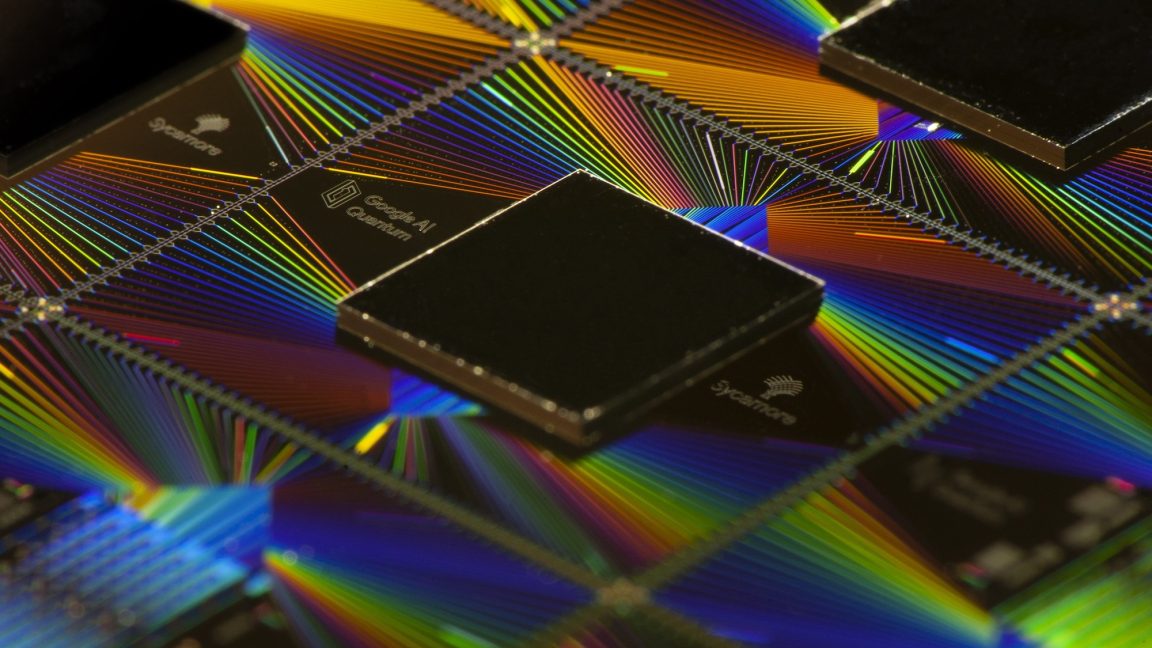
The Challenge of Quantum Instability
Quantum computers, despite their immense potential, are notoriously fragile. Qubits, the fundamental units of quantum information, are highly susceptible to environmental noise and internal imperfections. This noise can flip a qubit's state, introduce phase errors, or cause decoherence, leading to computational errors that cascade and render results unreliable. Traditional error correction methods in classical computing often rely on redundancy and fixed correction codes. However, the unique nature of quantum states and the continuous, subtle nature of quantum errors demand a more dynamic approach.
The core problem is that quantum systems are constantly interacting with their environment, leading to a continuous stream of errors. These errors aren't static; they evolve and can be correlated. Applying a fixed correction strategy, like a simple bit-flip correction in classical computing, is often insufficient. It’s akin to trying to fix a leaky faucet with a permanently applied patch, when the leak itself is constantly changing in intensity and location. The goal for quantum computing researchers has been to find a way to not just detect and correct errors, but to do so proactively and adaptively, in real-time, without disturbing the delicate quantum state itself.
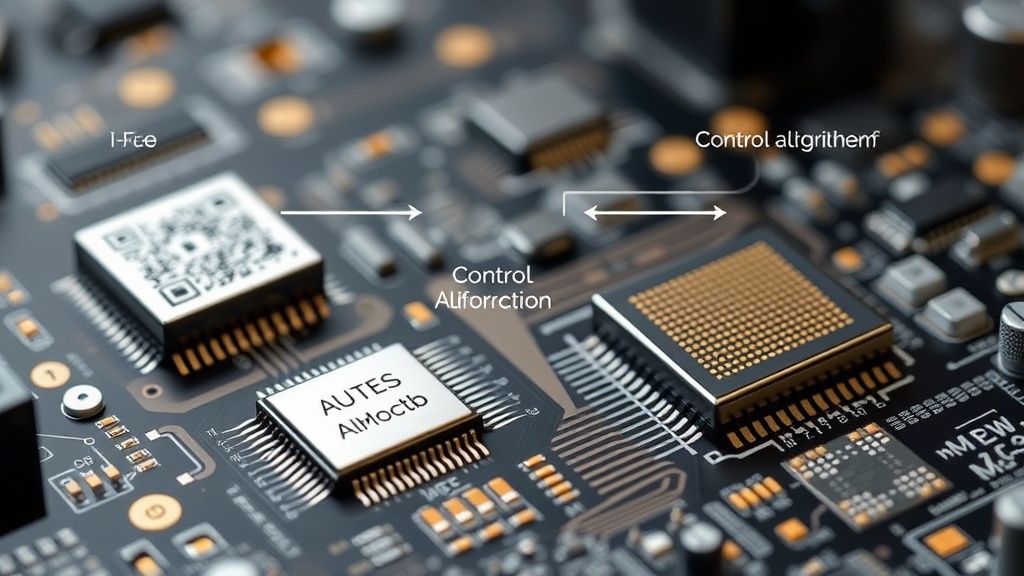
Reinforcement Learning as the Recalibrator
A significant leap forward in addressing this challenge comes from the application of reinforcement learning (RL) to quantum error correction. Instead of relying on pre-programmed, static correction protocols, this new paradigm uses the very information about errors that occur within the quantum processor to dynamically adjust the control algorithms. Think of it less like a rigid instruction manual and more like an experienced pilot who constantly reads the instruments and adjusts the aircraft's controls based on real-time atmospheric conditions.
At its heart, reinforcement learning involves an agent learning to make decisions in an environment to maximize a cumulative reward. In the context of quantum computing, the 'agent' is the control algorithm, the 'environment' is the quantum processor, and the 'decisions' are the adjustments made to the control pulses that manipulate the qubits. The 'reward' is defined by the success of the computation – minimizing errors and preserving the quantum state. The system continuously monitors error syndromes, which are specific measurements that indicate the presence and type of errors without directly measuring the qubit states (which would collapse them).
This error information is fed back to the RL agent. The agent, in turn, modifies its strategy for applying control pulses. If, for example, a specific type of environmental noise consistently leads to a particular error signature, the RL agent can learn to preemptively adjust its control sequences to mitigate that noise before it causes significant decoherence. This creates a closed-loop system where the processor is not just running computations, but is actively learning and adapting to its own operational imperfections.
Dynamic Control for Enhanced Stability
The implications of this approach are profound. By enabling constant recalibration, quantum processors can maintain their delicate quantum states for longer durations and perform more complex computations with higher fidelity. This dynamic adjustment is crucial because the error landscape in a quantum computer is not static. It can change due to thermal fluctuations, external electromagnetic interference, or even the ongoing operations of the processor itself. A system that can adapt to these changing conditions is inherently more robust.
This method moves beyond the limitations of traditional quantum error correction codes, which often require significant qubit overhead and can be computationally expensive to implement. While these codes are still vital, RL-based recalibration can act as a complementary layer, providing a more agile and responsive correction mechanism. It allows for finer-grained control over the quantum system, optimizing operations on the fly rather than relying on a one-size-fits-all correction strategy. The ability to learn and adapt means that the processor can potentially improve its performance over time as the RL agent becomes more sophisticated in its understanding of the system's error characteristics.
The Future of Quantum Computing Stability
The integration of reinforcement learning into quantum error correction represents a significant step towards building fault-tolerant quantum computers. While challenges remain, such as the computational cost of training RL agents and ensuring their stability in highly complex quantum environments, the principle is clear: by learning from errors, quantum processors can become self-correcting and self-optimizing. This continuous recalibration promises to unlock the full potential of quantum computation, paving the way for breakthroughs in fields like drug discovery, materials science, and cryptography.
The surprising detail here is not the concept of error correction itself, which is fundamental to quantum computing, but the specific mechanism of using reinforcement learning to achieve continuous, adaptive recalibration. It's a paradigm shift from passive correction to active, intelligent self-management of quantum states. This adaptive approach is what will likely differentiate future generations of quantum hardware, making them more reliable and practical for a wider range of applications.