The Shifting Landscape of Quantum Computing
Quantum computing, once confined to theoretical physics labs and academic papers, is beginning a tangible transition towards practical application and, crucially, towards the realm of high-volume production. This shift signifies a maturation of the technology, moving beyond proof-of-concept experiments to address the complex engineering and manufacturing challenges inherent in building reliable, scalable quantum systems. While the promise of solving problems intractable for even the most powerful classical supercomputers remains the ultimate goal, the path to widespread adoption is paved with significant hurdles that require breakthroughs in materials science, fabrication, and control systems.
The core of quantum computing lies in its ability to leverage quantum mechanical phenomena such as superposition and entanglement. Unlike classical bits that represent either a 0 or a 1, quantum bits, or qubits, can exist in a superposition of both states simultaneously. This allows quantum computers to explore a vast number of possibilities in parallel, offering exponential speedups for specific types of computational problems. These problems include drug discovery, materials science simulations, complex optimization tasks, and breaking modern encryption algorithms. However, building and maintaining qubits is an extraordinarily delicate act. They are highly susceptible to environmental noise – vibrations, temperature fluctuations, and electromagnetic interference – which can cause them to lose their quantum state, a phenomenon known as decoherence. Protecting qubits from this noise and maintaining their coherence for long enough to perform complex calculations is one of the primary engineering challenges.
Different approaches to building qubits exist, each with its own set of advantages and disadvantages. Superconducting qubits, which use superconducting circuits cooled to near absolute zero, are a leading contender, with companies like Google and IBM making significant strides. Trapped ions, where individual atoms are held in place by electromagnetic fields and manipulated with lasers, offer high fidelity and long coherence times, pursued by companies like IonQ. Topological qubits, a more theoretical approach, promise inherent resistance to noise but are proving exceptionally difficult to realize experimentally. Neutral atoms, photonic qubits, and silicon-based quantum dots are other avenues being explored. The diversity of these approaches highlights the fundamental difficulty of the problem: there is no single, universally agreed-upon pathway to building a fault-tolerant quantum computer.
Manufacturing Challenges for Scalability
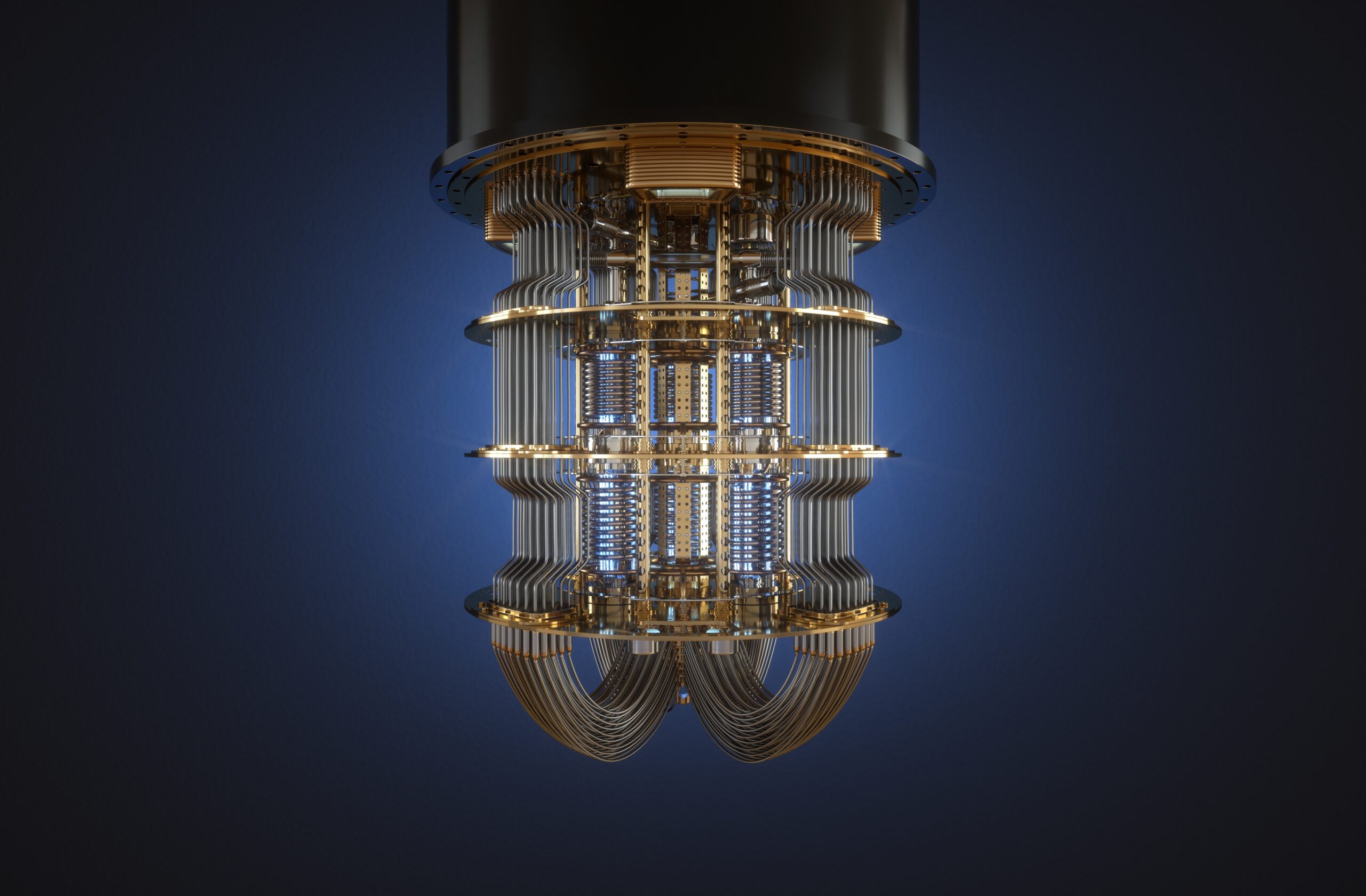
The transition from research prototypes to high-volume production introduces a new set of formidable challenges. For superconducting qubits, this means achieving extreme levels of precision in fabricating superconducting circuits, often at the nanometer scale, and ensuring their performance remains consistent across large batches. This requires adapting and refining semiconductor manufacturing techniques, which are already highly sophisticated but designed for classical transistors, not the highly sensitive quantum states of qubits. The cryogenic infrastructure needed to operate these qubits also presents significant engineering and cost barriers. Scaling up these systems means not just more qubits, but more qubits that can be controlled and read out reliably without introducing more noise.
For trapped ion systems, the challenge lies in precisely manipulating individual ions with lasers and scaling the number of ions that can be trapped and controlled within a single system. This involves complex optical systems and sophisticated control electronics. The vacuum systems required to maintain the ions also need to be robust and scalable. The surprising detail here is not just the difficulty of maintaining these delicate quantum states, but the sheer engineering effort required to build the surrounding infrastructure. Think of it less like building a powerful server and more like building a hyper-specialized, ultra-sensitive scientific instrument that needs to operate reliably in a production environment.
The supply chain for quantum computing components is still nascent. Specialized materials, high-precision lasers, advanced cryogenic equipment, and sophisticated control electronics are often custom-made or produced in very small quantities. Building a high-volume production capability necessitates the development of a robust and reliable supply chain, which in turn requires significant investment and standardization across the industry. This includes developing standardized testing and calibration procedures to ensure that each quantum processor meets stringent performance requirements.
The Path Forward: From NISQ to Fault Tolerance
Current quantum computers largely fall into the category of Noisy Intermediate-Scale Quantum (NISQ) devices. These machines have a limited number of qubits (tens to a few hundred) and are prone to errors due to decoherence and imperfect control. While NISQ devices can perform certain tasks beyond the reach of classical computers, their applications are limited, and they are not yet capable of running algorithms that require high levels of fault tolerance, such as Shor's algorithm for factoring large numbers. The ultimate goal is to achieve fault-tolerant quantum computing, where qubits are protected by error-correction codes, allowing for arbitrarily long computations with high reliability. This requires a significant increase in qubit count and a sophisticated system for quantum error correction, which itself demands many physical qubits to encode a single logical, error-corrected qubit.
The development of quantum error correction is a critical frontier. It involves encoding quantum information across multiple physical qubits in such a way that errors affecting individual qubits can be detected and corrected without destroying the encoded information. This overhead is substantial; early estimates suggest that hundreds or even thousands of physical qubits might be needed to form a single, stable logical qubit. This is why the move towards high-volume production is so critical – it's not just about making more qubits, but about making the foundational building blocks for future fault-tolerant systems.
The timeline for achieving fault-tolerant quantum computing remains uncertain, with estimates varying widely from a decade to several decades. However, the progress in quantum hardware, algorithms, and error correction techniques suggests that steady advancements are being made. As the technology matures, we can expect to see more hybrid classical-quantum approaches, where quantum computers tackle specific parts of a problem that they excel at, while classical computers handle the rest. This collaborative approach will likely be the first step towards unlocking the full potential of quantum computation for a broader range of applications.
What nobody has addressed yet is the economic and societal impact of a truly fault-tolerant quantum computer becoming widely accessible. The ability to break current encryption standards, for example, would necessitate a complete overhaul of global cybersecurity infrastructure. Understanding and preparing for these downstream effects is as crucial as the technological development itself.