
The Mechanics of Python Imports
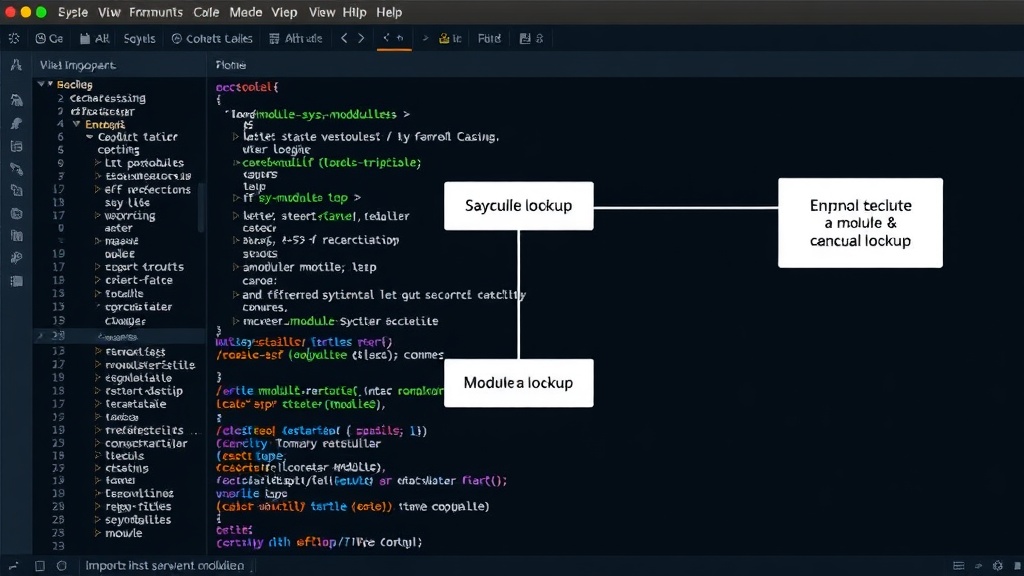
Python's import system is a cornerstone of code organization, yet its intricacies often elude developers until a tricky bug surfaces. Understanding how Python finds, loads, and caches modules is not just academic; it's crucial for diagnosing and resolving production issues related to circular imports, unexpected code execution, and module state bugs. When Python encounters an import mymodule statement for the first time, a precise sequence of events unfolds.
First, Python consults its internal cache, sys.modules. This dictionary holds all modules that have already been imported during the current session. If mymodule is found in sys.modules, Python immediately returns the existing module object, bypassing any further loading or execution. This caching mechanism is key to efficiency, preventing redundant loading of the same code. Think of sys.modules as a library's checkout system: if a book is already checked out and its details are logged, the librarian just points you to where it is, rather than going through the whole process of finding it on the shelf again.
If the module is not found in the cache, Python embarks on a search. It looks for the module file in a predefined sequence of locations. This search path, accessible via sys.path, typically includes the directory of the script being run, directories listed in the PYTHONPATH environment variable, and installation-dependent default paths. Once the module file (e.g., mymodule.py, or a package directory) is located, Python creates a new, empty module object. This object is then added to sys.modules under the name mymodule. This pre-emptive addition to the cache is vital; it prevents infinite recursion in cases of circular imports, ensuring that if a module being imported itself needs to import the original module, it can find a partially initialized object rather than getting stuck in a loop.
Finally, Python executes the code within the module file. This execution populates the module object with its attributes, functions, classes, and variables. Any code at the top level of the module runs at this point. If the module contains other import statements, Python recursively applies this entire process for each of them.
Module Caching and State Management
The caching behavior of sys.modules is a double-edged sword. On one hand, it ensures that a module's code is executed only once per Python process. This is essential for maintaining the singleton nature of modules and their associated global state. When you import a module, you're getting a reference to a specific, already-loaded object. Any changes made to that module's attributes or global variables persist throughout the application's lifetime.
This persistence is often desired. For instance, configuration settings loaded from a file into a module's global variables are available everywhere after the initial import. However, it can lead to subtle bugs if not managed carefully. If a module's state is modified by one part of an application, those changes are visible to all other parts that import the same module. Debugging these issues requires understanding that you are dealing with a shared, mutable object.
Consider a scenario where a module config.py holds application settings. When main.py imports config, it executes config.py. If another module, say utils.py, also imports config, it receives the *same* config module object. If utils.py were to modify a setting in config, main.py would see that modified setting, potentially leading to unexpected behavior if main.py relied on the original value.
The Peril of Circular Imports
Circular imports occur when two or more modules depend on each other. Module A imports Module B, and Module B imports Module A. This is a common source of confusion and errors in larger Python projects.
Let's trace a typical circular import scenario involving modules a.py and b.py:
- Python starts executing
main.py, which containsimport a. - Python checks
sys.modulesfora. Not found. - Python creates a new module object for
aand adds it tosys.modules. - Python begins executing
a.py. a.pycontainsimport b.- Python checks
sys.modulesforb. Not found. - Python creates a new module object for
band adds it tosys.modules. - Python begins executing
b.py. b.pycontainsimport a.- Python checks
sys.modulesfora. Found! It returns the partially initialized module object fora(created in step 3). b.pycontinues execution. Ifb.pytries to access an attribute from moduleathat has not yet been defined (becausea.py's execution was interrupted), anAttributeErrorwill occur. For example, ifa.pydefines a functionfunc_aafter the import ofb, andb.pytries to calla.func_a()beforea.pyfinishes executing, this will fail.
The key here is that Python's import system attempts to resolve the circular dependency by providing the partially constructed module object. The error arises not from the import itself, but from accessing attributes that haven't been defined yet in the interrupted module's execution. The module object exists, but its contents are incomplete.
Strategies for Debugging and Prevention
Debugging import-related issues, especially circular imports, requires a methodical approach. The first step is often to identify the import cycle. Tools like pydeps can help visualize module dependencies, making cycles apparent. However, understanding the underlying mechanism is crucial for effective resolution.
Several strategies can mitigate or resolve circular import problems:
- Refactor Code: The most robust solution is often to restructure your code to break the dependency cycle. This might involve moving shared functionality into a third module that both A and B can import without depending on each other. Alternatively, consolidating related code into a single module can eliminate the need for cross-module imports.
- Import within Functions/Methods: Delaying an import until it's absolutely needed within a function or method can break the cycle. If module A needs module B only for a specific function, import B inside that function. This ensures that module A's top-level code (which might import B) executes fully before B is needed, and B's import of A occurs only after A has completed its own initialization. This is akin to only fetching a specific reference book from the library when you're actively working on a chapter that requires it, rather than grabbing it as soon as you enter the library.
- Import Only Specific Attributes: Instead of
import mymodule, usefrom mymodule import specific_function. This can sometimes lessen the impact of circular imports, as the entire module doesn't need to be loaded immediately. However, ifspecific_functionitself relies on other parts ofmymodulethat are not yet initialized, you can still encounter issues. - Use
importlibcarefully: For dynamic imports, Python'simportlibmodule offers more control, but it also requires a deeper understanding of the import process. Incorrect usage can exacerbate import problems.
When debugging, printing sys.modules at various points can reveal which modules are loaded and in what state. Examining the traceback for AttributeError during imports is also key. The error message might point to an attribute that doesn't exist, but the root cause is often the incomplete initialization of a module due to an import cycle.
Ultimately, a solid grasp of Python's import system—how it caches, executes, and handles dependencies—is fundamental. It demystifies common errors and empowers developers to write more maintainable and robust code. By understanding these mechanics, you can move beyond simply fixing import errors to proactively designing systems that avoid them.