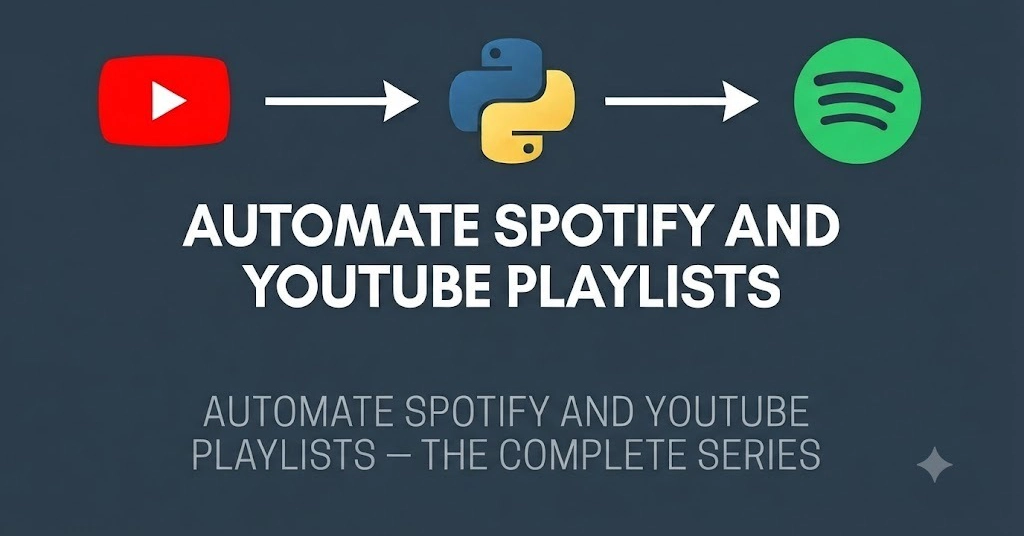
Automating Your Music: A Python Script for Seamless Playlist Syncing
The desire to have your favorite YouTube playlists mirrored on Spotify is a common one for music enthusiasts. This need is now met by a comprehensive series of articles that guide users through building a Python script to automate this process. The goal is to create a script that can sync a YouTube playlist to Spotify daily, ensuring your music library remains up-to-date across platforms without manual intervention.
This isn't just about a simple copy-paste operation; it involves understanding how to interact with the APIs of both services. The series breaks down the process into manageable steps, making it accessible even for those with limited prior coding experience. By the end of this tutorial, participants will have a functional Python script, understand how to schedule its execution, and possess a Spotify playlist that automatically updates itself.
The Series Structure: From Planning to Execution
The series is meticulously structured to guide users from foundational concepts to a fully operational script. It begins with Chapter 1: Understanding the Plan, Setting Up Accounts. This initial chapter lays the groundwork by explaining the project's architecture and the core functionalities. Crucially, it demystifies how Application Programming Interfaces (APIs) work in a jargon-free manner, making complex technical concepts understandable. It also outlines the essential four accounts required before any coding commences, ensuring users are prepared from the outset.
Following the planning phase, Chapter 2: Setting Up Spotify dives into the practicalities of integrating with Spotify. This chapter focuses on the specific steps needed to create a Spotify developer application. This is a critical step as it provides the necessary credentials, such as the Client ID, which are fundamental for authenticating and authorizing your script to interact with Spotify's services. Without these credentials, the script cannot access or modify Spotify playlists.
The subsequent chapters, though not detailed in the provided excerpt, would logically follow a similar pattern. They would likely cover setting up the YouTube API integration, including obtaining API keys and understanding how to fetch playlist data. Then, the core logic of the Python script would be developed, focusing on parsing the YouTube playlist information and translating it into actions on Spotify. This would involve searching for songs on Spotify that match the YouTube tracks and adding them to the designated Spotify playlist. Finally, the series would address the automation aspect, detailing how to schedule the Python script to run automatically on a daily basis, likely using system tools like cron jobs on Linux/macOS or Task Scheduler on Windows.
Technical Underpinnings: APIs and Python
At its heart, this project relies on the power of APIs. APIs act as intermediaries, allowing different software applications to communicate with each other. In this case, the YouTube Data API is used to retrieve information about a specific YouTube playlist, such as the video titles, artists, and album information (if available). Similarly, the Spotify Web API is used to search for these tracks within Spotify's catalog and to create and manage playlists. Developers will need to familiarize themselves with the authentication methods required by each API, typically involving OAuth 2.0, to ensure secure access.
Python is the chosen language for this automation task due to its extensive libraries and straightforward syntax, which are well-suited for scripting and API interaction. Libraries such as `requests` (for making HTTP requests to the APIs) and potentially specific Spotify and YouTube API wrapper libraries will be instrumental. The script will need to handle potential discrepancies, such as songs that exist on YouTube but not on Spotify, or variations in song titles and artist names. Robust error handling will be a key component to ensure the script runs reliably over time.
The Automation Payoff
The true value of this series lies in its promise of automation. Once the script is built and configured, it can be scheduled to run automatically. This means that any new songs added to a YouTube playlist will be reflected in the corresponding Spotify playlist the next day. This eliminates the tedious manual process of checking for new additions and updating playlists, saving users significant time and effort. For creators, curators, or even casual music fans who maintain multiple playlists across platforms, this script offers a streamlined workflow.
The series emphasizes that no prior experience is required, which is a significant draw. This suggests that the explanations will be clear, concise, and beginner-friendly, breaking down potentially complex topics like API authentication and asynchronous programming (if used) into digestible parts. By providing real code and a clear path to scheduling, the series empowers users to not only learn but also to implement a practical solution to a common digital life annoyance.
The "So What?" Perspective
Developers can leverage this series to build a custom Python script that automatically syncs YouTube playlists to Spotify. This involves understanding API interactions, handling authentication, and implementing logic for track matching and playlist manipulation. The project provides practical experience with the Spotify and YouTube APIs, essential for anyone working with music streaming services or building related applications.
This project primarily focuses on API integration and automation, with no inherent security vulnerabilities introduced by the script itself. However, developers must handle API credentials (Client IDs, Secrets) securely, avoiding hardcoding them directly into the script. Storing these sensitive keys in environment variables or secure configuration files is crucial to prevent unauthorized access to user accounts.
Founders looking to build music-related applications or services can use this series as a foundational example of cross-platform API integration. It demonstrates how to automate content synchronization between popular platforms, a valuable feature for many user-facing applications. Understanding these API integrations can inform build vs. buy decisions for features requiring similar functionality.
Content creators and playlist curators can benefit directly by automating the tedious task of maintaining identical playlists across YouTube and Spotify. This frees up time for content creation and engagement. The ability to sync playlists also ensures a consistent music experience for their audience, regardless of which platform they prefer.
For data scientists or analysts interested in music trends, this project offers a practical method for collecting synchronized playlist data from two major platforms. By automating the sync, one could potentially build datasets of user-curated music across different services, enabling analysis of genre popularity, artist discovery patterns, and cross-platform listening habits.
Sources synthesised
- 10% Match