
The Problem: Prompt Piracy
Selling curated GPT prompts is a growing niche, but protecting intellectual property is a significant challenge. One creator experienced firsthand how quickly their valuable prompts could be copied and resold after a buyer shared screenshots. This common scenario, where digital assets are easily replicated, mirrors the broader SaaS model: users don't get the source code; they get access to the functionality. Inspired by this, a developer built a solution: an OpenAI-compatible prompt encryption proxy.
The core issue is that when you sell a prompt, you're essentially shipping the recipe. Unlike established AI services that keep their system prompts proprietary, individual creators lack a robust mechanism to protect their carefully crafted instructions. The goal became to deliver access to a prompt's *effect* without revealing the prompt itself.
The Solution: A Lightweight Proxy
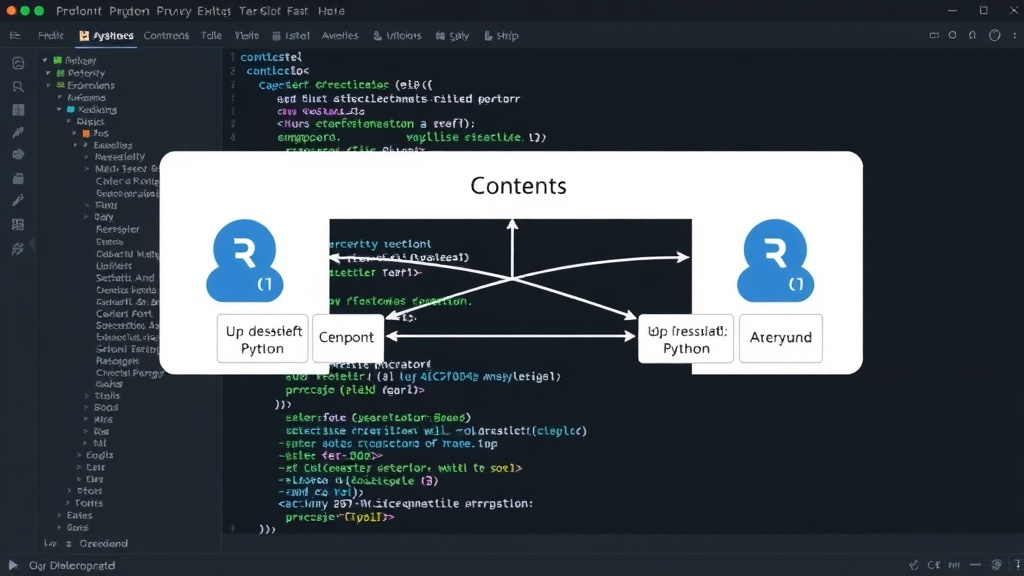
The solution is a compact proxy server, implemented in approximately 300 lines of Python. It leverages FastAPI for its asynchronous web framework capabilities and httpx for making HTTP requests. The proxy acts as an intermediary between the buyer's client and the actual AI provider (like OpenAI). Buyers receive an API URL and a unique bearer token. When a buyer sends a request to this proxy URL, the proxy first injects the protected system prompt into the request before forwarding it to the AI service. The AI's response is then streamed back to the buyer through the proxy. This architecture ensures that the buyer's client application interacts with the prompt's logic, but the prompt's text itself never leaves the developer's server.
Architecture and Implementation Details
The proxy is designed to be OpenAI-compatible, meaning it can often substitute for the standard OpenAI API endpoint with minimal client-side changes. Key features include:
- FastAPI Backend: Chosen for its speed, ease of use, and built-in support for asynchronous operations, crucial for handling streaming responses efficiently.
- HTTPX Client: Used for making outgoing requests to the actual AI provider. Its async capabilities align well with FastAPI.
- Bearer Token Authentication: Each buyer receives a unique API key (bearer token) to authenticate with the proxy. This allows for per-user access control and revocation.
- Streaming Responses: Essential for a good user experience with large language models. The proxy must correctly handle and forward the streamed chunks of data from the AI provider back to the client.
- Prompt Injection: The crucial step where the developer's proprietary system prompt is added to the user's request before it's sent to the AI model.
- OpenAI Compatibility: The API endpoints and request/response structures are designed to mimic the OpenAI API, simplifying integration for users who are accustomed to that interface.
The implementation involves setting up a FastAPI application with routes that accept POST requests. When a request arrives, the server validates the bearer token. If valid, it constructs a new request payload that includes the developer's hidden system prompt and the user's provided prompt. This combined payload is then sent to the target AI API endpoint. The response, often a stream of tokens, is captured and relayed back to the original requester. Error handling and rate limiting are also important considerations for a production-ready service.
Mistakes and Lessons Learned
Developing this proxy wasn't without its challenges. One common pitfall is underestimating the complexity of handling streaming responses correctly. Ensuring that chunks are forwarded immediately and without corruption requires careful management of asynchronous generators. Another lesson learned is the importance of robust authentication and authorization. Simply issuing static keys can be risky; implementing mechanisms for key rotation or temporary keys would enhance security. The initial implementation might also overlook edge cases in API compatibility, such as specific headers or parameter variations that different clients might expect. Iteration and testing against various clients (like ChatBox or Cursor, mentioned by the creator) are vital.
The simplicity of the codebase, around 300 lines, is a testament to the power of modern Python web frameworks and HTTP clients. It demonstrates that complex functionality, like secure API access and prompt protection, can be achieved with surprisingly little code. This approach democratizes the ability for smaller creators to protect their digital products, moving beyond simple content sales to a more secure, access-based delivery model.
Broader Implications
This project offers a blueprint for any creator or developer selling AI-generated content or prompts. It shifts the paradigm from shipping the raw product to shipping secure access. This model is not only more secure but also allows for greater control over usage, monetization, and updates. Competitors who previously relied on copying readily available prompt text will find this approach a significant barrier. For users, the experience remains largely the same, interacting with a familiar API structure, but the underlying IP is now protected. This pattern could extend to other AI-generated assets, such as fine-tuned models or custom datasets, where access control is paramount.