
The Rise of Python in Algorithmic Trading
Automated trading is no longer the sole domain of MQL5 within the MetaTrader 5 ecosystem. A growing number of developers are leveraging Python's expansive capabilities to build sophisticated trading bots. The primary driver for this shift is Python's unparalleled ecosystem, offering robust libraries for machine learning, data analysis, and seamless integration with external services. While MQL5 executes directly within the MetaTrader terminal, Python provides a more flexible and powerful environment for complex strategy development and execution.
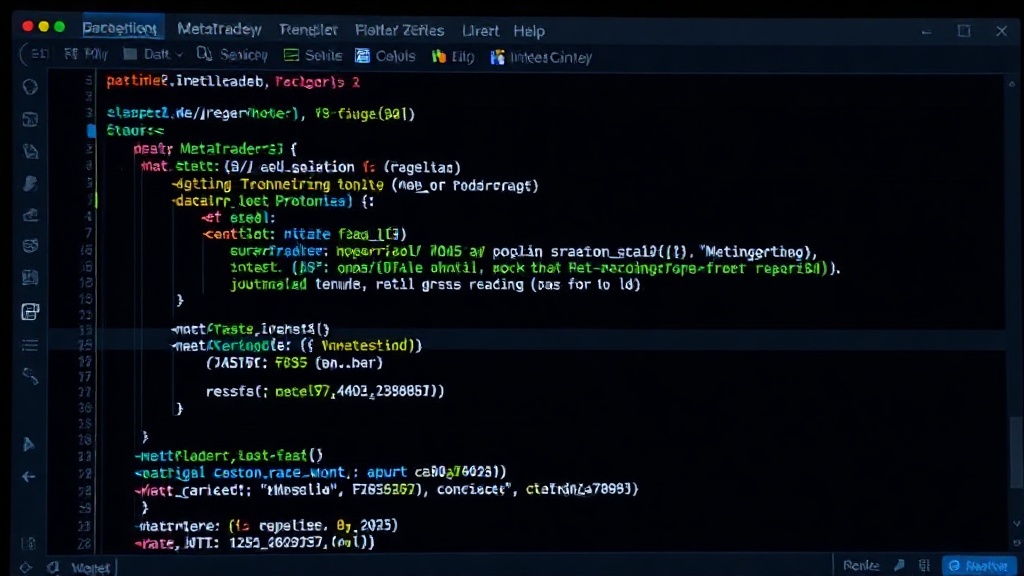
The official MetaTrader5 Python package acts as the crucial bridge, enabling direct interaction with the terminal. This allows Python scripts to initialize connections, retrieve historical and real-time market data, and even place trades. For instance, fetching the last 100 15-minute candles for XAUUSD is as straightforward as importing the library and calling a function. This direct access democratizes advanced trading bot development, moving beyond the confines of MQL5's steeper learning curve and limited library support.
Architecting the Smart Money Concept Bot
The core architecture of this MT5 trading bot centers on integrating Smart Money Concepts (SMC) with Python's analytical power. SMC, a trading methodology that attempts to identify the footprints of large financial institutions (often referred to as 'smart money'), focuses on concepts like order blocks, liquidity grabs, and market structure shifts. These principles are applied to identify high-probability trading setups.
The bot's logic begins with data acquisition. Using the MetaTrader5 Python package, it fetches historical price data, typically in candlestick format, for specific trading pairs or assets. This data serves as the foundation for analyzing market structure. The bot identifies key highs and lows, determines trends, and looks for specific SMC patterns.
Key SMC elements incorporated include:
- Order Blocks: The last up/down candle before a strong price move that breaks market structure. The bot identifies these as potential areas of interest for future price reversals.
- Liquidity: Identifying areas where stop-loss orders are likely accumulated (e.g., above previous highs or below previous lows). The bot scans for 'stop hunts' where price temporarily moves into these zones before reversing.
- Market Structure: Analyzing the sequence of higher highs/higher lows (uptrend) or lower highs/lower lows (downtrend). The bot detects shifts in this structure as potential trend change signals.
- Premium/Discount Zones: Using Fibonacci retracement levels or other tools to identify areas where price is considered 'expensive' (premium) or 'cheap' (discount) relative to a recent price swing.
Integrating Machine Learning for Signal Refinement
While SMC provides the conceptual framework for identifying potential trades, its manual application can be subjective and time-consuming. This is where machine learning (ML) plays a crucial role in refining the signals generated by the SMC analysis. Instead of relying solely on rigid SMC rules, ML models can learn to score the probability of a trade setup based on a multitude of factors.
The process involves training ML models, such as logistic regression, random forests, or even neural networks, on historical data. The input features for these models are derived from the SMC analysis. For example, features could include: the distance from the current price to the nearest order block, whether price has recently taken liquidity, the current market structure (e.g., trending, ranging), and the position of price within premium/discount zones. The target variable for training would be whether a subsequent price move met certain criteria (e.g., a significant profit target was hit within a specific timeframe).
By training models on a vast amount of historical data, the bot can learn subtle correlations and patterns that might be missed by a human trader or a purely rule-based system. This allows the bot to filter out lower-probability SMC setups and focus on those with a higher likelihood of success, thereby improving overall performance and reducing false signals.
Connecting to Telegram and Databases
Effective communication and data management are vital for any automated trading system. This bot leverages Python's versatility to integrate with Telegram for real-time alerts and databases for historical data logging and analysis. Telegram notifications provide immediate updates on trade entries, exits, and significant market events detected by the bot, allowing the user to stay informed without constantly monitoring the trading platform.
Storing trade data, market conditions, and model performance metrics in a database (e.g., PostgreSQL, MySQL, or even a simple CSV file for smaller-scale projects) is crucial for post-trade analysis and continuous improvement. This data can be used to backtest strategy modifications, retrain ML models with new data, and identify areas where the bot's performance can be enhanced. The ability to easily connect to and manage these external services is a significant advantage of using Python over MQL5 for bot development.
Future Iterations and Considerations
The current architecture represents a solid foundation, but several areas offer potential for further development. Advanced risk management techniques, such as dynamic stop-loss and take-profit adjustments based on market volatility, can be implemented. Exploring more sophisticated ML models, including deep learning architectures for time-series forecasting, could further enhance signal prediction accuracy.
Furthermore, optimizing the data fetching and processing pipeline is essential for high-frequency trading scenarios. Implementing asynchronous programming or parallel processing could improve the bot's responsiveness. The surprising detail here is not the complexity of the SMC concepts themselves, but how readily Python's ecosystem allows for their integration and enhancement with ML, creating a powerful synergy that was previously much harder to achieve within the native MetaTrader environment.
For anyone looking to build a sophisticated trading bot, this approach offers a clear roadmap. It combines established trading principles with modern development tools, creating a system that is both conceptually sound and technically robust. The journey from concept to a functioning bot requires iteration, but the foundational architecture using Python and MetaTrader5 is now more accessible than ever.