The Python Interpreter: A Necessary Middleman
For decades, running Python code has meant relying on the Python interpreter. You write `.py` files, and the interpreter translates that human-readable code into bytecode, which is then executed. This process, while familiar, introduces a layer of indirection. What if you could skip the interpreter entirely and run the compiled bytecode directly?
That's precisely what a developer known as natuworkguy has achieved. They've demonstrated that Python's internal bytecode, typically confined to the interpreter's execution environment, can be packaged into a standalone executable file. This isn't pseudocode; it's a tangible demonstration that changes how we might think about Python deployment and execution.
The core of this innovation lies in understanding Python's execution model. When you run a Python script, the interpreter first compiles the source code into a sequence of low-level instructions called bytecode. This bytecode is then executed by the Python Virtual Machine (PVM). The developer's work essentially packages this bytecode, along with minimal necessary metadata, into a format that can be executed directly by a custom loader, effectively creating a self-contained Python application.
From Bytecode to Executable: The 'main.pya' Format
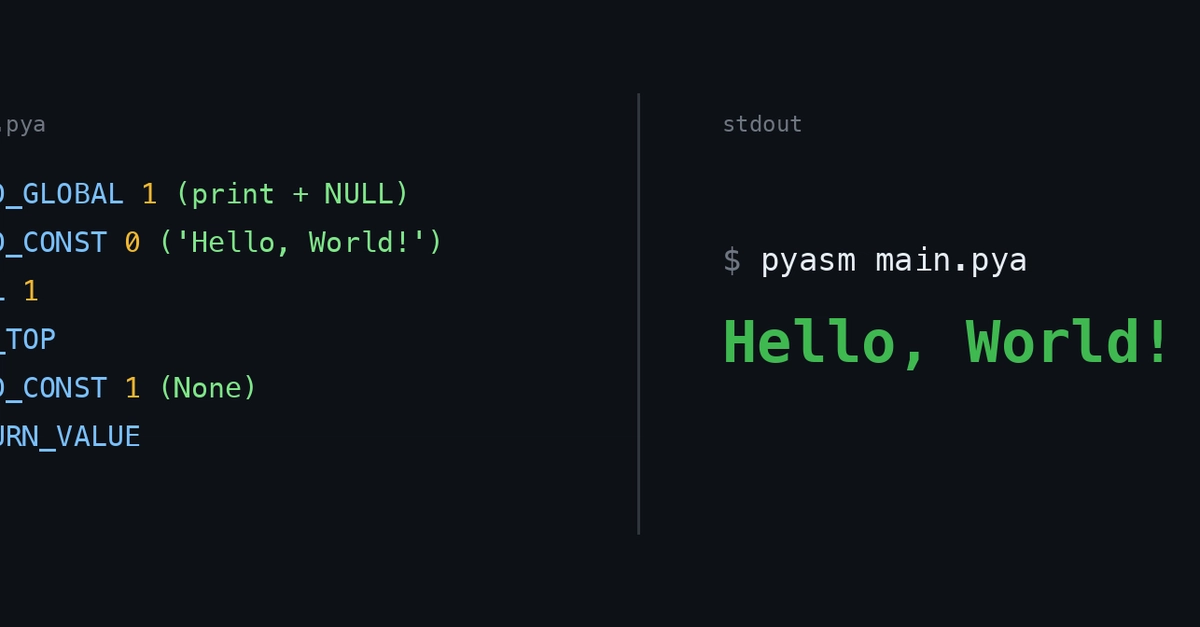
The developer has created a new file format, exemplified by the `main.pya` file. This file contains the raw Python bytecode. The magic isn't in the bytecode itself – that's standard Python bytecode – but in how it's presented and loaded. By structuring the bytecode into a specific file format, it becomes possible to bypass the standard `python` command-line interpreter and execute the compiled code directly.
Consider the classic 'Hello, World!' program. Traditionally, you'd write:
print('Hello, World!')
This would be compiled by the interpreter into bytecode similar to what's shown in the example: `LOAD_GLOBAL 1 (print)`, `LOAD_CONST 0 ('Hello, World!')`, `CALL 1`, `POP_TOP`, `LOAD_CONST 1 (None)`, `RETURN_VALUE`. The innovation here is taking this sequence and making it directly runnable.
The implication is a potential reduction in overhead. Instead of invoking the full Python interpreter, which involves parsing, compilation, and then execution, a custom loader can directly execute the pre-compiled bytecode. This could lead to faster startup times and potentially more efficient memory usage, especially for smaller, single-purpose scripts.
What This Means for Python Development
This development challenges the conventional understanding of how Python code is executed. It suggests that the Python ecosystem could evolve beyond its interpreter-centric model. For developers, this opens up possibilities for creating more lightweight, self-contained Python applications. Imagine deploying small utility scripts or even microservices that don't require a full Python installation on the target system.
The benefits could be significant for embedded systems, IoT devices, or serverless functions where minimizing dependencies and startup latency is critical. Instead of shipping a Python interpreter alongside your application, you could ship a single executable file containing the compiled bytecode. This simplifies deployment and reduces the attack surface.
However, this approach also raises questions. How will this new format handle external libraries? Will there be a need for a stripped-down PVM or a compatibility layer? The developer's demonstration, while compelling, is a foundational step. Building a robust ecosystem around this concept would require addressing dependency management, packaging, and potentially even debugging tools.
The surprise here is not that Python compiles to bytecode – that's fundamental to its design. The surprise is that this bytecode, with the right packaging, can be liberated from the interpreter's cradle and run as a first-class executable. It’s like discovering your car’s engine can be removed and run on a test bench with just a few modifications, proving its independent operational capability.
The Road Ahead: Challenges and Opportunities
While the concept is exciting, widespread adoption will depend on several factors. Firstly, tooling. Developers need easy ways to compile their Python code into this new executable format. This means creating compilers or build tools that understand how to generate these `.pya` files or similar self-contained executables.
Secondly, dependency management. Most Python applications rely on external libraries. A system that can bundle these dependencies efficiently within the executable or provide a mechanism for them to be loaded by the custom loader would be crucial. This could involve static linking of bytecode or a dynamic loading system tailored for this new execution model.
Thirdly, performance. While startup times might improve, the overall execution speed will still be governed by the efficiency of the PVM executing the bytecode. Further optimizations to the PVM itself, or specific optimizations for this standalone execution mode, could unlock even greater potential.
This innovation could also spur new research into alternative Python execution environments. It demonstrates that the PVM is not inextricably bound to the interpreter process. This could lead to entirely new ways of running Python, perhaps on specialized hardware or in highly optimized runtime environments.
Ultimately, this work by natuworkguy is a powerful proof-of-concept. It re-frames Python's bytecode from an intermediate representation to a potential deployment artifact. If this concept matures, we might see a future where Python applications can be distributed as single, efficient executables, much like compiled languages, but retaining Python's development flexibility.