The Agentic AI for Business Operations
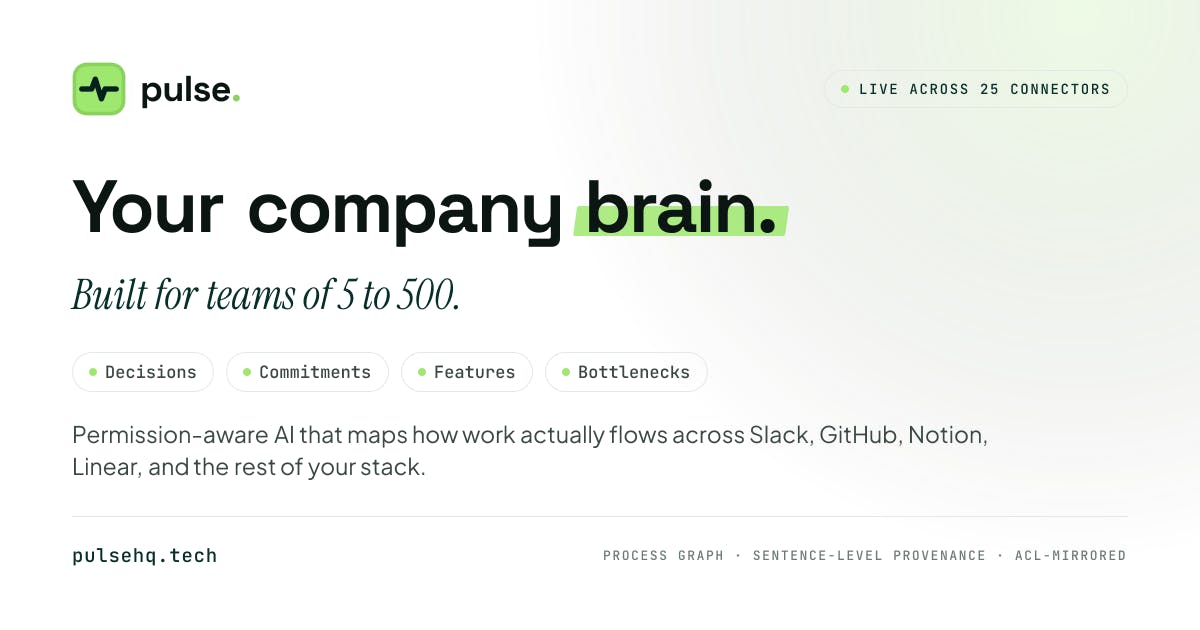
Pulse has launched with a bold vision: to become the permission-aware, proactive, and agentic brain for any company. This new AI platform is designed to operate within an organization's existing workflows, understanding user permissions and acting autonomously to achieve defined goals.
At its core, Pulse aims to bridge the gap between AI's potential and its practical application in day-to-day business operations. Unlike many AI tools that require explicit, step-by-step instructions for every task, Pulse is built to understand context, anticipate needs, and execute actions based on pre-defined rules and user-granted permissions. This makes it less like a tool and more like an intelligent assistant embedded directly into the company's operational fabric.
The platform’s agentic nature means it can initiate actions, not just respond to prompts. This is a critical differentiator. Imagine an AI that doesn't just answer your question about Q3 sales data but proactively identifies a dip, cross-references it with marketing campaign performance, and suggests a targeted ad spend adjustment—all before you even ask. Pulse is designed to perform these kinds of complex, multi-step operations.
Permission-Aware Autonomy
A key challenge for any AI operating within a business is navigating the intricate web of data access and user permissions. Pulse tackles this head-on by building permission awareness into its fundamental architecture. This means the AI understands who can access what information and what actions they are authorized to perform. This is not a superficial layer; it's intended to be a core component of how Pulse operates, ensuring that its proactive actions remain compliant with internal policies and data governance rules.
This approach is crucial for enterprise adoption. Companies are rightly hesitant to deploy powerful AI systems that could inadvertently expose sensitive data or perform unauthorized actions. By prioritizing permission awareness, Pulse aims to build trust and enable deeper integration into critical business processes. The platform is intended to be configured by administrators to respect existing role-based access controls (RBAC), ensuring that its agentic capabilities are always exercised within defined boundaries.

Proactive Task Automation
Pulse's proactive stance means it doesn't wait for a command. It's designed to monitor relevant data streams, identify potential issues or opportunities, and then take action or flag them for human review. This could involve anything from automatically generating a weekly performance report based on live data to identifying a potential customer churn risk and initiating a re-engagement workflow. The goal is to offload routine, yet critical, tasks from human employees, freeing them up for more strategic work.
Consider the process of onboarding a new client. Pulse could be configured to automatically create project folders, set up necessary communication channels, assign initial tasks to team members based on their roles, and send welcome materials—all triggered by the closing of a sales deal. This level of automation, driven by an AI that understands the sequence of operations and the permissions involved, can significantly streamline business processes and reduce the potential for human error or oversight.
The Agentic Future of Work
The launch of Pulse signals a move towards more sophisticated AI agents in the workplace. While chatbots and generative AI tools have focused on augmenting human input through conversational interfaces, agentic AI like Pulse aims to become a more integrated, autonomous participant in business workflows. This shift is not without its challenges. Defining the right triggers, ensuring the AI's decision-making aligns with business objectives, and maintaining robust security and ethical guardrails are paramount.
For developers and IT leaders, Pulse represents a new category of enterprise AI. It requires a different approach to integration and management than traditional software. Understanding how to configure its agentic behaviors, define its permission scope, and monitor its autonomous actions will be key to successful deployment. The promise is a more efficient, intelligent, and responsive organization, but realizing that promise will depend on careful implementation and ongoing oversight.
What nobody has addressed yet is the long-term impact on organizational structure. As AI agents like Pulse become more capable of managing complex workflows autonomously, how will team roles and responsibilities evolve? Will we see a rise in 'AI managers' overseeing fleets of agents, or will human roles shift even further towards strategic oversight and exception handling?
Pulse is positioning itself to be at the forefront of this evolution, offering a platform that aims to deliver on the promise of intelligent, permission-aware automation for businesses ready to embrace the next wave of AI.