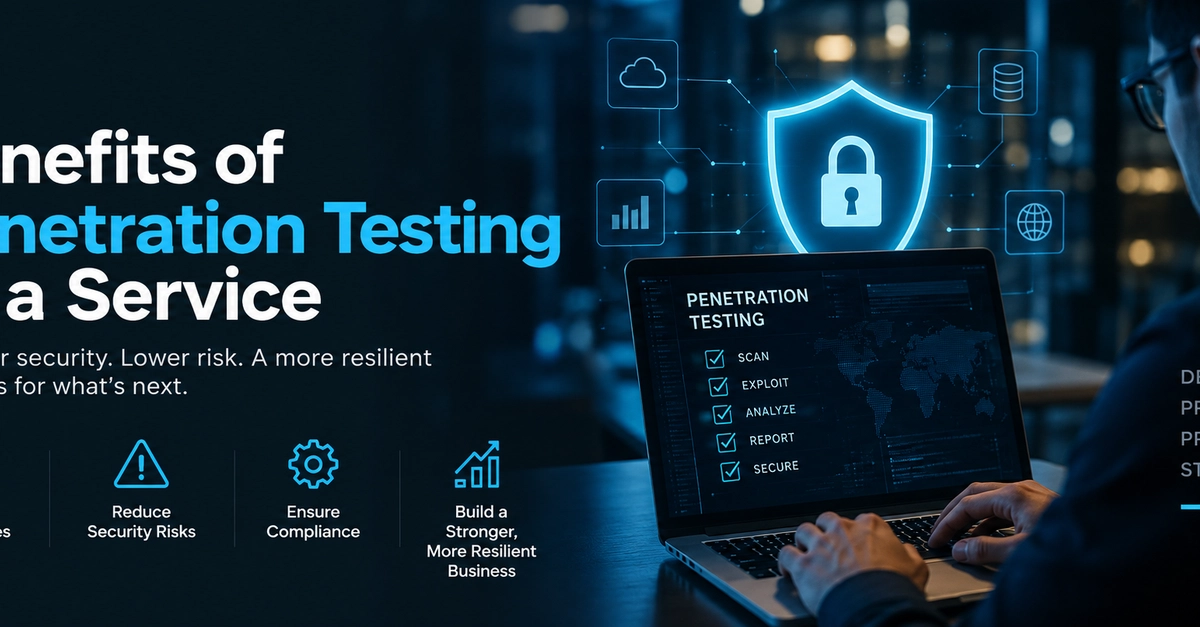
The Shift from Static to Dynamic Security Testing
The traditional annual penetration test, a staple of cybersecurity for years, is increasingly inadequate for today's rapid development cycles. Applications now ship weekly, and infrastructure can change monthly. A security assessment performed in January offers little insight into an organization's attack surface by September. This gap is precisely what Penetration Testing as a Service (PTaaS) aims to close. PTaaS delivers continuous, on-demand security testing, fundamentally altering the approach to vulnerability management.
Unlike a one-time, point-in-time assessment, PTaaS operates on a subscription model. This model provides organizations with ongoing vulnerability discovery, real-time reporting, and accelerated remediation cycles. It moves security testing from a reactive, annual event to a proactive, continuous process. This shift is crucial in an environment where new threats emerge daily and application landscapes evolve at an unprecedented pace.
Understanding Penetration Testing as a Service (PTaaS)
Penetration Testing as a Service (PTaaS) represents a modern approach to security assurance, leveraging a platform that integrates automated scanning with human-led testing. This subscription-based model grants organizations continuous access to penetration testing capabilities, moving away from the episodic nature of traditional engagements. The core value proposition lies in its ability to provide constant vigilance over an organization's digital assets.
The PTaaS platform acts as a central hub for security activities. It orchestrates automated vulnerability scans, which can run frequently to identify low-hanging fruit and known weaknesses. Crucially, this is augmented by expert human testers who perform more sophisticated, context-aware assessments. This hybrid approach ensures that both common vulnerabilities and complex, exploitable flaws are identified. The platform also facilitates seamless communication and collaboration between the testing team and the client's development and security teams, streamlining the reporting and remediation process.
Key Benefits of Adopting PTaaS
The advantages of adopting a PTaaS model are manifold, addressing critical pain points associated with traditional penetration testing.
Cost Predictability and Efficiency
One of the most significant benefits of PTaaS is cost predictability. Traditional pen tests often involve variable costs based on the scope and duration of each engagement. PTaaS, however, operates on a fixed subscription fee. This allows organizations to budget more effectively for their security testing without the risk of unexpected expenses. Furthermore, by eliminating the overhead of repeatedly scoping and scheduling individual tests, PTaaS offers greater efficiency. The continuous nature of testing means that resources are utilized more consistently, providing better value over time.
Continuous Security Coverage
The static nature of annual penetration tests is a major liability. Applications and infrastructure are dynamic, and new vulnerabilities can be introduced with almost every code deployment or configuration change. PTaaS addresses this by providing continuous coverage. Security testing becomes an ongoing activity, ensuring that the attack surface is monitored consistently. This proactive approach allows for the early detection of new vulnerabilities, significantly reducing the window of exposure for potential attackers. It's akin to having a security guard patrol your premises constantly, rather than just checking the locks once a year.

Access to Broader Security Expertise
Finding and retaining specialized penetration testing talent is a significant challenge for many organizations. PTaaS providers typically offer access to a diverse pool of highly skilled security professionals with expertise across various domains, technologies, and attack vectors. This means that clients can benefit from a wider range of testing capabilities than they might be able to afford or assemble in-house. Whether the need is for web application testing, mobile app security, cloud infrastructure assessments, or IoT device security, a PTaaS provider can bring the right specialists to bear on the problem.
Streamlined Compliance and Reporting
Maintaining compliance with industry regulations and standards (e.g., PCI DSS, HIPAA, GDPR) often requires regular penetration testing. PTaaS simplifies this process. The continuous testing and real-time reporting capabilities provide an always-up-to-date view of the organization's security posture. This makes it easier to demonstrate due diligence to auditors and regulators. The platform's reporting features are typically designed to be actionable, providing clear guidance on identified vulnerabilities and their severity, along with recommendations for remediation. This detailed, ongoing documentation streamlines the compliance audit process.
Faster Remediation Cycles
One of the most critical outcomes of effective penetration testing is timely remediation. With traditional pen tests, there can be a significant delay between the test completion, report delivery, and the actual fixing of vulnerabilities. This delay can leave an organization exposed for extended periods. PTaaS minimizes this lag. Real-time reporting and continuous monitoring mean that vulnerabilities are identified and communicated to the client almost immediately. Many PTaaS platforms include features that integrate with development workflows, allowing for rapid triage and patching. This accelerates the remediation cycle, drastically reducing the time an organization remains vulnerable.
The Future of Security Testing
As the digital landscape continues to evolve, so too must the methods used to secure it. The limitations of static, annual penetration tests are becoming increasingly apparent. PTaaS offers a robust, scalable, and cost-effective solution that aligns security testing with the pace of modern development. By embracing continuous testing, organizations can achieve a more resilient security posture, better manage compliance, and respond more effectively to the ever-changing threat environment.