The Case Against Passive Learning
Traditional tutorials offer a one-way street to understanding prompt engineering. You read, you absorb, you try to replicate. But when it comes to interacting with large language models (LLMs), this passive approach falls short. The nuances of prompt construction—the precise wording, the order of instructions, the inclusion of examples—are best discovered through iterative experimentation. This is the core belief that drove the creation of a novel prompt engineering game.
The author, a developer who grappled with the limitations of existing learning methods, identified a critical gap: the absence of engaging, practical environments for honing prompt engineering skills. While online courses and documentation provide foundational knowledge, they often fail to replicate the dynamic, sometimes frustrating, yet ultimately rewarding process of coaxing specific outputs from an AI. The game aims to fill this void by transforming theoretical concepts into interactive challenges.
Introducing the Prompt Engineering Game
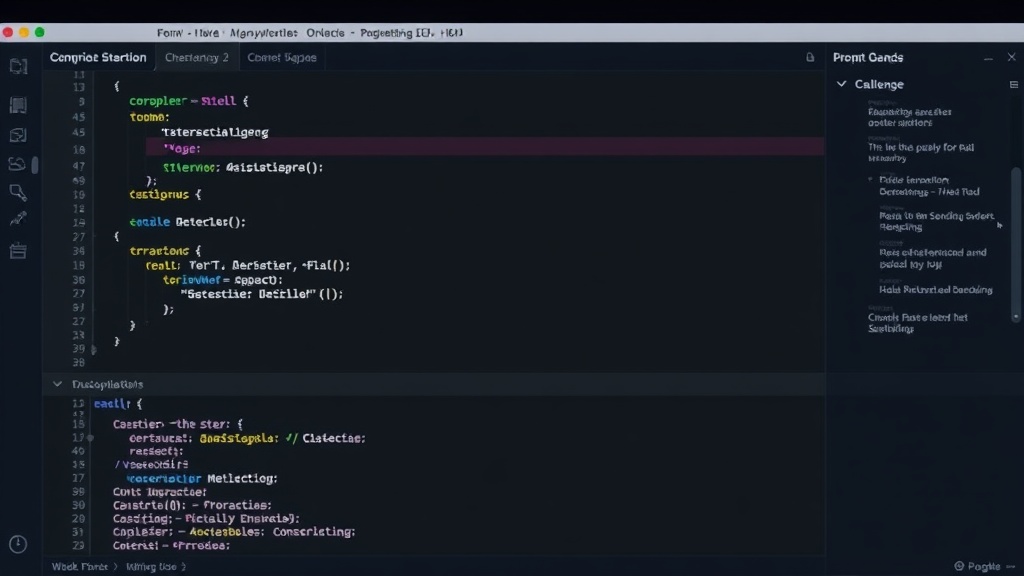
The game is designed to simulate real-world prompt engineering scenarios. Players are presented with objectives that require them to craft prompts to achieve specific AI responses. These objectives could range from generating creative text formats, answering complex questions accurately, summarizing information concisely, or even performing specific coding tasks. Each level introduces new challenges, increasing in complexity and requiring a deeper understanding of prompt manipulation.
The mechanics are straightforward: users input their prompts, the AI responds, and the player receives feedback on how closely their output matches the desired outcome. This feedback loop is crucial. It’s not just about getting the right answer; it’s about understanding *why* a particular prompt succeeded or failed. Was it too vague? Did it lack context? Was a negative constraint needed? The game provides an immediate, low-stakes environment to explore these questions.
Learning by Doing: The Core Advantage
The fundamental premise is that learning prompt engineering is akin to learning a new language or a complex craft. You can read books about carpentry, but you won't truly learn until you pick up a hammer and saw. Similarly, while tutorials can explain the syntax of prompt components, they cannot convey the intuition that comes from direct interaction. The game forces users to actively engage with the LLM, experimenting with different parameters and phrasing.
Consider the difference between reading about how to ask an AI to adopt a specific persona versus actually trying to make it do so. A tutorial might explain the concept of system prompts or few-shot examples. The game, however, would present a task like: "Get the AI to respond as a cynical, world-weary detective from the 1940s, but only answer questions about modern technology." Achieving this requires not just understanding the components, but creatively combining them, iterating based on the AI’s imperfect first attempts, and fine-tuning the prompt until the persona is convincing and the constraints are met. This trial-and-error process solidifies understanding in a way that passive reading cannot.
Beyond Basic Prompts: Advanced Techniques
As players progress, the game introduces more sophisticated prompt engineering techniques. This includes techniques like:
- Chain-of-Thought Prompting: Encouraging the AI to explain its reasoning step-by-step, which often leads to more accurate results for complex problems.
- Few-Shot Learning: Providing a few examples within the prompt to guide the AI’s output format and style.
- Role-Playing and Persona Alignment: Instructing the AI to adopt a specific character or viewpoint.
- Constraint Handling: Defining rules and limitations for the AI’s responses, such as output length or forbidden topics.
- Negative Prompts: Specifying what the AI should *not* do or include.
Each of these techniques is presented not as an abstract concept, but as a tool to overcome a specific in-game obstacle. The immediate feedback mechanism allows players to see the direct impact of applying these advanced methods, fostering a deeper, more intuitive grasp of their utility and effectiveness.
The Unanswered Question of Scalability
While the game demonstrably improves practical prompt engineering skills, a significant question remains: how scalable is this approach? The current implementation, as described, focuses on a single-player, curated experience. As LLMs become more integrated into diverse applications and workflows, will gamified learning be sufficient to train a broad user base? What happens when users need to engineer prompts for highly specialized domains or for LLMs with fundamentally different architectures? The success of this game suggests a powerful learning paradigm, but its widespread applicability to the vast landscape of AI interaction is yet to be fully explored.
Why This Matters for the Future of AI Interaction
Prompt engineering is rapidly evolving from a niche skill to a fundamental requirement for effective AI utilization. As LLMs become more powerful and accessible, the ability to communicate intent clearly and precisely will be paramount. This game represents a significant step towards democratizing this skill. By making the learning process engaging and iterative, it lowers the barrier to entry and empowers a wider range of users to harness the full potential of AI tools.
For developers, it means a more intuitive path to mastering LLM integration. For content creators, it offers a way to refine AI-generated material more effectively. For businesses, it translates to more efficient and accurate AI-driven processes. The shift from passive consumption of tutorials to active, game-based learning signifies a maturation in how we approach human-AI collaboration. It’s a testament to the principle that true mastery comes not just from knowing, but from doing.