
The 24-Hour Frenzy and the Long Flat Tail
Many indie developers pour weeks into a Product Hunt launch, achieving a top-three spot and a satisfying 24-hour traffic surge. But by Thursday, analytics often show a stark drop-off. The launch itself wasn't a failure; the strategy was. Founders optimize for a single day, neglecting the 365 days that follow.
The true, durable value of a launch isn't the fleeting traffic spike. It's the creation of an indexable page and a valuable backlink that continue to work for your product while you sleep. This is the part of the launch process that is consistently overlooked.

The chart above depicts a common scenario: a steep ascent on launch day, followed by a long, flat tail. This tail is where startups gain sustained discovery, primarily through search engines, not through the ephemeral attention of a launch platform. Relying solely on launch-day traffic is akin to building a house on a sandbar during low tide; it’s impressive for a moment but lacks foundational stability.
Beyond the Launch: Building Sustainable Discoverability
The core issue is a misalignment of focus. Product Hunt is a powerful tool for initial visibility, but it's a sprint, not a marathon. The real marathon is SEO. Founders need to shift their mindset from a one-day event to a long-term content and discoverability strategy.
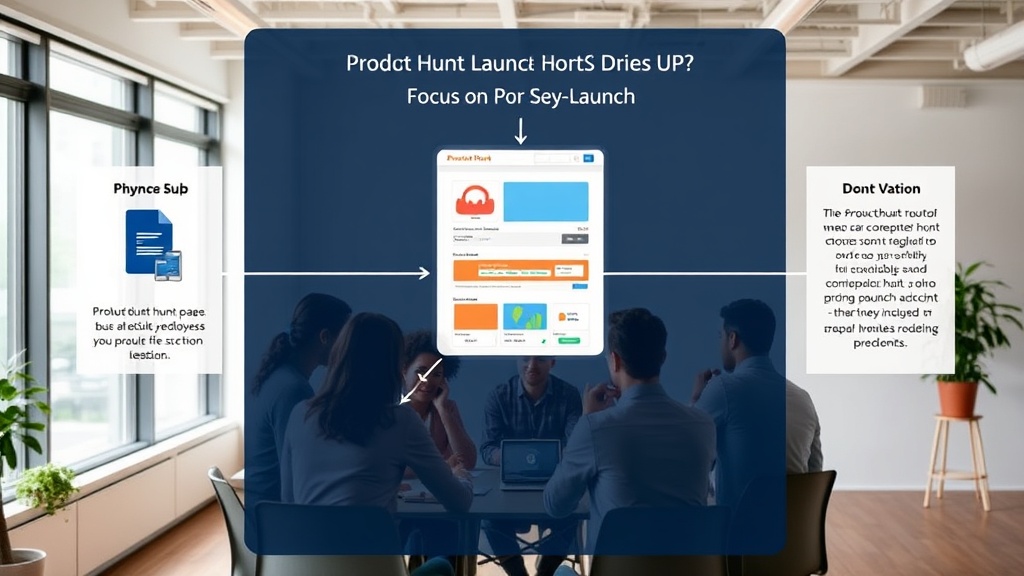
Consider your Product Hunt page. It's a dedicated URL for your product, often with significant domain authority pointing to it (from Product Hunt itself and the users who upvote and comment). This page, if optimized correctly, becomes a persistent asset.
Optimizing Your Product Hunt Page for Search
Most founders treat their Product Hunt page as a temporary billboard. Instead, it should be viewed as a permanent landing page that can rank in search results for relevant queries. This requires a proactive approach:
- Keyword Research: Identify the terms potential users search for when looking for a solution like yours. These are often problem-aware queries, not brand-specific ones.
- On-Page Optimization: Ensure your product name, tagline, and description on your Product Hunt page incorporate these keywords naturally. Think about how someone would describe your product if they found it via Google.
- Content Integration: Link your Product Hunt page from your own website and blog. Furthermore, consider creating content on your own blog that discusses the problems your product solves, and link back to your Product Hunt page (and vice-versa) where relevant. This builds topical authority.
- Backlink Strategy: While Product Hunt provides a strong backlink, encourage users and enthusiasts to link to your Product Hunt page from their own blogs or social media. This signals to search engines that the page is valuable and authoritative.
The Search Engine as a 365-Day Launch
Search engines operate on a different timeline. They crawl, index, and rank content based on relevance, authority, and user experience over time. A Product Hunt launch can kickstart this process by providing initial signals of interest and a quality backlink.
Think of your Product Hunt page as a seed. The launch day provides the initial water and sunlight. But for that seed to grow into a tree that provides shade and fruit year-round, you need to cultivate it with ongoing SEO efforts. This means:
- Content Creation: Regularly publish blog posts, case studies, or tutorials related to your product and the problems it solves. These pieces should target different stages of the user journey, from problem awareness to solution comparison.
- Link Building: Beyond the Product Hunt backlink, actively pursue other high-quality backlinks from relevant industry sites, publications, and communities.
- Technical SEO: Ensure your own website is technically sound, mobile-friendly, and loads quickly. This supports the overall authority of your brand, which can indirectly benefit your Product Hunt page's visibility if properly interlinked.
What nobody has addressed yet is what happens to the thousands of developers who built on the old API. This is a question that looms large in the minds of many who have invested significant resources into existing platforms. For founders, the implication is clear: the launch is merely the starting gun for a much longer race.
Why This Matters for Founders and Developers
For founders, understanding this dynamic is crucial for sustainable growth. Relying on short-term visibility tactics like Product Hunt launches without a post-launch SEO strategy is a recipe for plateaued growth. The investment in a launch should be seen as an investment in a persistent asset, not just a temporary traffic source.
For developers building products, this means thinking about discoverability from day one. The Product Hunt page is just one piece of the puzzle. The real work involves ensuring that users can find your product not only through direct promotion but also through organic search over the long term. This requires a deep understanding of SEO principles and a commitment to creating valuable, indexable content.
The surprise here is not that Product Hunt traffic fades, but how consistently founders overlook the opportunity to convert that fleeting attention into lasting search visibility. The durable value of a launch lies in its ability to anchor a persistent, searchable online presence.