
Beyond the Two-Line Migration: Production Realities of Postgres Full-Text Search
Adding full-text search (FTS) capabilities to PostgreSQL often begins with a deceptively simple two-line migration. However, deploying this powerful feature into a production environment without encountering unforeseen issues is far from trivial. The Generalized Inverted Index (GIN), crucial for fast search performance, introduces write amplification and a background cleanup process. Under heavy insert loads, this cleanup can fall behind, impacting performance. Furthermore, the notion of "relevance" that appears adequate during local development can diverge significantly once real-world data and user interactions come into play, especially with changes to dictionaries or data patterns. To confidently assess whether PostgreSQL's FTS meets your needs, you require concrete evidence: a load test that accurately reflects your actual write rate and a measurable, defined contract for search relevance, not merely a count of indexed rows.
While PostgreSQL's FTS is frequently the optimal starting point, offering a "one fewer service" advantage over dedicated search engines like Elasticsearch, this operational aspect is frequently overlooked in tutorials. This article delves into the critical operational considerations for production FTS in PostgreSQL.
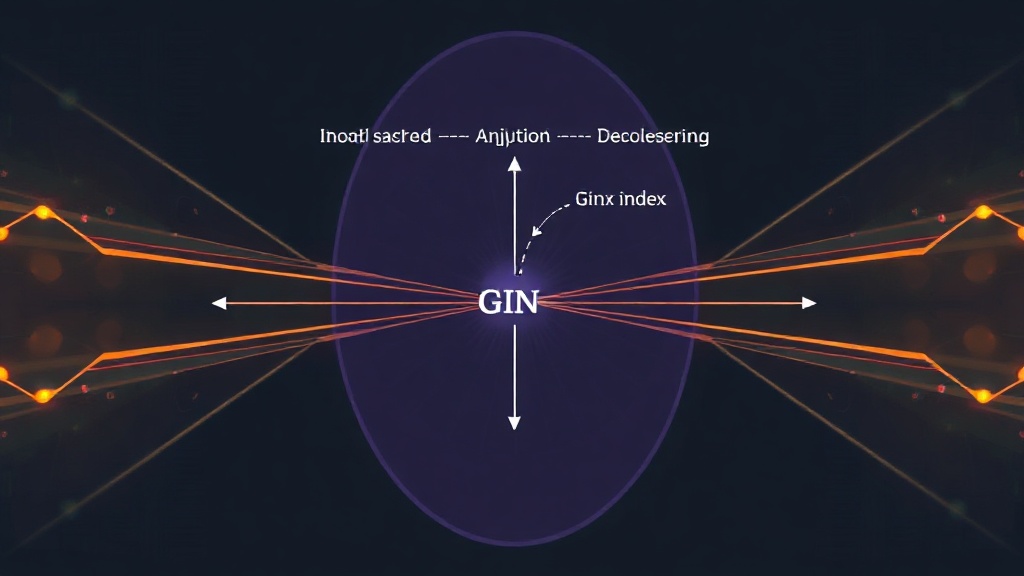
Understanding GIN Index Write Amplification
The GIN index, a key component for efficient full-text search, operates by mapping terms to the documents containing them. When new data is inserted or updated, the GIN index must be modified to reflect these changes. This process can lead to write amplification, meaning that for a single logical write operation (e.g., inserting a new document), multiple physical writes may occur within the index. This is because GIN indexes are structured in a way that facilitates rapid lookups, but this structure requires significant effort to maintain during writes. Each new term found in a document might necessitate updates across various nodes within the index's tree-like structure. This constant modification, especially under high insert volumes, can become a bottleneck, consuming significant I/O resources and potentially slowing down the entire database.
Moreover, GIN indexes have a background cleanup process. This process reclaims space occupied by deleted or updated entries and consolidates index fragments. When the write rate is high, the rate of index modification can outpace the cleanup process. This leads to index bloat, where the index consumes more disk space than necessary, and performance degradation. In extreme cases, the cleanup process can fall so far behind that it starts impacting foreground operations, leading to noticeable latency for both writes and reads. Monitoring the health and activity of this background process is therefore paramount for maintaining stable FTS performance.
Load Testing for Realistic Write Throughput
The most common pitfall is assuming that a system performing adequately with a modest dataset and insert rate will scale linearly. Production environments often exhibit significantly higher write volumes and more complex data interactions. To avoid surprises, a rigorous load testing strategy is essential. This involves simulating your application's actual write patterns and concurrency levels against your PostgreSQL instance configured with FTS.
The goal is to identify the breaking point: the maximum insert rate your database can sustain while keeping the GIN index overhead manageable. This requires tools that can generate realistic traffic and monitor key performance indicators (KPIs) such as transaction commit times, WAL write rates, CPU utilization, I/O wait times, and, crucially, the lag of the GIN vacuum process. Tools like pgbench can be adapted, but custom scripts or specialized load testing frameworks might be necessary to accurately mimic application-specific write behaviors, including the size and complexity of documents being indexed. Pay close attention to the time it takes for newly inserted data to become searchable. A significant delay indicates that the index is struggling to keep up.
Defining and Measuring Relevance
"Relevance" in full-text search is subjective and highly context-dependent. What appears relevant in a developer's test environment, often with curated data, can be vastly different in production where data is messy and user search queries are unpredictable. The initial setup of PostgreSQL's FTS typically uses default configurations for text processing, stemming, and stop words. However, these defaults may not align with the specific linguistic nuances or domain-specific terminology of your application.
To "pin down relevance," you must first define what constitutes a relevant result for your application. This involves understanding user search intent and identifying key terms, synonyms, and patterns that should influence ranking. PostgreSQL's FTS offers several configuration options to tune this: different text search configurations, dictionaries (including custom ones), stemming algorithms, and weighting. For instance, you can assign higher weights to matches in specific fields (e.g., titles vs. body text) or use more sophisticated ranking algorithms. The challenge lies in translating these qualitative goals into quantifiable metrics. This can involve creating a set of benchmark queries with known expected results and measuring metrics like Precision@K, Recall@K, or Mean Reciprocal Rank (MRR) against your FTS results. Regularly re-evaluating these metrics as data and queries evolve is critical.
Beyond Basic Indexing: Operational Best Practices
Successfully running FTS in production requires more than just creating the index. It demands proactive monitoring and maintenance. Key operational considerations include:
- Monitoring GIN Vacuum Lag: Regularly track
pg_stat_progress_vacuumand related metrics to ensure the GIN vacuum process is keeping up with index modifications. Alerts should be set for excessive lag. - Index Bloat Management: Implement a strategy for periodic `VACUUM FULL` or `REINDEX` operations on the FTS index if bloat becomes an issue, understanding the performance implications of these maintenance tasks.
- Configuration Versioning: Treat your text search configurations, dictionaries, and stop word lists as code. Version control them and deploy changes systematically, testing their impact on relevance before rolling out.
- Query Analysis: Use
EXPLAIN ANALYZEon your FTS queries to understand their performance characteristics and identify potential optimizations, such as improving query structure or indexing strategies. - Data Consistency Checks: Periodically verify that the search index accurately reflects the underlying data, especially after large data imports or complex updates.
The JFK Files: A Case Study in Search Utility
The challenge of making vast amounts of unstructured data searchable is a recurring theme. A notable example is the release of the JFK files by the National Archives and Records Administration (NARA). Initially provided in an unsearchable format, researchers faced significant hurdles in manual investigation. While NARA offered metadata via a CSV file, this did not grant the ability to search the content of the documents themselves. This gap highlighted the critical need for effective full-text search capabilities, even for historical archives. Projects like Apario Writer emerged from such needs, aiming to process flattened PDFs into a usable, searchable format. This underscores that the requirement for robust search functionality extends far beyond typical e-commerce or content management systems, reaching into areas like historical research and open government data initiatives. The complexity of such projects, often involving millions of pages, necessitates scalable solutions that can handle large-scale data ingestion and indexing, a domain where PostgreSQL's FTS can be a powerful, albeit carefully managed, option.
The journey from raw, unsearchable documents to a functional search engine, as demonstrated by the JFK files effort, emphasizes that the technical implementation is only part of the solution. The true value lies in making information accessible and discoverable. For developers and organizations looking to leverage PostgreSQL for FTS, understanding the operational demands—load testing, relevance tuning, and continuous monitoring—is as crucial as writing the initial SQL query.