Polymarket API Design: A Blueprint for Prediction Market Platforms
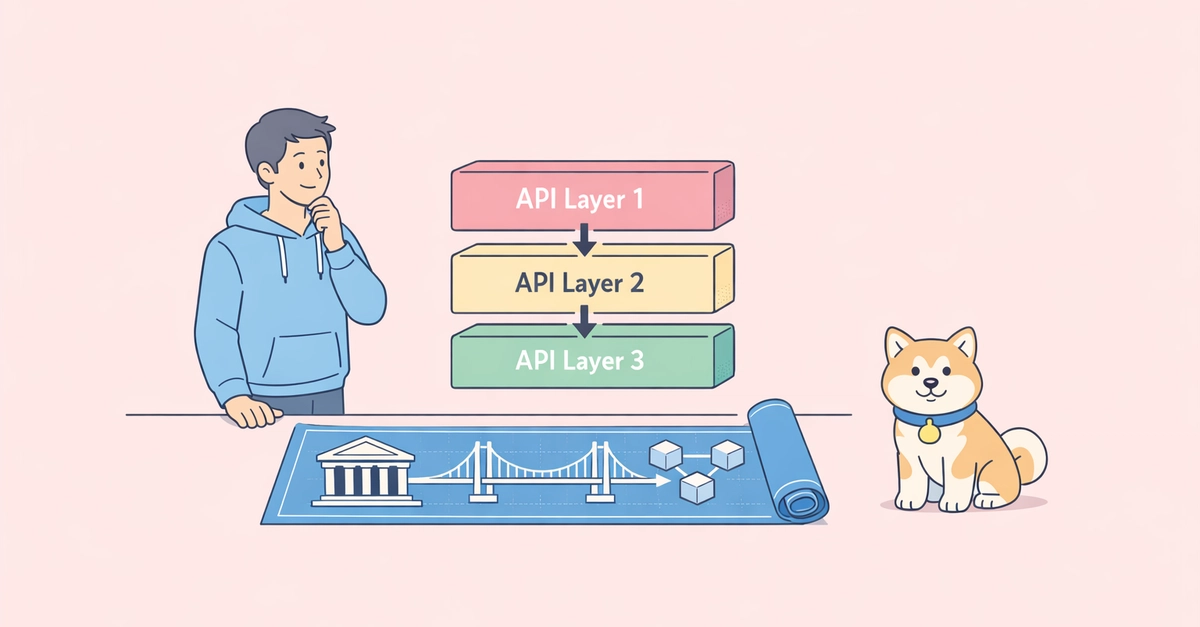
Prediction markets represent one of the most demanding environments for API design. They involve financial instruments with expiration dates, real-time probability shifts, multi-outcome events, intricate capital relationships, and a mix of human traders and high-frequency arbitrage bots. Polymarket, currently the dominant global platform in this space by volume, showcases a robust architecture worth studying. Its core strategy lies in the explicit separation of concerns: market discovery, trading execution, historical data access, and real-time data feeds are managed by distinct API surfaces.
This deliberate modularity is not merely an organizational choice; it's a strategic imperative. It allows Polymarket to scale different components independently, optimize performance for specific workloads, and maintain a cleaner interface for developers integrating with the platform. For any application dealing with complex, time-sensitive financial data and transactions, Polymarket’s approach offers a valuable set of patterns.
Model 1: Domain-Separated APIs
Polymarket exposes three primary APIs, each with a clearly defined responsibility:
- Gamma API (
gamma-api.polymarket.com): This API is dedicated to market discovery. It allows users and bots to find and explore available prediction markets. Key functionalities include searching for markets, filtering by criteria such as category, status, or liquidity, and retrieving detailed information about individual markets, including their current probabilities, contract terms, and trading volumes. This separation ensures that the process of finding markets does not interfere with the high-throughput demands of trading or the data retrieval needs of analytics. - Trading API (
trade-api.polymarket.com): Focused on the core trading experience, this API handles all order placements, cancellations, and modifications. It's designed for low latency and high reliability, crucial for executing trades at desired price points. Developers building trading bots or integrating automated execution strategies would interact primarily with this endpoint. The separation here prevents discovery or data queries from impacting the critical path of trade execution. - Data API (
data-api.polymarket.com): This endpoint serves historical and aggregated market data. It's optimized for analytical queries, backtesting trading strategies, and generating reports. Unlike real-time feeds, this API provides access to snapshots of market states at specific times or aggregated statistics over periods. This distinction is vital: serving historical data, which can involve large datasets and complex aggregations, should not burden the real-time trading infrastructure.
Model 2: Real-time Data Feeds
Beyond the RESTful APIs for discovery and trading, Polymarket leverages real-time data streams for instantaneous updates. This is typically achieved using technologies like WebSockets.
- Real-time Probability and Trade Updates: For applications requiring the most up-to-the-minute information, Polymarket provides streams that push updates on market probabilities, new trades, and market status changes as they happen. This is essential for traders needing to react immediately to market movements and for bots monitoring the live state of markets.
The surprising detail here is not the technology itself, but the explicit separation of these real-time feeds from the general data API. While a data API might offer periodic snapshots, a dedicated real-time stream ensures that latency-sensitive applications receive data with minimal delay, without the overhead of polling or the potential for stale data inherent in less frequent updates.
Model 3: Consistent Market Identifiers
Across all APIs, Polymarket uses consistent, unique identifiers for each market. This might be a string or a UUID that remains constant throughout the market's lifecycle, regardless of its status (open, resolved, expired). This is critical for reliable integration. Developers can reference a market by its ID in discovery, trading, and data queries without fear of the identifier changing. This predictability forms the bedrock of stable integrations, preventing common bugs that arise from dynamic or ephemeral resource identifiers.
Model 4: Granular Event and Outcome Representation
Prediction markets often deal with complex outcomes. Polymarket’s API design likely accounts for this by providing a structured way to represent events and their potential outcomes. This could involve:
- Categorical Events: Markets where the outcome is one of several predefined categories (e.g., 'Yes', 'No', 'Other').
- Numerical Events: Markets where the outcome is a specific number within a range.
- Multi-Resolution Outcomes: Markets that might resolve based on multiple conditions or sub-events.
The API would expose fields that clearly define the event type, the possible outcomes, and the rules for resolution. This structured representation is crucial for both users to understand what they are betting on and for systems to correctly interpret and process market resolutions.
Model 5: Liquidity and Order Book Information
For traders, understanding market depth and liquidity is paramount. Polymarket's trading and data APIs likely provide insights into:
- Order Book Depth: The available buy and sell orders at various price levels.
- Spread: The difference between the highest bid and lowest ask, indicating immediate trading friction.
- Volume and Open Interest: Metrics reflecting overall market activity and commitment.
This information allows traders to gauge the ease with which they can enter or exit positions without significantly impacting the price. Providing this data through the API is essential for sophisticated trading strategies that rely on market microstructure.
Model 6: Fee Structures and Gas Information
As prediction markets often operate on blockchains, transaction costs (gas fees) and platform fees are significant considerations. Polymarket's APIs likely expose:
- Platform Fee Rates: The percentage charged by Polymarket on trades or resolutions.
- Estimated Gas Costs: For on-chain transactions, providing an estimate of the gas required for an operation.
This transparency helps users accurately calculate their potential profits and losses, making informed decisions about when and how to trade. If you're building a trading bot, accurately accounting for these costs is non-negotiable for profitability.
Model 7: User Portfolio and Holdings
A core function for any trading platform is allowing users to track their positions and overall portfolio value. Polymarket's APIs would support endpoints for:
- Current Holdings: Displaying the markets a user is currently invested in and the size of those positions.
- Portfolio Value: An aggregated view of the user's total assets, potentially including unrealized gains and losses.
- Transaction History: A log of past trades and market resolutions for the user.
This model is fundamental for user experience, enabling individuals to manage their investments effectively within the platform.
Model 8: Market Lifecycle Management
Prediction markets have a defined lifecycle: creation, trading, resolution, and expiration. Polymarket's API design must reflect this:
- Market Creation Endpoints: While possibly restricted to certain users or partners, APIs for programmatically creating markets could exist.
- Resolution Mechanisms: APIs or associated processes that handle the official resolution of a market based on predefined criteria.
- Status Flags: Clear indicators of a market's current state (e.g., `open`, `resolved`, `expired`, `canceled`).
This comprehensive lifecycle management ensures that markets are created, traded, and settled in an orderly and predictable manner, which is critical for maintaining user trust and operational integrity.
Implications for Developers and Platforms
Polymarket's API architecture is a masterclass in handling complexity. By segmenting responsibilities across distinct APIs—discovery, trading, historical data, and real-time streams—they achieve scalability, maintainability, and developer-friendliness. Developers can integrate with specific functionalities without being overwhelmed by the entire system's complexity. For instance, a data analytics dashboard only needs to interact with the Gamma and Data APIs, while a high-frequency trading bot focuses solely on the Trading and real-time feeds. This pattern of domain-separated APIs is not unique to prediction markets; it's a best practice applicable to any complex distributed system where different concerns have vastly different performance and scaling requirements.