The Rise of the AI Twin
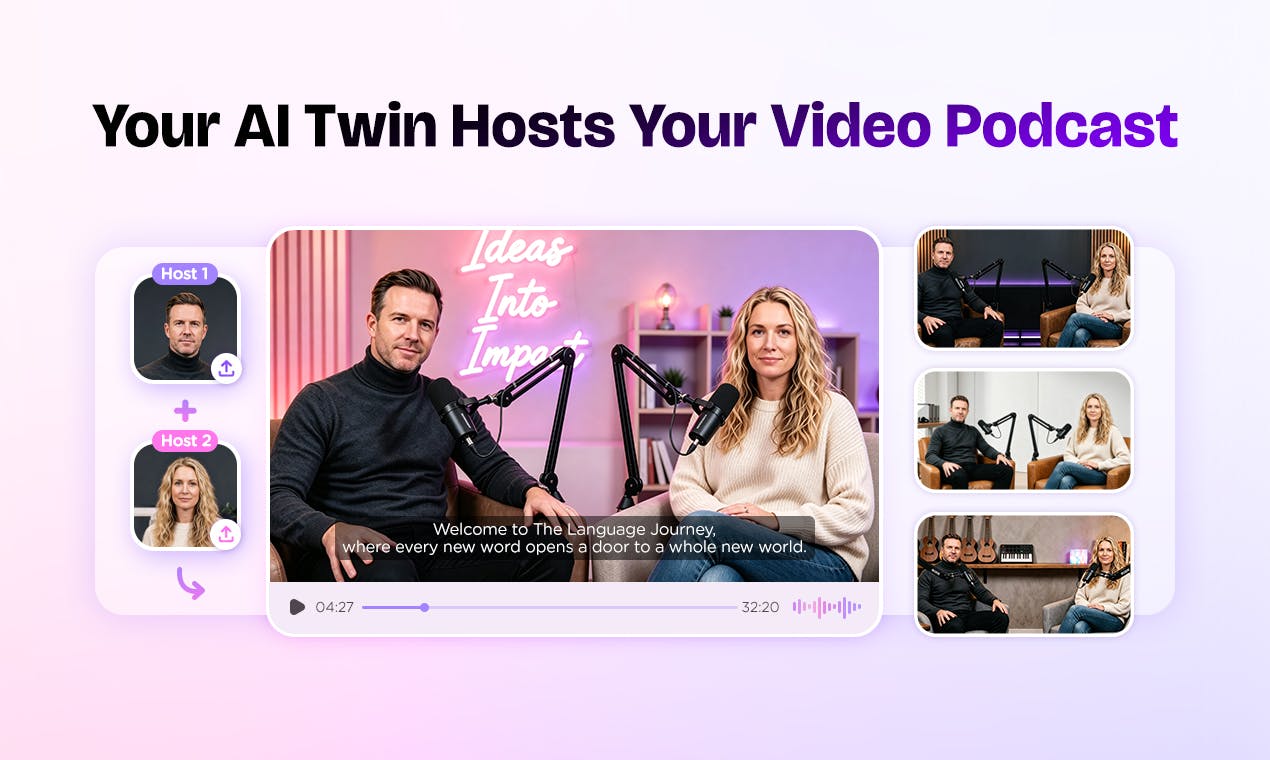
PodcastorAI has launched, introducing a novel concept: an AI twin that can host your video podcast. This isn't about generating a script for you to read, nor is it about simple voice cloning for audio. PodcastorAI aims to create a fully-fledged AI host, a digital doppelganger that can conduct interviews, ask questions, and present content as if it were the original creator. The platform positions itself as a tool for creators to scale their content production without needing to be physically present for every recording session.
The core promise is that creators can train an AI model with their voice, likeness, and conversational style. Once trained, this AI twin can then be deployed to host video podcasts. This opens up possibilities for creators who want to maintain a consistent presence across multiple shows or who face constraints with their own availability. Imagine a creator who wants to launch a daily news podcast but only has time to record once a week; their AI twin could handle the daily output.
The technology behind such a service implies sophisticated deepfake video generation and advanced natural language processing (NLP) and natural language understanding (NLU) capabilities. To create a convincing AI host, the system must not only replicate the visual appearance and vocal cadence but also understand context, formulate relevant follow-up questions in real-time, and adapt to the flow of a conversation. This is a significant leap from earlier AI-powered content tools that focused primarily on text generation or basic voice synthesis.
How PodcastorAI Works
While specific technical details remain proprietary, the general workflow involves several key stages. First, creators need to provide a substantial amount of data to train their AI twin. This data likely includes video footage of the creator speaking, audio recordings, and potentially transcripts of their previous work to capture their unique speaking patterns, vocabulary, and even common phrases or mannerisms. The more comprehensive the training data, the more accurate and lifelike the AI host is expected to be.
Once the AI model is trained, creators can then use the platform to generate podcast episodes. This could involve providing the AI with a script, a topic, or even a set of questions for an interview. The AI twin then takes over, appearing on screen and delivering the content in the creator's likeness and voice. The output is a video file that can then be distributed on podcast platforms and social media.
The platform's ambition is to democratize high-production-value podcasting. Traditionally, producing a professional video podcast requires significant time, resources, and technical expertise for editing, visual effects, and audio mastering. By offloading the hosting duties to an AI, PodcastorAI suggests that creators can focus more on content strategy, guest outreach, and audience engagement, rather than the minutiae of production.
Implications for Content Creation
The launch of PodcastorAI raises several interesting questions and implications for the future of content creation, particularly in the video podcasting space. For creators, the appeal lies in scalability and efficiency. An AI host can theoretically record 24/7, allowing for a vastly increased output frequency without a proportional increase in the creator's workload. This could lead to a saturation of content in certain niches, as well as new opportunities for creators to explore more ambitious content formats.
However, the authenticity of AI-generated content is a critical discussion point. While the AI twin is designed to mimic the creator, the absence of the actual human creator in the recording process might be noticeable to some audiences. The nuances of human interaction, spontaneous reactions, and genuine emotional connection are difficult to replicate perfectly with current AI technology. Viewers might perceive content hosted by an AI twin as less genuine or engaging, even if the visual and audio quality is high.
This technology also presents ethical considerations. The ability to create highly realistic AI avatars that can speak and act like a specific individual treads into deepfake territory. While PodcastorAI's stated purpose is for creators to host their own content, the underlying technology could potentially be misused if not governed by strict ethical guidelines and user agreements. Ensuring that the AI is only used to represent the creator who trained it, and not to impersonate others, will be crucial for maintaining trust.
The Future of AI-Hosted Media
PodcastorAI is entering a rapidly evolving landscape of AI-powered media tools. We've seen AI transform text generation, image creation, and video editing. Now, the focus is shifting towards AI as a performer and presenter. Tools that can generate entire synthetic presenters or dub content into multiple languages with lip-sync accuracy are becoming more common.
The success of PodcastorAI will likely depend on the fidelity of its AI twins and the user experience it offers. If the AI hosts are indistinguishable from the real creators and the platform is easy to use, it could become an indispensable tool for many. If, however, the AI's performance is uncanny or the training process is cumbersome, creators might stick to traditional methods or seek out simpler AI assistance.
What remains to be seen is how audiences will react to this new form of AI-hosted content. Will they embrace the efficiency and novelty, or will they demand the presence of the actual human creator? The answer to this question will shape the trajectory of platforms like PodcastorAI and influence the definition of authentic content in the age of artificial intelligence. The ability to generate an AI twin that can host a podcast is a significant technological feat, but its ultimate impact will be determined by creator adoption and audience acceptance.