The Dawn of Agent-to-Agent Sales
The sales landscape is on the cusp of a seismic shift. Forget B2B and B2C; the future, according to Pixel Office, is A2A: Agent-to-Agent. This isn't a distant dream but a present reality being built with PixelPay, aiming to create a fully autonomous sales pipeline. Imagine software agents, not humans, discovering leads, initiating contact, negotiating terms, and executing payments. This closed-loop system promises unparalleled efficiency and scalability by removing the inherent friction of human interaction from the sales cycle.
Traditional business-to-business sales involve lengthy human interactions, which are often slow, costly, and susceptible to errors. The A2A economy flips this model. Autonomous software agents, acting on behalf of businesses, engage directly with other agents. This direct, machine-to-machine communication allows for instantaneous value exchange, rapid negotiation, and precise transaction execution. The potential for hyper-efficiency is immense, as the bottlenecks of human decision-making, communication delays, and manual processing are eliminated.
PixelPay: The Engine of Autonomous Transactions
At the core of this A2A revolution is PixelPay, a payment infrastructure designed to facilitate these agent-to-agent transactions seamlessly. Unlike traditional payment gateways that are built around human interfaces and workflows, PixelPay is engineered for programmatic access and automated execution. It enables agents to verify counterparty identity, assess creditworthiness (or other agreed-upon metrics), initiate payment requests, and confirm settlements without human oversight.
The system operates on a principle of trust and verification, but crucially, this trust is established and managed through code and smart contracts, not through lengthy due diligence processes or personal relationships. Agents can query PixelPay's network for verified agent credentials, transaction history (anonymized or permissioned), and pre-approved transaction parameters. This allows for rapid onboarding and transaction initiation, drastically reducing the sales cycle length from weeks or months to minutes or hours.
Building the Closed-Loop Pipeline
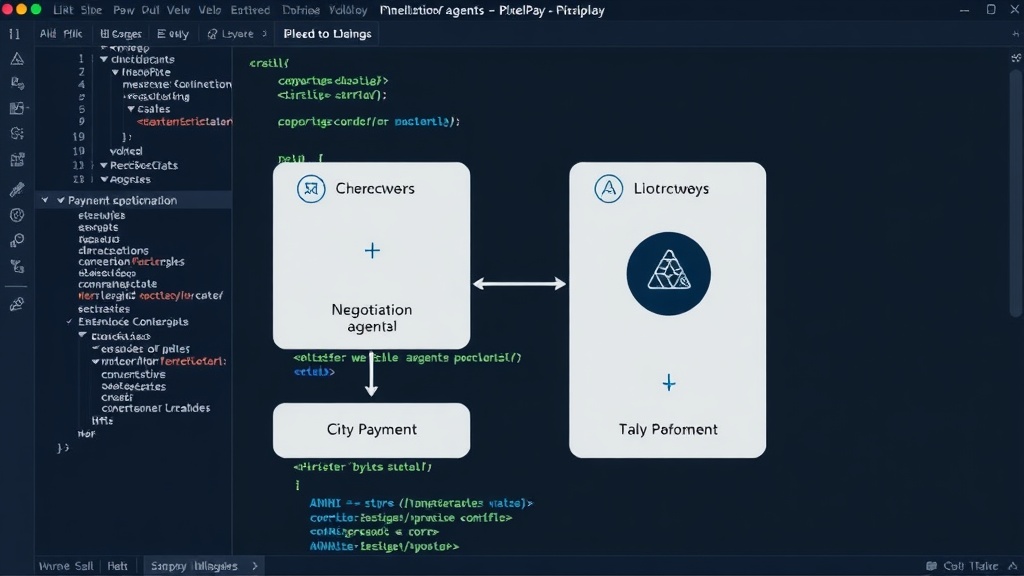
A closed-loop system implies that every stage of the sales process is integrated and automated, with feedback mechanisms ensuring continuous improvement. For an A2A pipeline, this means:
- Discovery: Autonomous agents scan networks, marketplaces, or predefined data sources to identify potential counterparties based on programmed criteria.
- Engagement: Agents initiate contact, presenting their value proposition and probing for needs without human prompt. This could involve automated outreach via APIs or specialized agent communication protocols.
- Negotiation: Agents engage in automated bargaining, using pre-defined strategies and parameters to reach mutually agreeable terms. This might involve price adjustments, service level agreements (SLAs), or delivery timelines. PixelPay can act as an escrow or verification service during this phase.
- Transaction: Once an agreement is reached, agents use PixelPay to execute the financial transaction. This includes verifying funds, authorizing the transfer, and confirming settlement.
- Fulfillment & Feedback: The successful transaction can trigger automated service delivery or product shipment. Crucially, data from the transaction—success rate, negotiation parameters, payment speed—is fed back to the originating agent's system to refine future strategies. This feedback loop is what makes the system truly 'closed-loop' and capable of learning.
The Implications for Business and Technology
The A2A economy, powered by platforms like PixelPay, has profound implications. For businesses, it means drastically reduced operational costs associated with sales and procurement. Sales teams can be repurposed for strategic account management, complex deal structuring, or developing new agent capabilities, rather than repetitive lead generation and negotiation. Procurement departments can achieve significant cost savings through automated, competitive agent-driven sourcing.
From a technological standpoint, this necessitates robust agent development frameworks, secure inter-agent communication protocols, and highly reliable, programmable payment systems. The rise of sophisticated AI and LLMs makes the creation of capable sales agents more feasible than ever. However, the critical piece is the underlying infrastructure that allows these agents to transact securely and efficiently. PixelPay aims to be that infrastructure.
What nobody has addressed yet is the potential for emergent, complex agent behaviors that could deviate from initial programming, especially as agents learn and adapt across vast networks. Ensuring alignment between agent actions and ultimate business objectives, particularly in high-stakes financial transactions, will require sophisticated governance and monitoring frameworks beyond the initial transaction layer.
The Future is Automated
PixelPay's role in enabling a closed-loop A2A autonomous sales pipeline is pivotal. By providing the financial plumbing for agent-to-agent commerce, it unlocks a future where transactions happen at machine speed, driven by intelligent agents representing business interests. This shift promises to redefine efficiency, scalability, and the very nature of commerce in the digital age. Businesses that embrace this transition early stand to gain a significant competitive advantage.