
PixelCrew: AI-Powered Design Production
PixelCrew has launched a new platform promising production-ready design assets generated by a team of AI agents. The service aims to significantly reduce the time and resources required for businesses to acquire high-quality visual content for their products and marketing efforts. Unlike tools that focus solely on concept generation or mood boards, PixelCrew emphasizes delivering final, usable design outputs.
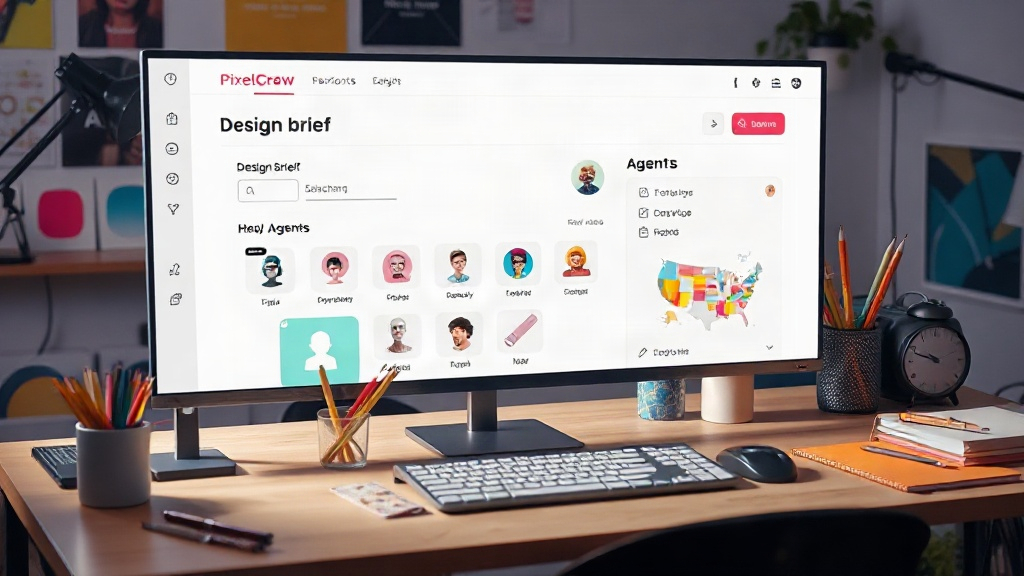
The core of PixelCrew's offering lies in its multi-agent AI system. Instead of a single model attempting to handle all aspects of design, the platform employs specialized agents, each trained for specific tasks. This approach mimics a human design studio, where different specialists contribute their expertise. One agent might focus on brand identity and color palettes, another on layout and composition, and a third on generating specific asset types like icons, illustrations, or even UI elements. This division of labor is intended to improve the quality and coherence of the final output.
How PixelCrew Works
Users interact with PixelCrew by providing a detailed brief. This brief can include brand guidelines, target audience information, desired aesthetic, specific asset requirements, and any existing visual assets or inspiration. The AI agents then collaboratively interpret this brief to generate a range of design options. The platform is designed to allow for iterative feedback, where users can refine the generated designs by providing further instructions or selecting preferred elements from initial outputs.
The production-ready aspect means that the assets generated are not just conceptual mockups but are delivered in formats suitable for immediate use. This could include vector files for logos and illustrations, high-resolution raster images for web and print, or even code snippets for UI components, depending on the specific service tier and user needs. The goal is to eliminate the bottleneck often found in the handoff between design and development or marketing teams.
The AI Agent Model: A Paradigm Shift?
The concept of using multiple AI agents to achieve a complex task is not entirely new, but its application to the full production pipeline of graphic design is a notable development. Traditional AI art generators often produce stunning but abstract or unpolished results. PixelCrew's approach suggests a move towards more practical, commercially viable AI applications. By segmenting the design process, the platform can potentially overcome some of the limitations of monolithic AI models, which can struggle with consistency and adherence to complex constraints.
This multi-agent system is analogous to how a freelance design agency might operate. A project manager (the user's brief) assigns tasks to a logo designer, an illustrator, and a UI specialist (the AI agents). Each agent works within its domain, and their outputs are integrated. The potential advantage of the AI approach is speed and scalability. A human agency might take days or weeks to produce a set of assets; PixelCrew aims to deliver within hours or even minutes for certain types of requests.
Implications for the Design Industry
The launch of PixelCrew raises questions about the future of design work. For businesses, it presents an opportunity to access design services at a potentially lower cost and with faster turnaround times. This could democratize access to professional design, enabling smaller businesses or startups with limited budgets to compete visually with larger corporations. For in-house design teams, PixelCrew could serve as a powerful augmentation tool, handling repetitive tasks and freeing up human designers to focus on higher-level strategy, conceptualization, and refinement.
However, the platform also highlights the evolving role of human designers. As AI takes on more production-oriented tasks, the emphasis for human creatives may shift towards areas that AI currently struggles with: deep emotional intelligence, nuanced cultural understanding, complex strategic problem-solving, and truly novel conceptual leaps. The ability to guide, curate, and integrate AI-generated outputs will likely become a crucial skill.
What's Next for PixelCrew?
PixelCrew's immediate focus will likely be on refining its AI agents, expanding the range of asset types it can produce, and building out its user base. The success of the platform will depend on its ability to consistently deliver high-quality, production-ready designs that meet the diverse needs of its clients. As AI technology continues to advance, the capabilities of platforms like PixelCrew are expected to grow, potentially further blurring the lines between human and machine creativity in the professional design space.
The company has not yet detailed its pricing structure or specific tiers of service, but the promise of production-ready design suggests a premium offering. Early adopters will be watching closely to see if PixelCrew can live up to its ambitious claims and establish itself as a significant player in the AI-driven creative tools market.