
PHP's Resurgence: Performance and Ecosystem Dominance
The narrative around programming languages often focuses on the newest entrants, promising paradigm shifts and unparalleled efficiency. Yet, in 2026, a significant trend is emerging: developers are increasingly choosing advanced PHP technologies over newer languages for a wide array of web development projects. This isn't a nostalgic return to older ways; it's a strategic decision driven by tangible improvements in PHP itself and its surrounding ecosystem.
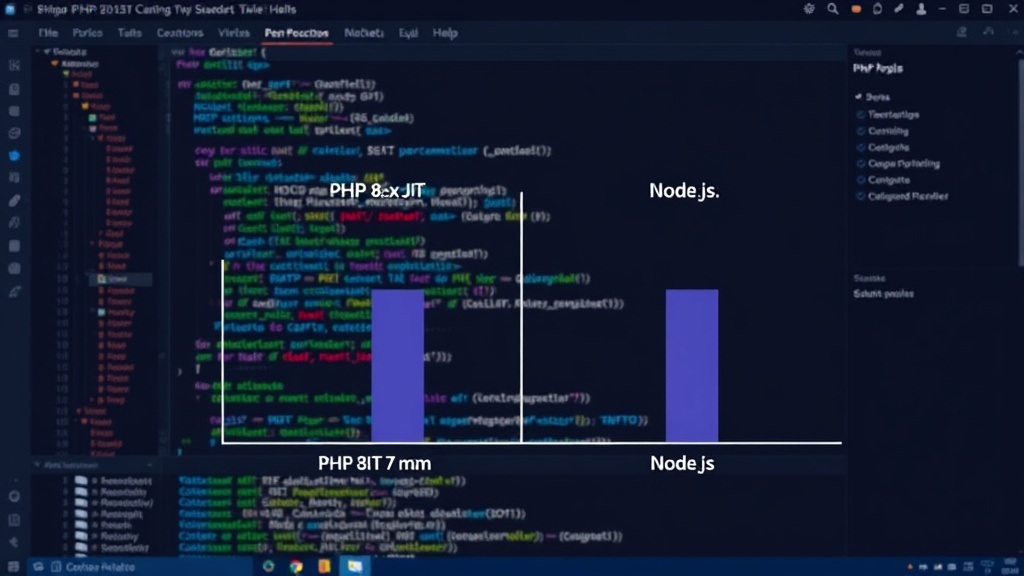
PHP 8.x has undergone a dramatic transformation. The introduction of Just-In-Time (JIT) compilation has brought substantial real-world performance gains, effectively closing the gap with languages previously considered unequivocally faster. Benchmarks comparing PHP 8.x against Node.js for common web workloads now show highly competitive, and in some cases superior, results. This performance leap means developers no longer need to sacrifice speed for the ease of use and rapid development PHP traditionally offers. The language is no longer a bottleneck; it's a high-performance engine ready for demanding applications.
The maturity of PHP's leading frameworks, particularly Laravel and Symfony, plays a crucial role. These frameworks offer comprehensive solutions for common application patterns, reducing development time significantly. Most standard architectural challenges have been addressed with well-tested, robust implementations within their extensive ecosystems. This allows development teams to focus on unique business logic rather than reinventing the wheel for fundamental components. The commercial advantage of cutting down development cycles while maintaining code quality and security is undeniable. For businesses operating in competitive markets, this acceleration in delivery is a critical differentiator.
The Human Factor: Talent Pool and Web-Native Design
Beyond technical merits, the sheer availability of skilled PHP developers is a powerful economic driver. The global talent pool for PHP is enormous and diverse, offering developers at virtually every experience and price point. For startups and established companies alike, where development costs and time-to-market are critical constraints, this accessibility is a significant advantage. Hiring experienced PHP engineers is often more straightforward and cost-effective than sourcing developers for newer, more niche languages.
PHP's fundamental design as a web-native language continues to be a key strength. Its request/response lifecycle is intrinsically aligned with how web applications function. Unlike general-purpose languages that might require more complex abstractions or architectural workarounds to fit the web paradigm, PHP's core model directly maps to the HTTP protocol and web server interactions. This inherent suitability simplifies development, reduces cognitive load for engineers, and often leads to more straightforward, maintainable codebases for web-centric applications.
The language's evolution hasn't been limited to performance. Modern PHP incorporates features like strong typing, attributes, and improved error handling, making it a robust choice for building complex, scalable applications. The tooling and developer experience have also seen considerable improvement, with advanced IDE support, sophisticated package management via Composer, and comprehensive testing frameworks. This combination of raw performance, a rich ecosystem of libraries and frameworks, a vast talent pool, and a design optimized for the web makes PHP a compelling, pragmatic, and powerful choice for developers in 2026.
When PHP Isn't The Answer
It is crucial to acknowledge that PHP is not a universal solution. For certain specialized workloads, other languages remain the superior choice. AI and Machine Learning tasks, for instance, are typically better handled by languages like Python, which boast extensive libraries and established frameworks such as TensorFlow and PyTorch. Similarly, for low-level systems programming, operating system development, or performance-critical embedded systems, languages like Rust, C++, or Go often provide the necessary control and efficiency.
The decision to use PHP should always be informed by the specific requirements of the project. If the core of the application is a dynamic website, an e-commerce platform, a content management system, or a complex API service, PHP 8.x and its mature frameworks present a powerful, efficient, and cost-effective development path. However, for projects leaning heavily into data science, high-performance computing, or systems-level development, exploring alternative languages is the more prudent approach.
The ongoing development and community support for PHP indicate its continued relevance. Developers are not choosing PHP out of obligation or lack of alternatives, but rather out of a clear-eyed assessment of its strengths. The language has evolved beyond its early iterations to become a sophisticated tool capable of powering modern, high-performance web applications. Its combination of speed, developer productivity, and economic advantages ensures its place in the developer's toolkit for years to come.