Scaling PostgreSQL Without Application Rewrites
The promise of scaling a relational database like PostgreSQL without altering existing application code is a perennial challenge for developers and infrastructure teams. Database bottlenecks often force painful, time-consuming refactors, delaying feature releases and increasing operational overhead. PgDog emerges as a potential solution, offering a way to enhance PostgreSQL performance and scalability by acting as an intelligent proxy layer between applications and the database.
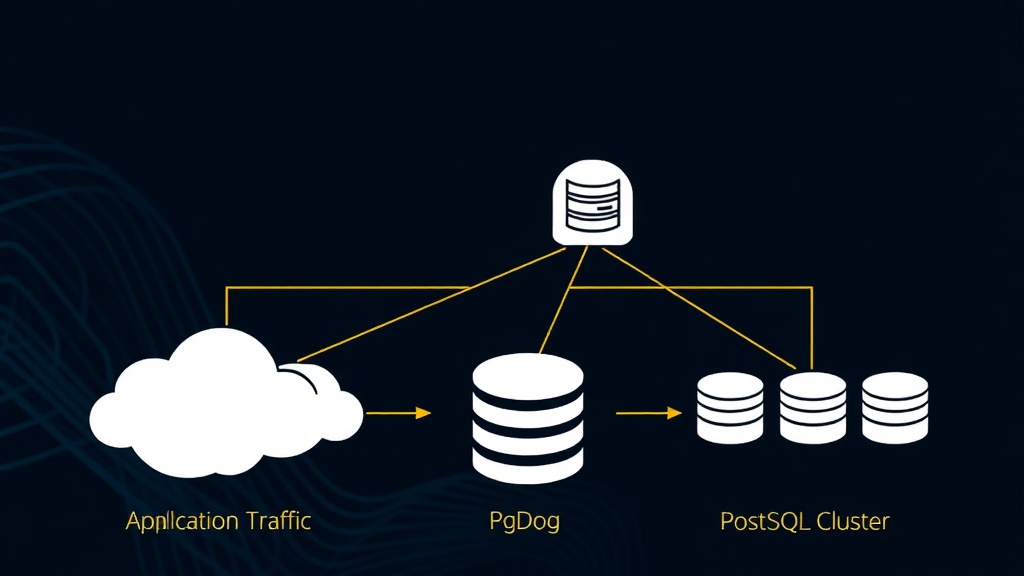
The core problem PgDog addresses is the inherent difficulty in scaling traditional relational databases as application loads increase. As read and write operations grow, database contention, slow queries, and connection pooling issues can cripple application performance. Traditional scaling methods often involve complex sharding, read replicas, or even migrating to entirely different database architectures, all of which demand significant application-level changes and development effort. This is where PgDog aims to differentiate itself by providing an abstraction layer that intercepts database traffic, optimizes it, and directs it to a scaled PostgreSQL cluster, all while presenting a unified, unchanged database interface to the application.
How PgDog Works: An Intelligent Proxy
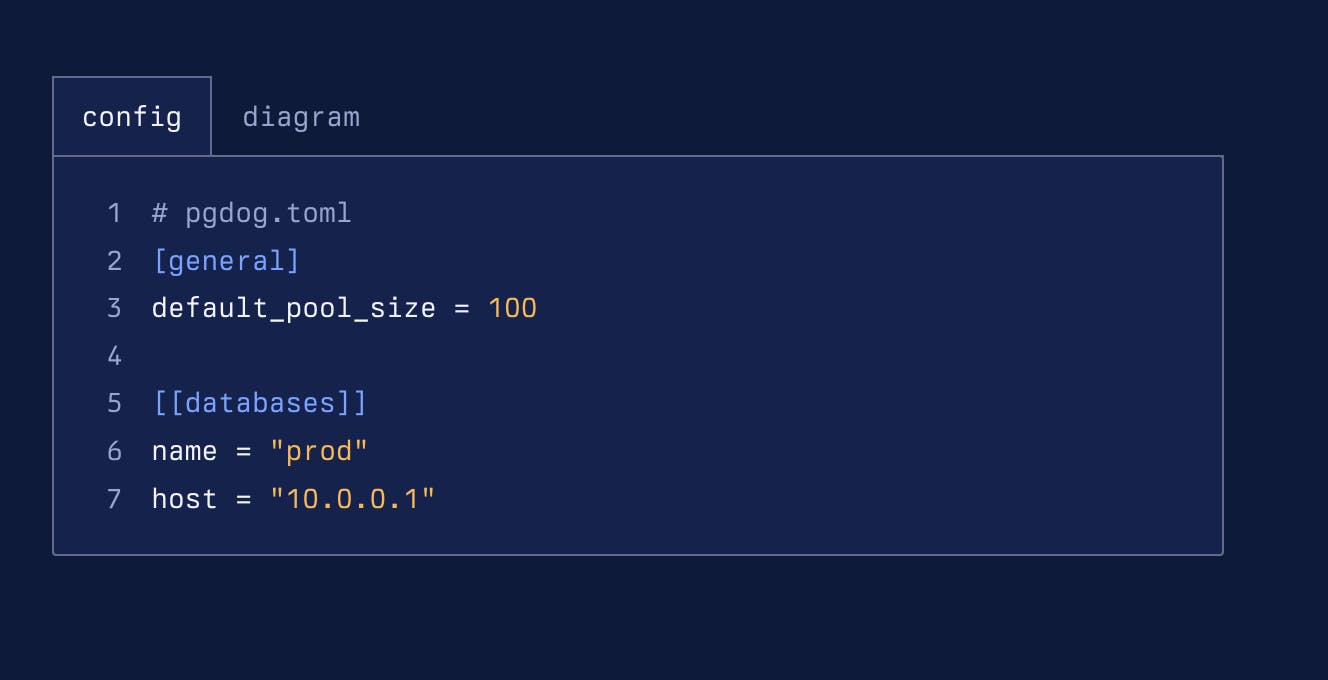
PgDog operates as a smart proxy that sits between your application and your PostgreSQL instances. Instead of your application connecting directly to a single PostgreSQL server or a basic load balancer, it connects to PgDog. PgDog then intelligently routes queries to an underlying PostgreSQL cluster. This cluster can be configured with multiple read replicas, sharded databases, or other advanced configurations that would normally require application-level awareness.
The magic lies in PgDog's ability to understand and optimize database traffic. It can perform query caching, intelligent connection pooling, and even route read-heavy queries to replicas while ensuring writes go to the primary instance. This abstraction means that an application that was previously talking to a single PostgreSQL database can now be pointed at PgDog, and PgDog handles the complexity of distributing the load across a much larger, more resilient, and performant PostgreSQL infrastructure. This significantly reduces the barrier to entry for scaling, as developers do not need to modify their ORM configurations, SQL queries, or data access logic.
Key Features and Benefits
PgDog touts several key features designed to make scaling PostgreSQL more accessible:
- Application Agnosticism: The primary benefit is the ability to scale without changing application code. This is achieved by presenting a standard PostgreSQL wire protocol, ensuring compatibility with existing applications, ORMs, and tools.
- Intelligent Query Routing: PgDog can differentiate between read and write queries. Read queries can be seamlessly directed to multiple read replicas, distributing read load effectively. Write queries are directed to the primary instance, maintaining data consistency.
- Connection Pooling: Efficiently manages database connections, reducing the overhead of establishing new connections for each request and preventing connection exhaustion on the database servers.
- Query Caching: For frequently executed, read-only queries, PgDog can cache results, serving them directly without needing to hit the database. This dramatically reduces database load for repetitive operations.
- High Availability and Load Balancing: By managing a cluster of PostgreSQL instances, PgDog can provide failover capabilities and distribute traffic to ensure consistent performance and availability.
- Observability: Provides insights into database traffic, query performance, and system health, helping users identify bottlenecks and optimize their configurations.
The advantage of this approach is clear: it allows organizations to leverage the power and familiarity of PostgreSQL while achieving the scalability and performance of more distributed or specialized database systems, without the associated development cost and complexity.
The Unanswered Question: Performance Overheads and Complexity
While PgDog's promise is compelling, a critical question remains unaddressed by the initial product announcement: what is the inherent performance overhead introduced by the proxy layer itself? Introducing any intermediary can add latency. For applications that are already pushing the boundaries of database performance, even a few milliseconds of added latency per query could become a significant bottleneck. Furthermore, while PgDog aims to simplify scaling, the configuration and management of the underlying distributed PostgreSQL cluster, even if abstracted, will still require a sophisticated understanding of database operations and distributed systems. The true test will be in how effectively PgDog can mask these complexities and maintain near-native PostgreSQL performance under heavy load.
Market Context and Competitors
The database proxy and scaling market is increasingly crowded. Solutions like ProxySQL, MaxScale, and cloud-native database offerings from AWS (RDS, Aurora), Google Cloud (Cloud SQL, AlloyDB), and Azure (Azure Database for PostgreSQL) already provide varying degrees of scaling and proxying capabilities. PgDog's key differentiator appears to be its focus on achieving significant scaling *without* requiring any application code changes, a pain point that many developers experience acutely. This positions it as a potentially attractive option for legacy applications or teams that cannot afford extensive refactoring cycles. However, it will need to demonstrate superior performance, ease of use, and cost-effectiveness compared to established players and managed cloud services to gain significant market traction.
Conclusion: A Promising Abstraction for PostgreSQL Scaling
PgDog introduces an ambitious solution to a pervasive problem in database management. By abstracting the complexities of scaling PostgreSQL behind an intelligent proxy, it offers a path to enhanced performance and availability without the need for disruptive application rewrites. If PgDog can deliver on its promise of near-transparent scaling with minimal performance overhead and a manageable operational footprint, it could become an invaluable tool for developers and operations teams struggling with database bottlenecks. The coming months will reveal how this product fares in real-world deployments and against the backdrop of increasingly sophisticated database scaling technologies.