The "Where Did I Read That?" Problem
In the rapidly evolving fields of AI, developer tools, and Web3, staying current means consuming a high volume of research papers. For product people and developers alike, the challenge isn't just reading the papers, but retaining the critical insights and remembering where specific findings originated. This is the core of the "context collapse" problem in academic and technical reading.
One product manager, reading approximately 30 papers a month, found himself spending 45 minutes searching for a specific finding from a paper read months prior. Traditional methods failed: browser history was too broad, Zotero felt cumbersome, Notion notes were buried, and Slack messages were a digital labyrinth. The paper was eventually found, but the time lost highlighted a systemic issue in managing technical literature.
This isn't a unique problem. Many tech professionals face a similar scenario: a dozen browser tabs open, each with a research paper, leading to a vague sense of having read material without recalling specific details or their implications. The bottleneck is not reading speed, but context retention across disparate research threads.
The Traditional Paper Reading Bottleneck
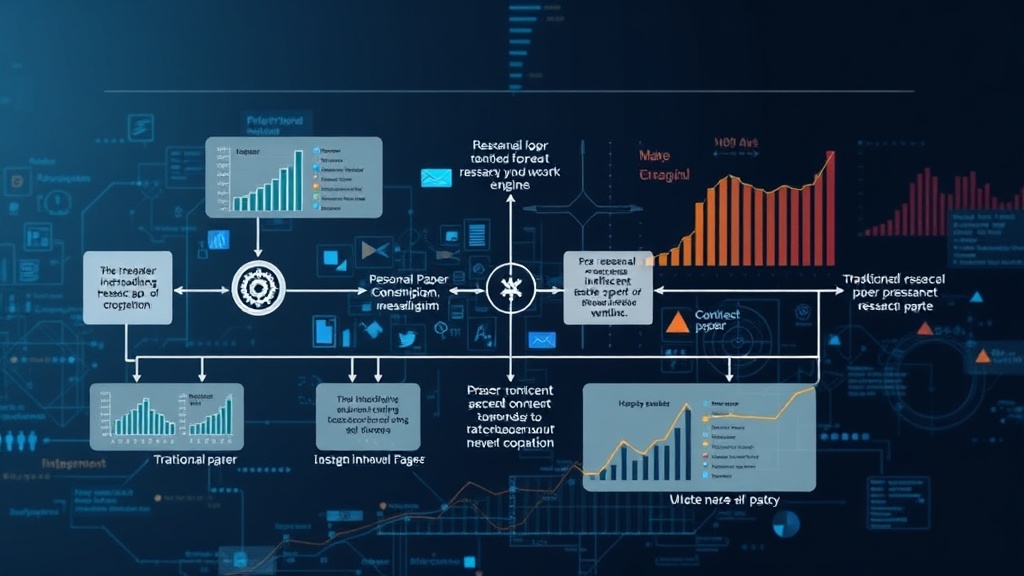
The conventional approach to engaging with research papers often follows a predictable, inefficient pattern:
- Download PDF: The initial step involves acquiring the document, often as a PDF.
- Abstract Screening: The abstract is read to quickly assess relevance.
- Introduction Skim: The introduction is reviewed, often with a focus on identifying the methodology.
- Results Jump: Readers frequently jump directly to the results section to extract key numbers or findings.
- Context Loss: Crucially, understanding of specific sections, like methodology (3.2), is often lost by the time the reader moves on.
- Repetition: This cycle repeats for multiple papers, leading to a superficial understanding and a failure to build a cohesive knowledge base.
The outcome is a vague sense of having processed information, rather than a deep, retrievable understanding. The issue lies not in the ability to read quickly, but in the brain's limited capacity to maintain context and connections between multiple, disconnected research documents simultaneously. This is where tools designed for traditional document management fall short.
Paperlist.ai's Differentiated Approach
Paperlist.ai tackles this context collapse by fundamentally changing how research papers are treated and interacted with. Instead of viewing papers as static, monolithic PDFs to be downloaded and filed, paperlist.ai abstracts the core components of research into a more manageable and interconnected format.
The platform treats each paper not as an indivisible unit, but as a collection of distinct, searchable elements. This includes key components such as:
- Abstracts: Concise summaries providing an initial overview.
- Methodologies: Detailed descriptions of how the research was conducted.
- Key Findings: The primary results and conclusions derived from the research.
- Data Points: Specific numerical or qualitative results presented in the paper.
By parsing and indexing these specific elements, paperlist.ai allows users to quickly search and retrieve information not just by paper title or keyword, but by the specific content within a paper. This granular approach enables users to connect ideas across multiple sources more effectively. For instance, a user could search for all papers that employed a specific machine learning technique, or all papers that reported a particular benchmark metric, regardless of their original titles or publication dates.
This method transforms the research consumption process from a passive, linear activity into an active, query-driven exploration. It allows for the rapid retrieval of specific information, facilitating the synthesis of knowledge and the application of findings in new contexts. The system aims to move beyond mere digital archiving to active knowledge management, where individual research papers become nodes in a personal, searchable knowledge graph.
Beyond Simple Archiving: Building a Knowledge Graph
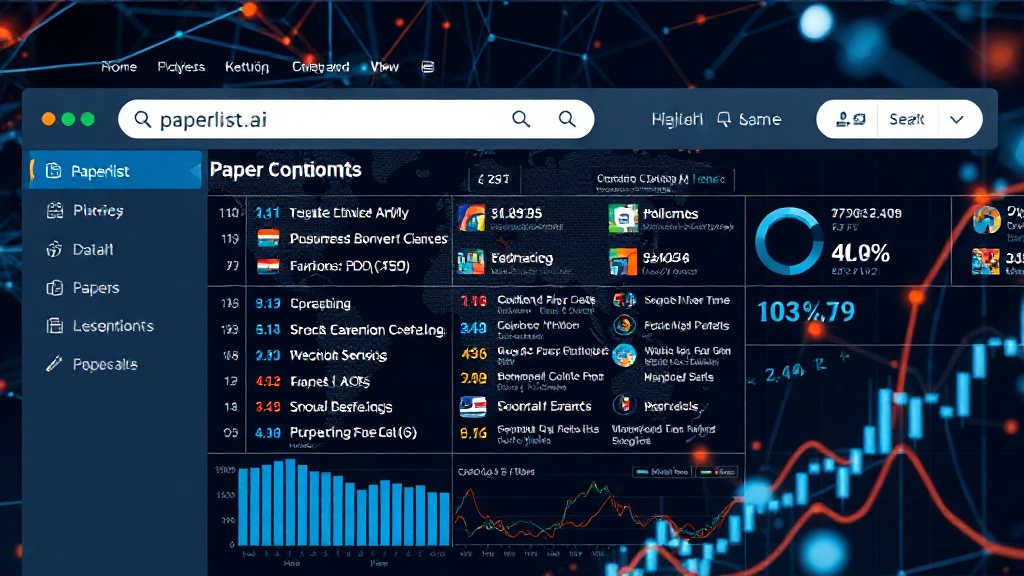
The core innovation of paperlist.ai, as described by its proponents within the OpenNomos ecosystem, lies in its ability to transform a collection of research papers into a dynamic, interconnected knowledge base. This is achieved through a combination of structured data extraction and a user interface designed for recall and synthesis.
Unlike traditional reference managers that primarily store PDFs and bibliographic data, paperlist.ai aims to create a semantic layer over research content. This involves extracting not just metadata, but also the substantive contributions of each paper. The platform parses abstracts, identifies methodologies, pulls out key findings, and indexes specific data points. This granular indexing means that a search query can return results based on the actual content of the papers, not just their titles or keywords.
Consider the