
Perseverance's Autonomous Journey on the Red Planet
NASA's Perseverance rover, a marvel of engineering and artificial intelligence, has achieved a significant milestone on its mission to explore the Jezero Crater on Mars. Approximately 90 percent of the total distance covered by the rover since its landing has been driven autonomously. This remarkable feat underscores the sophistication of the rover's navigation and decision-making systems, allowing it to operate with minimal direct human intervention across the challenging Martian terrain.
The primary objective of the Perseverance mission is to seek signs of ancient microbial life and collect samples of rock and regolith for potential return to Earth. To achieve these ambitious goals, the rover is equipped with an array of scientific instruments, including cameras, spectrometers, and drills. However, the sheer scale of the Martian landscape and the communication delays between Earth and Mars necessitate a high degree of autonomy for efficient exploration. The rover's ability to navigate complex environments, avoid obstacles, and select scientifically interesting targets without constant real-time commands from Earth is crucial for maximizing its scientific output.
The Technology Behind Autonomous Martian Navigation
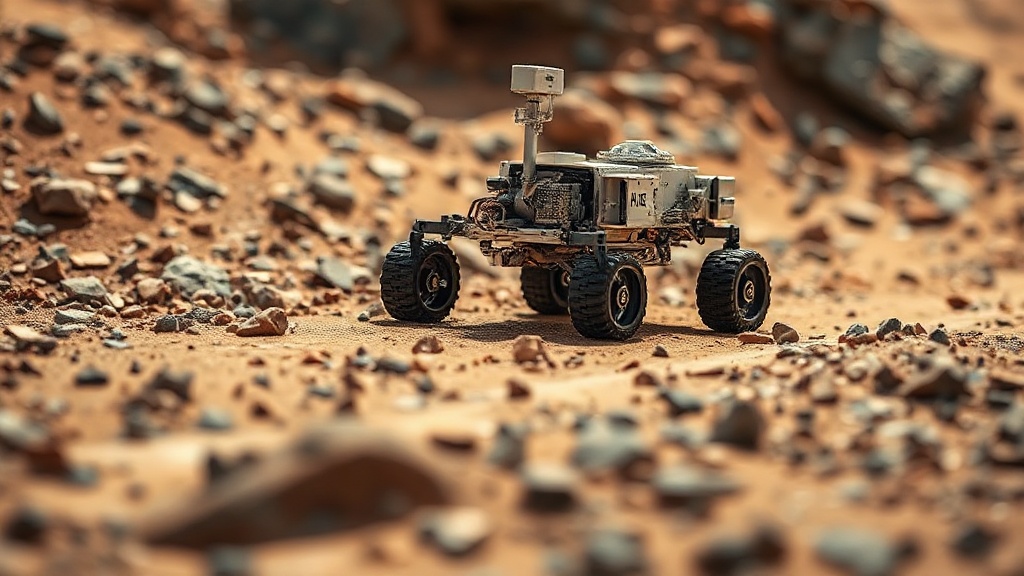
The autonomous driving capability of Perseverance is powered by a sophisticated suite of hardware and software. At its core is the AutoNav system, which processes data from the rover's stereo cameras and inertial measurement unit (IMU) to build a 3D map of the surrounding terrain. This map is then used to identify safe paths forward, avoiding hazards such as large rocks, steep slopes, and soft sand traps. The rover can analyze its surroundings, identify potential dangers, and plot a course around them in near real-time.
Unlike previous Mars rovers, which relied more heavily on Earth-based commands for navigation, Perseverance is designed to make more on-the-spot decisions. This increased autonomy is critical for covering more ground and performing more science in the limited time available. The rover's onboard computers can process vast amounts of data from its sensors, enabling it to identify geological features of interest and even adjust its path to investigate them without waiting for instructions from mission control. This allows for a more dynamic and responsive exploration strategy, akin to how a human geologist might explore an unknown territory.
The development of AutoNav represents a significant leap forward in planetary exploration robotics. It builds upon the lessons learned from earlier missions, such as Spirit and Opportunity, which, while highly successful, had more limited autonomous capabilities. The success of Perseverance's autonomous driving is a testament to years of research and development in AI, robotics, and space exploration technologies. The ability to cover significant distances autonomously means that the scientific team can focus on analyzing the data and planning the next steps of the mission, rather than spending valuable time and resources on routine driving commands.
Implications for Future Mars Missions and Beyond
The success of Perseverance's autonomous operations has profound implications for future robotic exploration. It validates the approach of developing highly intelligent and self-sufficient spacecraft that can operate effectively despite communication lags and the inherent uncertainties of exploring alien worlds. This enhanced autonomy will enable future missions to cover more ground, explore more diverse and challenging environments, and collect more comprehensive scientific data.
Looking ahead, this technology could be crucial for future human missions to Mars. Autonomous systems can assist astronauts with navigation, hazard avoidance, and even perform routine tasks, freeing up human crews to focus on critical scientific research and exploration. The ability of a rover to independently scout ahead, identify safe routes, and assess potential landing sites could significantly reduce risks and increase the efficiency of human expeditions.
Furthermore, the advancements in AI and robotics demonstrated by Perseverance have applications far beyond Mars. The sophisticated algorithms and hardware developed for the rover can be adapted for autonomous vehicles on Earth, advanced robotics in hazardous environments, and other complex AI-driven systems. The lessons learned from navigating the Red Planet will undoubtedly pave the way for greater autonomy in a wide range of technological fields, pushing the boundaries of what machines can achieve.
The 90% autonomous driving statistic is not merely a number; it represents a paradigm shift in how we conduct planetary exploration. It means that Perseverance is not just a remote-controlled vehicle but a highly capable robotic explorer, making intelligent decisions on its own. This level of autonomy allows the rover to be more productive, more adaptable, and ultimately, more successful in its scientific endeavors. The mission continues to push the frontiers of science and technology, with its autonomous capabilities playing a central role in its ongoing discoveries.