Introducing Pepsi Page Builder
Developer Ebrahim Elmwafy has launched Pepsi Page Builder, an open-source web page creation tool built with React. The project aims to provide a lightweight yet extensible platform for users to design responsive web layouts visually. Available under the MIT License, Pepsi Page Builder offers a drag-and-drop interface combined with an architecture designed for developer customization.
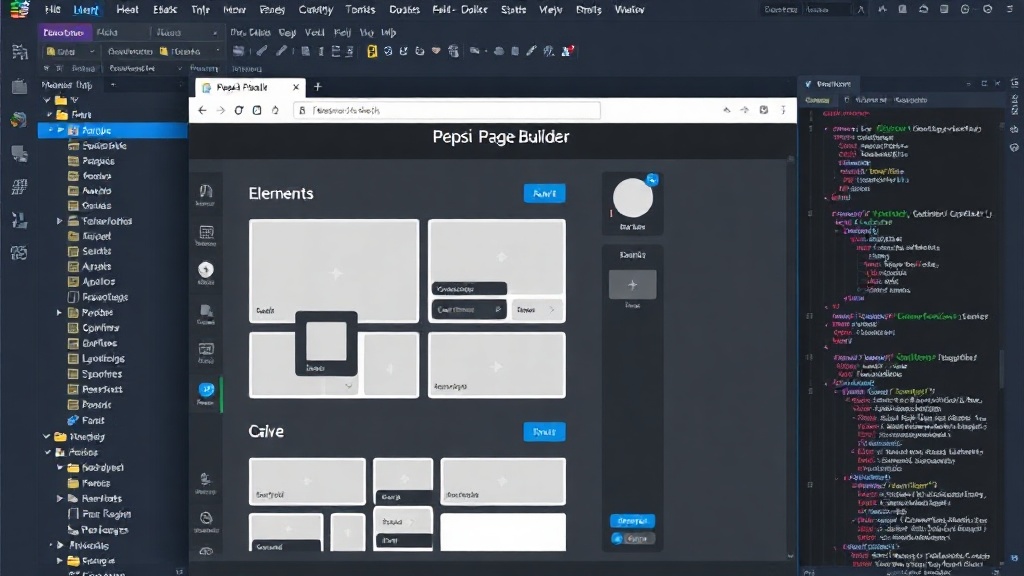
The core of Pepsi Page Builder is its visual editing capability. Users can arrange custom elements on a page through a drag-and-drop mechanism, allowing for rapid prototyping and content structuring without direct code manipulation. This visual approach is intended to democratize web design, making it accessible to a broader range of users, including those without deep coding expertise. The tool focuses on generating clean, optimized layout output, crucial for performance-sensitive web applications.
Extensibility for Developers
A key design principle behind Pepsi Page Builder is its extensibility. Developers can integrate their own custom components into the builder, expanding its functionality beyond the default elements. This modular approach means the tool can be adapted to various project needs, from simple landing pages to more complex application interfaces. The architecture facilitates plugging in new UI elements, widgets, or even entirely new editing functionalities.
The tech stack is straightforward, primarily leveraging React and JavaScript for the frontend logic. For styling, the project supports integration with CSS frameworks, with Tailwind CSS being a prominent example. This flexibility in CSS allows teams to maintain brand consistency and adhere to existing project styling guidelines. The choice of React positions the builder within a popular and robust JavaScript ecosystem, making it easier for developers to understand, contribute to, and integrate with existing React projects.
Performance and Open Source Ethos
Performance is a stated priority for Pepsi Page Builder. The project emphasizes being lightweight, which translates to faster load times for both the builder interface and the generated web pages. This focus on optimization is critical in today's web development landscape, where user experience is heavily influenced by page speed. The clean layout output ensures that the generated HTML and CSS are efficient and maintainable, avoiding bloat often associated with complex visual editors.
Being open-source under the MIT License is central to Elmwafy's vision for the project. This permissive license encourages widespread adoption, modification, and contribution from the developer community. Open-source projects like this foster collaboration, allowing for rapid iteration and improvement driven by a diverse group of contributors. It also means businesses and individuals can use, adapt, and distribute the software freely, reducing barriers to entry for creating visually rich web experiences.
Usage and Potential Applications
Pepsi Page Builder is suitable for a variety of use cases. Small businesses can use it to quickly create professional-looking websites and landing pages. Marketing teams can leverage its visual interface for rapid campaign page creation. Developers can integrate it into larger applications as a white-label solution for content management or user-facing customization features. The ability to extend the component library means it can grow with a project's complexity.
The live demo, accessible at https://pepsi-beige.vercel.app/, provides a hands-on experience with the builder's capabilities. The GitHub repository, linked within the original Dev.to post, contains the source code, documentation, and contribution guidelines. This transparency allows developers to inspect the codebase, understand its inner workings, and contribute improvements. The project represents a practical application of React for building user-friendly interfaces that abstract away complex web development details.
The Road Ahead
While Pepsi Page Builder is presented as a lightweight and extensible solution, its future development will likely depend on community engagement and contributions. The success of such open-source tools often hinges on active maintenance, feature requests, and bug fixes from a dedicated user base. Elmwafy's initiative provides a solid foundation, and its adoption by other developers could lead to a rich ecosystem of custom components and integrations. The project addresses a common need for accessible yet powerful web design tools, positioning itself as a valuable asset in the open-source development landscape.