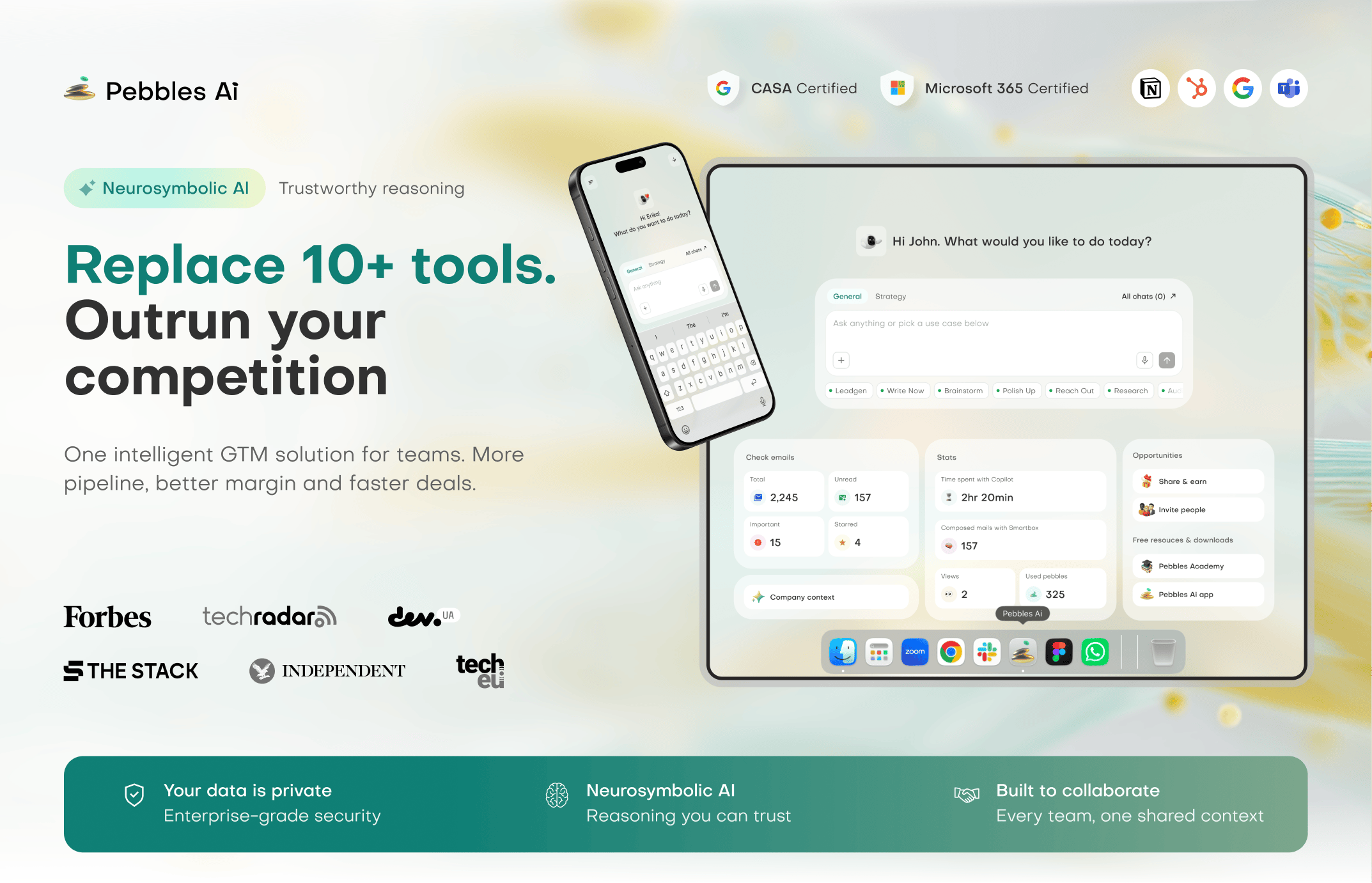
Pebbles AI: A New Frontier in Sales Automation
Pebbles AI has entered the market with a new AI-powered sales platform aimed at modern B2B teams. The platform promises to enhance sales productivity by automating key aspects of the sales workflow. In a landscape increasingly dominated by AI-driven solutions, Pebbles AI positions itself as a tool to help sales professionals focus on high-value activities rather than getting bogged down in repetitive tasks.
The core proposition of Pebbles AI is to leverage artificial intelligence to assist sales teams in managing their pipelines, engaging with prospects, and closing deals more efficiently. This move comes at a time when B2B sales cycles can be complex and lengthy, often requiring significant manual effort across multiple touchpoints. By integrating AI, the platform aims to provide insights, automate communication, and optimize outreach strategies.
Key Features and Functionality
While specific details on the full feature set are emerging, the platform is designed around several key pillars that address common pain points in B2B sales:
- Automated Prospecting and Lead Qualification: Pebbles AI aims to identify and qualify potential leads by analyzing various data sources, reducing the manual effort required for lead generation. This allows sales representatives to concentrate on prospects with a higher likelihood of conversion.
- Intelligent Communication and Engagement: The platform is expected to offer AI-driven tools for crafting personalized outreach messages, scheduling follow-ups, and managing customer interactions across different channels. This could include AI-assisted email writing, automated response suggestions, and intelligent chatbot integration for initial prospect engagement.
- Pipeline Management and Forecasting: By analyzing sales data, Pebbles AI intends to provide clearer visibility into the sales pipeline, predict deal outcomes, and identify potential bottlenecks. This data-driven approach helps sales managers make more informed decisions and allocate resources effectively.
- Performance Analytics and Optimization: The platform will likely offer robust analytics to track sales performance, identify trends, and provide actionable insights for optimizing sales strategies. This continuous feedback loop is crucial for adapting to market dynamics and improving team effectiveness.
The AI Advantage in B2B Sales
The integration of AI into sales platforms is not entirely new, but Pebbles AI is focusing on a modern, streamlined approach. Traditional CRM systems often require extensive customization and manual data entry, which can be time-consuming. Pebbles AI aims to abstract away much of this complexity, offering an intuitive interface that allows sales teams to get up and running quickly.
Consider the process of lead nurturing. A salesperson might spend hours researching a prospect, crafting a personalized email, and then scheduling a follow-up. Pebbles AI aims to automate significant portions of this. It can analyze a prospect's online activity, identify key decision-makers, and even draft initial outreach emails tailored to their industry and role. This frees up the salesperson to engage in deeper conversations, build relationships, and handle more complex negotiations.
The platform's focus on modern B2B teams suggests an understanding of current sales methodologies, such as account-based selling and value-based selling. AI can play a critical role in these strategies by identifying high-value accounts, understanding their specific needs, and tailoring outreach accordingly. This level of personalization at scale is a significant challenge for human sales teams alone, making AI a powerful enabler.
Market Context and Future Implications
The B2B sales technology market is crowded, with established players like Salesforce, HubSpot, and Gong. However, there is a clear demand for solutions that can simplify sales processes and deliver tangible ROI through AI. Pebbles AI is entering this space with the goal of offering a more focused, AI-native solution.
What remains to be seen is how Pebbles AI differentiates itself in terms of its AI models, data privacy, and integration capabilities. The success of such a platform hinges on its ability to accurately predict prospect behavior, generate effective communication, and provide actionable insights without overwhelming the user. Early adopters will likely be looking for concrete evidence of improved conversion rates, shorter sales cycles, and increased rep productivity.
For B2B sales teams, the adoption of platforms like Pebbles AI signifies a shift towards a more data-driven and automated approach. It suggests a future where AI acts not just as a tool, but as a collaborative partner, augmenting human capabilities and driving better business outcomes. The challenge for Pebbles AI will be to deliver on this promise and prove its value in a competitive and rapidly evolving market.