%22%20%2F%3E%0A%20%20%3C%2Fsvg%3E)
The Genesis of PCjs Machines
PCjs Machines is an ambitious open-source project dedicated to preserving and making accessible the history of personal computing. It provides a suite of web-based emulators that allow users to run vintage operating systems and software directly within their web browser. This initiative is not merely an archival effort; it's a living platform designed for education, nostalgia, and technical exploration. The project aims to democratize access to computing history, allowing anyone with an internet connection to experience the machines that shaped the digital age.
The core of PCjs Machines is its emulation technology. Developed with a deep understanding of the original hardware, these emulators accurately replicate the behavior of processors, memory, peripherals, and graphics chips of classic computers. This meticulous approach ensures that the software runs as it would have on the original hardware, offering an authentic experience. The project focuses on a wide range of systems, from early IBM PCs and their contemporaries to more specialized machines.
Core Features and Supported Systems
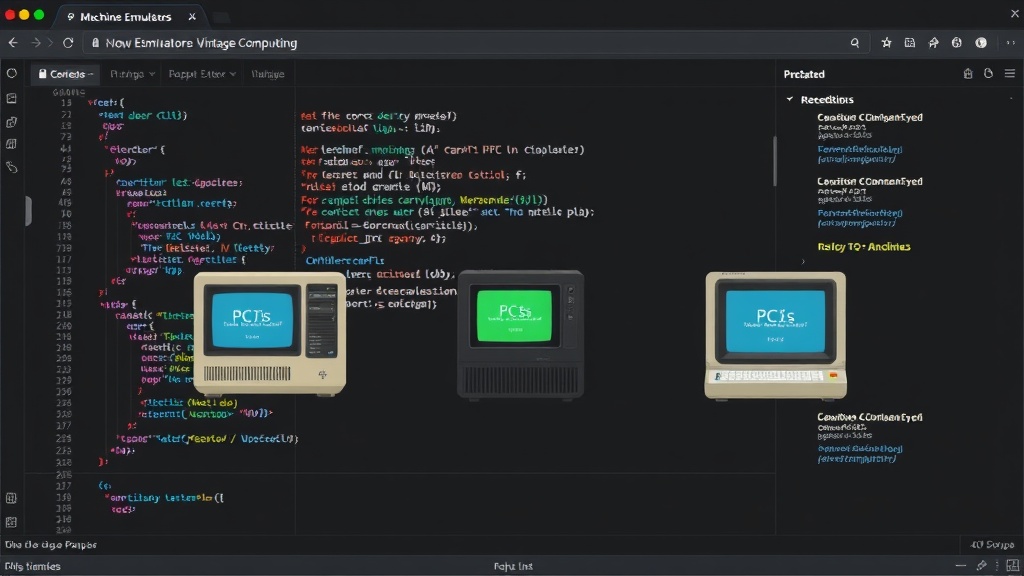
PCjs Machines supports an impressive array of vintage computing platforms. At its heart are emulators for the IBM PC and its successors, enabling users to boot MS-DOS, PC-DOS, and various early versions of Windows. This includes iconic systems like the IBM PC XT and AT, allowing enthusiasts to relive the command-line interfaces and foundational applications of the 1980s.
Beyond the standard IBM PC architecture, the project extends its reach to other significant systems. This includes emulators for machines like the Amstrad CPC, the Sinclair ZX Spectrum, and various CP/M-based systems. Each emulator is a standalone piece of software, but they are integrated into a cohesive platform accessible via the PCjs Machines website. Users can select a machine, load a disk image, and begin interacting with the historical software.
The project also emphasizes the ability to load custom disk images. This feature is crucial for users who wish to experiment with specific software configurations, historical applications, or even run their own legacy programs. The emulators support various disk image formats, making it relatively straightforward to bring your own historical software into the PCjs environment. This flexibility transforms the platform from a passive museum into an interactive laboratory.
Technical Underpinnings and Development
The technical foundation of PCjs Machines is built on modern web technologies, primarily JavaScript. This choice allows the emulators to run directly in the browser without requiring any plugins or downloads, making them instantly accessible. The developers have invested considerable effort in optimizing the JavaScript code for performance, ensuring that even complex emulations run smoothly on contemporary hardware.
The project is open-source, hosted on platforms like GitHub. This transparency invites collaboration and contributions from the community. Developers can examine the source code, identify bugs, suggest improvements, or even add support for new systems. The modular design of the emulators facilitates this collaborative development process. Each component, from the CPU emulation to the I/O handling, is designed to be manageable and extensible.
A significant challenge in emulation is accurately replicating the timing and behavior of the original hardware. PCjs Machines tackles this by employing sophisticated techniques to model the clock speeds, interrupt handling, and peripheral responses. This attention to detail is what differentiates PCjs Machines from simpler simulators; it aims for fidelity. The project also includes tools for debugging and analyzing the emulated systems, providing valuable insights for developers and historians.
Use Cases and Community
The utility of PCjs Machines spans several domains. For developers, it offers a convenient way to test and understand legacy code or to develop new applications that might interact with historical systems. Security researchers can use it to analyze old vulnerabilities in a controlled, sandboxed environment without risking actual hardware. Educators can leverage it to demonstrate the evolution of computing to students, providing hands-on experience with systems that are otherwise inaccessible.
For hobbyists and enthusiasts, PCjs Machines is a treasure trove. It allows for rediscovery of cherished software, exploration of operating systems that defined an era, and a deeper appreciation for the ingenuity of early computer pioneers. The ability to share specific machine states or disk images further enhances the community aspect, allowing users to collaborate on historical software challenges or simply share their discoveries.
The project's Hacker News presence indicates a strong interest from the technically savvy audience. Discussions often revolve around specific machine implementations, potential new systems to emulate, and the technical challenges involved. This active community engagement is vital for the project's continued growth and relevance. The developers themselves are active participants, responding to feedback and guiding the project's direction.
The Future of PCjs Machines
The ongoing development of PCjs Machines promises further expansion. With a robust open-source framework, the potential for adding more systems and features is vast. Future work may include enhanced networking capabilities for emulated systems, improved graphics rendering, and broader support for a wider range of peripherals and software. The project's commitment to web-based accessibility ensures that the rich history of personal computing remains available to future generations.
What remains to be seen is how PCjs Machines will integrate with emerging trends in digital preservation and historical computing. As physical hardware continues to degrade, projects like this become increasingly critical. The challenge will be to maintain the accuracy and performance of the emulators as web technologies evolve and as the demand for more complex historical systems grows.