Pasqal's Ambitious Nasdaq IPO and Valuation
Paris-based quantum computing scaleup Pasqal has publicly disclosed a wealth of financial and operational details as it gears up for a New York Nasdaq listing later this year. The company’s Securities and Exchange Commission (SEC) filings paint a picture of significant investment, a substantial valuation, and a complex ownership structure that includes notable French state involvement.
Pasqal is pursuing a SPAC (Special Purpose Acquisition Company) merger with Quantum Acquisition Company (QAC), a deal expected to inject over $500 million into the company. This SPAC route, while common, often involves intense scrutiny of the target company's financials and future prospects. The filings reveal Pasqal's aggressive growth trajectory and its ambition to become a dominant player in the nascent quantum computing market. The valuation implied by the SPAC deal, reportedly around 100 times its current revenue, signals immense investor confidence, or perhaps, a significant degree of speculative optimism in the quantum sector.
The company's financial disclosures highlight substantial revenue growth, with reported revenues of €1.1 million in 2023, a significant jump from €0.2 million in 2022. Projections for 2024 estimate revenues reaching €3.4 million, with a further leap to €68.3 million by 2025. These figures, while impressive in percentage terms, represent a small base compared to the billions in market capitalization anticipated. Pasqal also reported significant operational expenses, including €55k in R&D in 2018, which have scaled considerably with its growth.
Funding and Investor Landscape
The SPAC filing outlines Pasqal's fundraising history, including a €16.3 million Series A round in 2021 and a subsequent €25 million Series B in 2022. The current transaction with QAC is structured to provide approximately $500 million in gross proceeds. This capital infusion is earmarked for continued research and development, scaling manufacturing capabilities, and expanding its commercial operations globally.
The filings also detail the ownership stakes post-merger. French state-backed entities, including the sovereign wealth fund Bpifrance, are set to hold a significant portion of Pasqal's shares. Bpifrance, a key investor, is expected to retain approximately 15.4% of the combined company, while the French sovereign fund Caisse des Dépôts et Consignations (CDC) will hold around 9.5%. Other significant shareholders include the European Innovation Council (EIC) and private investors. This substantial state ownership raises questions about potential French state influence over the company's strategic decisions, particularly as it operates on a global stage and targets sensitive industries.
Technological Approach and Market Position
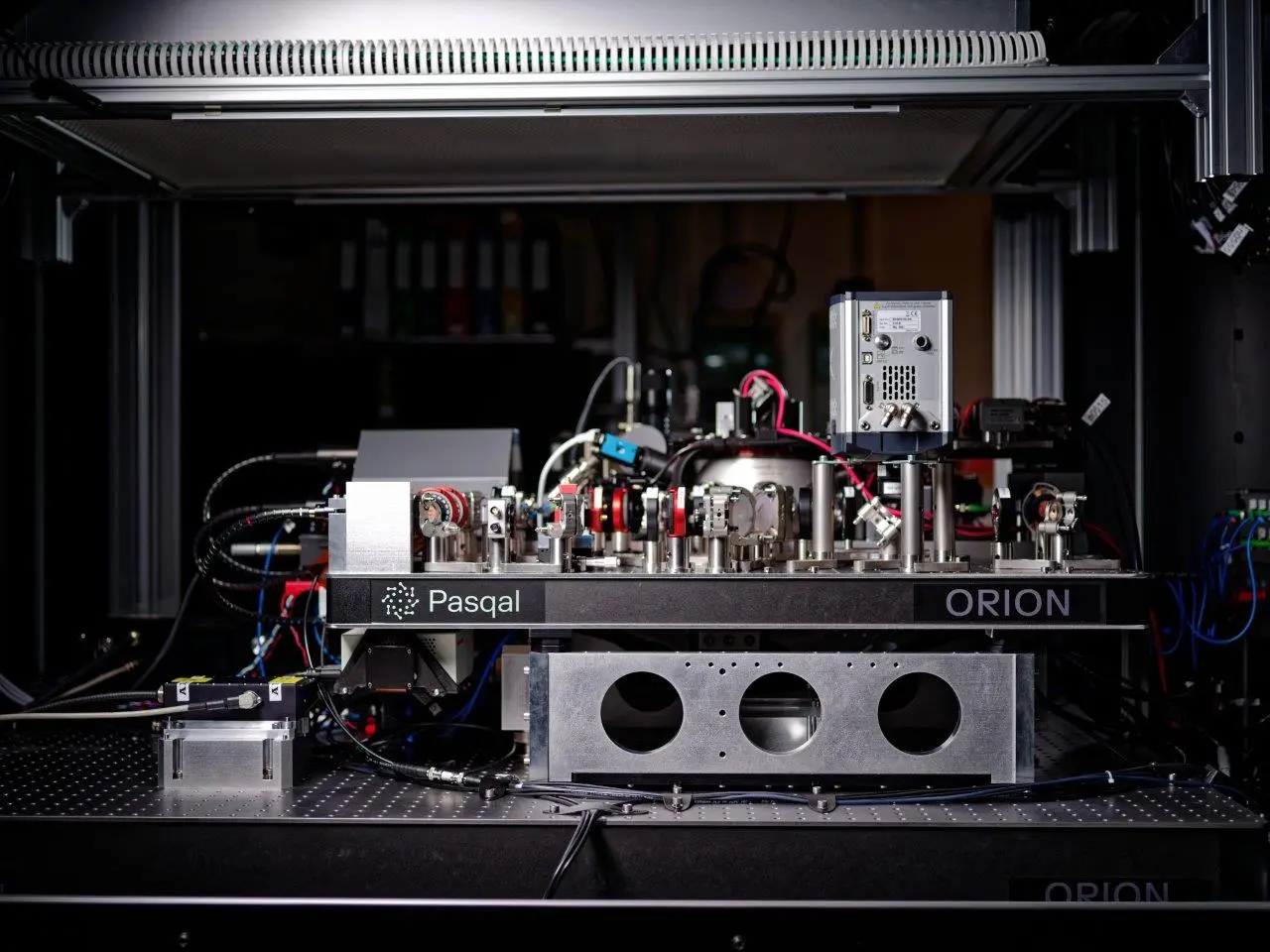
Pasqal differentiates itself by focusing on neutral-atom quantum computing technology. Unlike superconducting qubits or trapped ions, neutral atoms offer a potentially scalable and more robust platform. The company's processors are designed to address complex problems in areas such as drug discovery, materials science, and financial modeling. Their approach leverages laser beams to trap and manipulate neutral atoms, forming qubits that can perform computations.
The company's competitive landscape includes giants like IBM, Google, and Microsoft, as well as numerous other startups vying for dominance. Pasqal's strategy appears to be centered on developing quantum processors that can solve specific, high-value problems for enterprise clients, rather than aiming for a general-purpose quantum computer in the immediate future. This targeted approach, focusing on applications like optimization and simulation, could provide a faster path to commercial viability.
Risks and Disclosures
The SPAC filings are inherently forward-looking and laden with risk disclosures. Pasqal acknowledges the inherent uncertainties of the quantum computing market, including the long development cycles, the need for significant ongoing investment, and the potential for technological obsolescence. A notable risk highlighted is the concentration of ownership by French state entities, which could lead to "political or regulatory influence" and potentially impact strategic decisions, especially concerning international partnerships or intellectual property.
The company also disclosed significant operating losses, with a net loss of $23.7 million in 2023 on revenues of $1.1 million. This burn rate underscores the critical importance of the SPAC funding for its continued operations and growth. The filings also detail executive compensation and stock options, indicating a substantial incentive structure for leadership. The valuation, while high, reflects the speculative nature of the quantum computing sector, where future potential often outweighs current financial performance. Investors are betting on Pasqal's ability to execute its ambitious roadmap and capture a significant share of a market that is still in its infancy.
Broader Implications for Quantum Computing
Pasqal's move towards a public listing is a significant event for the quantum computing industry. It signals a maturing market capable of attracting substantial public capital. The success of this SPAC deal could pave the way for other quantum startups to follow suit, providing much-needed liquidity and investment for further innovation. However, the disclosures also bring to the forefront the unique challenges faced by companies in this sector, including the high cost of development, the long road to profitability, and the complex interplay between technological advancement, market adoption, and geopolitical considerations.
The emphasis on state backing and the associated risks of political influence are not unique to Pasqal but are amplified by the strategic importance of quantum computing. As nations increasingly view quantum technology as a matter of national security and economic competitiveness, the lines between private enterprise and state interest are likely to blur further. For developers and researchers, this means a landscape shaped not only by technical breakthroughs but also by regulatory frameworks and national industrial policies. For founders, it presents both opportunities for state-backed funding and challenges related to autonomy and international collaboration.
The valuation, while striking, is not entirely out of step with the high-risk, high-reward nature of deep tech investments. Investors are pricing in the transformative potential of quantum computing, accepting that profitability may be years away. This SPAC filing serves as a crucial data point, offering an unprecedented look into the financial realities and strategic considerations of a leading quantum computing company as it navigates the path to public markets.