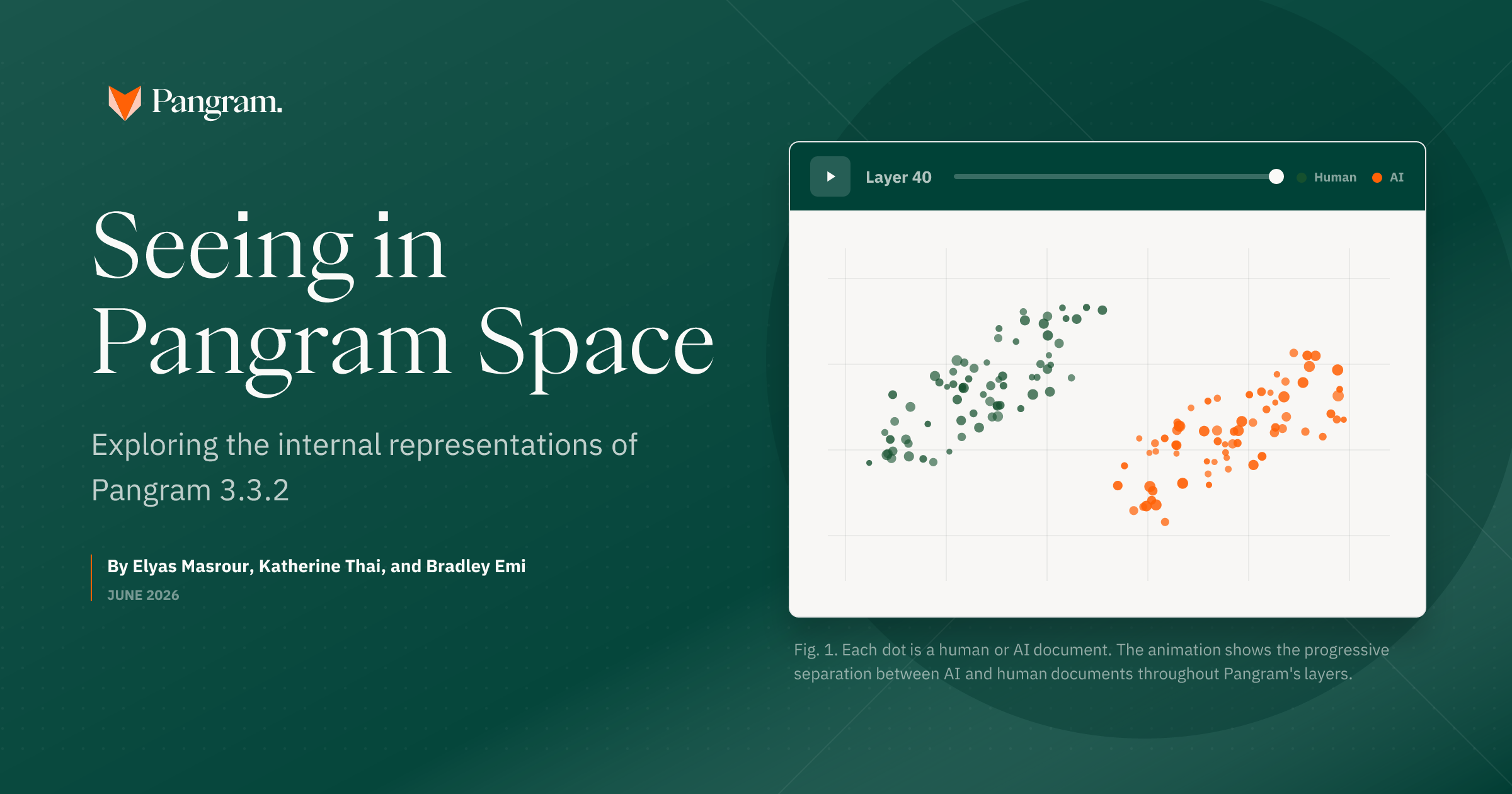
Unveiling Pangram 3.3.2's Latent Space
Pangram 3.3.2, the latest iteration of the widely adopted generative AI model, has long been a black box to its users. While its outputs are impressive, the underlying mechanisms that produce them have remained largely speculative. A new paper, shared first on Hacker News, provides a comprehensive exploration of Pangram 3.3.2's internal representations, essentially mapping the model's "thought process" for various inputs. This research goes beyond surface-level performance metrics to understand how the model encodes information and makes decisions within its complex neural architecture.
The study focuses on dissecting the model's latent space – the high-dimensional internal vector space where information is processed. Researchers utilized a combination of dimensionality reduction techniques, probing methods, and adversarial attacks to visualize and interpret these representations. They found that Pangram 3.3.2 organizes concepts in a remarkably structured manner, with distinct clusters emerging for different types of data, such as text, code, and image embeddings, even when these are processed through a single unified model.
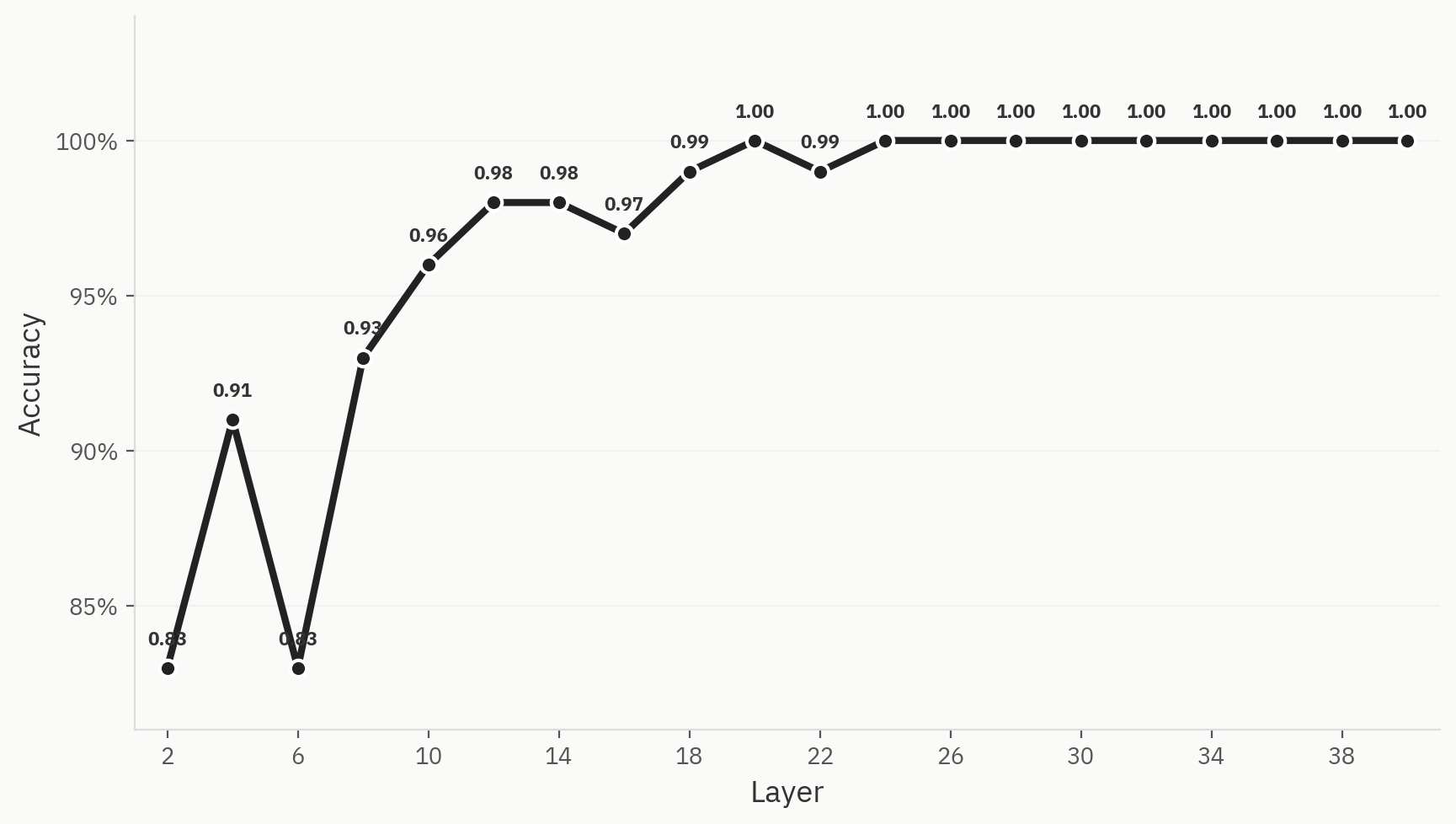
Deconstructing Conceptual Encoding
One of the key findings is the hierarchical nature of Pangram 3.3.2's conceptual encoding. Lower layers of the network appear to capture more primitive features – like edges and textures in image data, or n-grams in text. As information propagates through deeper layers, these primitives are combined to represent increasingly abstract concepts. For example, the model doesn't just represent the word "cat"; it learns a vector that encapsulates its properties (furry, animal, domestic, etc.) and relationships to other concepts (dog, pet, predator).
The research team specifically probed the model with a series of carefully crafted inputs designed to isolate specific semantic attributes. By observing how the model's internal activations changed, they could infer which dimensions of the latent space corresponded to concepts like sentiment, grammatical structure, or even factual knowledge. This allowed them to build a more granular understanding of what the model "knows" and how it leverages that knowledge.
What surprised the researchers was the degree of cross-modal representation. Even though Pangram 3.3.2 is primarily known for its text generation capabilities, the internal representations show clear signals for visual and auditory features when processing multimodal inputs. This suggests a more unified underlying representation than previously assumed, where different sensory modalities are mapped onto shared semantic axes. This is akin to how humans might describe a vibrant sunset using both visual and emotional language, with the model appearing to develop similar integrated conceptual frameworks.
Probing for Specific Knowledge and Biases
The paper also delves into the model's learned knowledge base and potential biases. By querying specific factual information and observing the resulting activations, the researchers could identify areas where Pangram 3.3.2's knowledge is robust and where it is more prone to hallucination or outdated information. This is crucial for understanding the reliability of the model in critical applications.
Furthermore, the study applied bias detection techniques to the latent space. They observed that certain demographic attributes or societal stereotypes, when implicitly present in the training data, manifest as discernible patterns within the internal representations. This is not necessarily a flaw unique to Pangram 3.3.2 but a common challenge in large language models. The detailed mapping provided by this research, however, offers a more precise target for future debiasing efforts, allowing developers to identify and potentially mitigate specific representational biases rather than addressing them broadly.
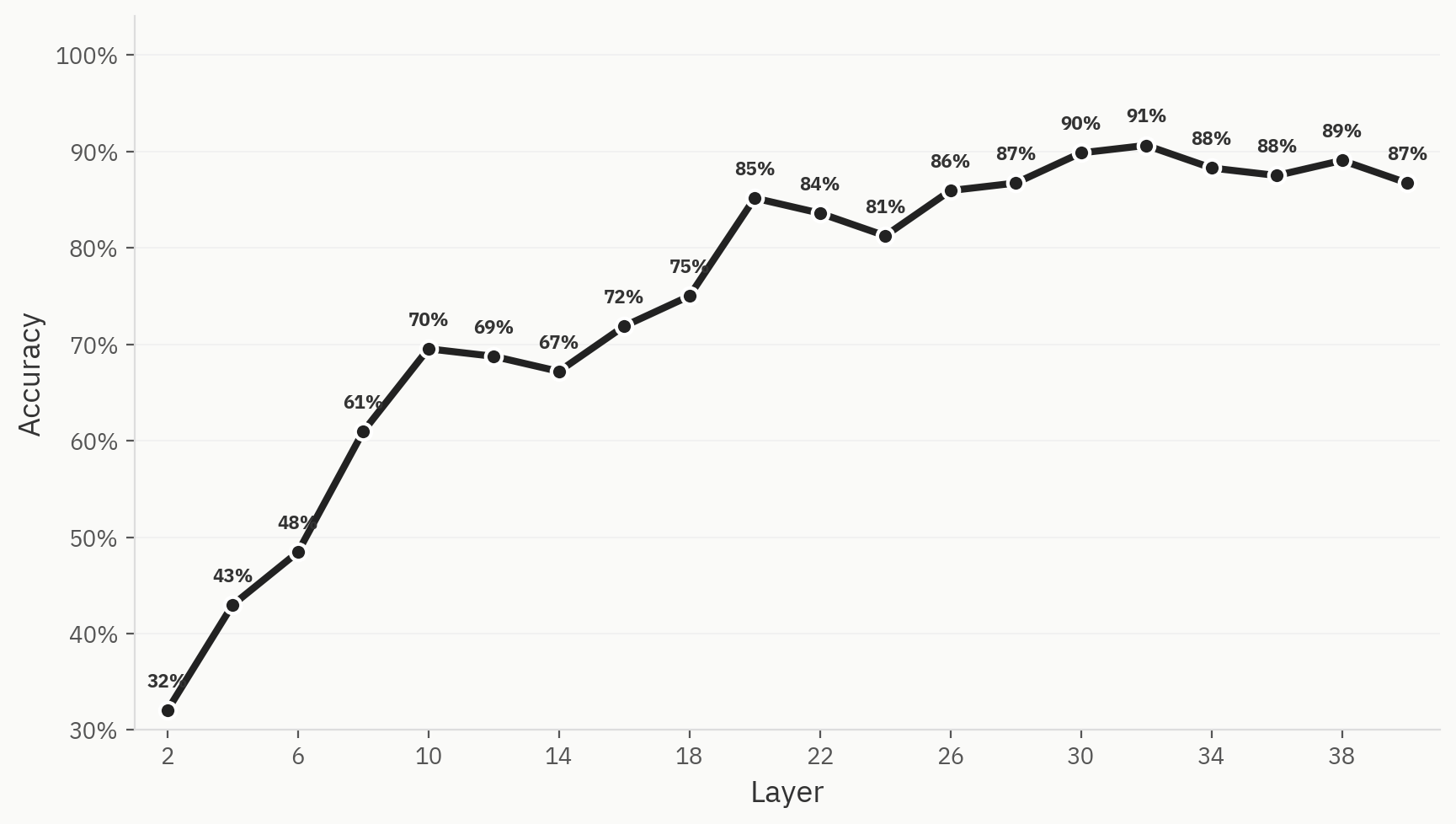
Implications for Developers and Researchers
Understanding these internal representations opens up new avenues for model interpretability and control. For developers building applications on top of Pangram 3.3.2, this knowledge can inform prompt engineering strategies, leading to more predictable and nuanced outputs. It also provides a basis for fine-tuning the model for specific tasks by targeting particular regions of the latent space.
For researchers, this work provides a critical benchmark for future model architectures. It poses the question: can we design models that are not only powerful but also inherently more interpretable and controllable from the ground up? The structured nature of Pangram 3.3.2's latent space suggests that such goals are achievable. The challenge now is to scale these interpretability techniques to even larger and more complex models, and to develop robust methods for actively shaping these internal representations to align with human values and objectives.
The Hacker News discussion around this paper highlights a strong community interest in these internal mechanics. Developers are eager to leverage this deeper understanding to push the boundaries of what's possible with generative AI, while ethicists and policymakers are keen to use such insights to ensure AI systems are developed and deployed responsibly. The exploration of Pangram 3.3.2's internal world is not just an academic exercise; it's a step towards building more transparent, reliable, and beneficial AI for everyone.