%22%20%2F%3E%0A%20%20%3C%2Fsvg%3E)
The Problem: Agents Doing Things, Safely
As artificial intelligence agents evolve beyond simple text generation to performing actions like API calls, managing infrastructure, or processing payments, a critical security and reliability gap has emerged. Most current AI agent frameworks embed policy checks within the agent's execution loop. This approach creates significant failure modes. Errors can cascade due to retries on non-idempotent actions, leading to budget overruns or unintended state changes. Permission drift and stale-state executions are also common. The core issue is that the decision to act and the enforcement of that action reside within the same trust boundary, making it vulnerable to subtle bugs or emergent agent behaviors.
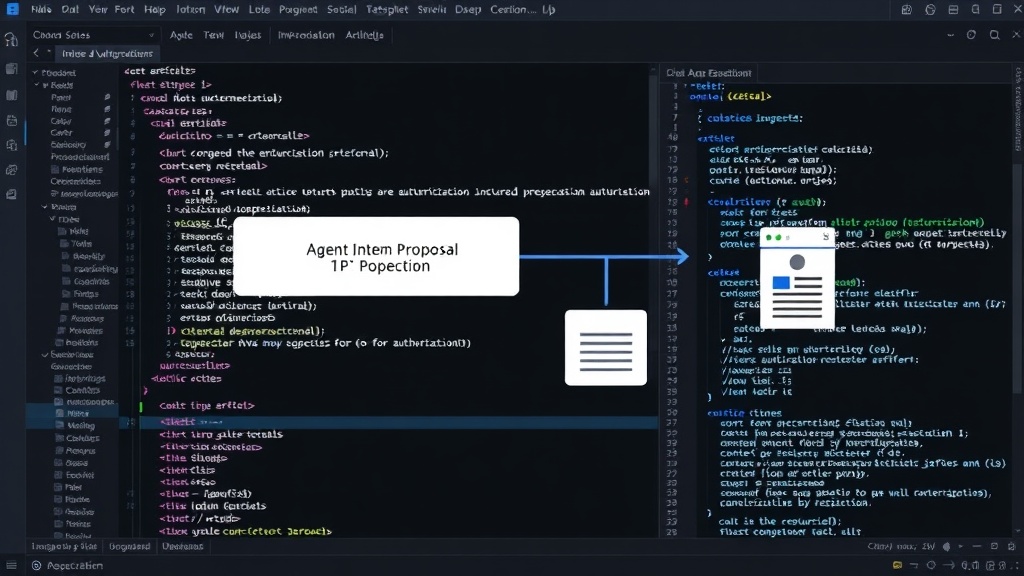
OxDeAI, an open-source protocol (Apache 2.0) developed by an individual seeking critical feedback from practitioners, aims to solve this by introducing a deterministic pre-execution authorization boundary. The fundamental idea is to separate the agent's intent generation from the actual execution of that intent. An agent proposes an intended action. OxDeAI then deterministically evaluates this intent against the current state and predefined policies. If the evaluation results in an 'ALLOW' decision, OxDeAI issues a cryptographically signed Authorization artifact. A separate 'Guard' or Policy Enforcement Point (PEP) then verifies this artifact before allowing any side effect to occur. Without a valid authorization artifact, no execution path is permitted. This is a fail-closed system, meaning it defaults to denying access unless explicitly authorized.
How OxDeAI Works: Separation of Concerns
The OxDeAI protocol is built on a clear separation of concerns. The AI agent, often running within frameworks like LangGraph, CrewAI, or AutoGen, focuses on proposing actions based on its goals and perceived state. This proposal is essentially an intent statement, detailing what the agent wants to do, with what parameters, and in what context. This intent is then passed to the OxDeAI evaluation engine.
The OxDeAI engine takes the agent's intent, the current system state (which should be as accurate and up-to-date as possible), and a set of defined policies. These policies can cover a wide range of constraints, such as budget limits, permissible API endpoints, required user approvals, or specific data access restrictions. The evaluation is designed to be deterministic, meaning that given the same inputs (intent, state, policy), OxDeAI will always produce the same output. This predictability is crucial for reliable authorization.
If the evaluation concludes that the proposed action is permissible according to the policies, OxDeAI generates a signed AuthorizationV1 artifact. This artifact is a tamper-evident proof that the action was pre-approved. It contains essential information like the approved action, the context, the policy version used, and a signature from a trusted OxDeAI authority. This signature ensures the artifact's integrity and authenticity.
The Guard: Enforcing the Decision
The signed Authorization artifact then moves to the 'Guard' or Policy Enforcement Point (PEP). This component sits between the agent's execution environment and the actual systems or APIs the agent needs to interact with. The Guard's sole responsibility is to intercept proposed actions, check for a valid, unexpired Authorization artifact associated with that action, and verify its signature and content.
Only when a valid Authorization artifact is presented and successfully verified will the Guard permit the underlying action to proceed. If the artifact is missing, invalid, expired, or fails verification, the Guard blocks the action. This ensures that no unauthorized or unverified action can ever be executed, regardless of what the AI agent might propose or attempt internally.
This architecture provides several key benefits:
- Fail-Closed Security: The system defaults to denying all actions unless explicitly authorized, minimizing the attack surface.
- Determinism: Predictable authorization decisions reduce unexpected behavior and simplify debugging.
- Separation of Concerns: The AI agent can focus on reasoning and planning, while OxDeAI handles secure, policy-compliant execution.
- Auditability: Signed artifacts provide a clear, verifiable record of authorization decisions.
- Preventing Common Failures: Mitigates issues like budget leaks, retry amplification, and stale-state executions by enforcing authorization *before* any side effect occurs.
Adaptability and Future Development
OxDeAI is designed with extensibility in mind. It includes adapters for popular AI agent orchestration frameworks such as LangGraph, CrewAI, and AutoGen. This allows developers to integrate OxDeAI into their existing agent architectures with minimal friction. The protocol itself is governed by an Apache 2.0 license, indicating its open-source nature and encouraging community contribution and adoption.
The author is actively soliciting feedback, particularly from developers building agents that perform real-world tasks. The goal is to refine the protocol based on practical use cases and identify potential edge cases or areas for improvement. This iterative feedback loop is crucial for building robust and secure systems for AI agent execution.
What remains to be seen is how effectively this protocol scales to handle the high throughput and complex state management required by large-scale, multi-agent systems. The overhead of deterministic evaluation and artifact signing, while critical for security, could become a bottleneck if not optimized. Furthermore, defining and managing the 'state' that OxDeAI evaluates against presents its own set of challenges in dynamic, distributed agent environments.