
The Unexpected Downgrade
The promise of modern automotive technology often hinges on seamless connectivity and intelligent features. For many, this includes the convenience of Android Auto, integrating their familiar smartphone experience into the car's infotainment system. However, a recent experience with a new vehicle revealed a starkly different reality: an over-the-air (OTA) update, intended to improve the car's software, instead rendered a core functionality, Android Auto, completely inoperable. This isn't a minor bug; it's a symptom of a broader, concerning trend in software development that prioritizes rapid deployment over stability, leading to what can only be described as a 'great software regress'.
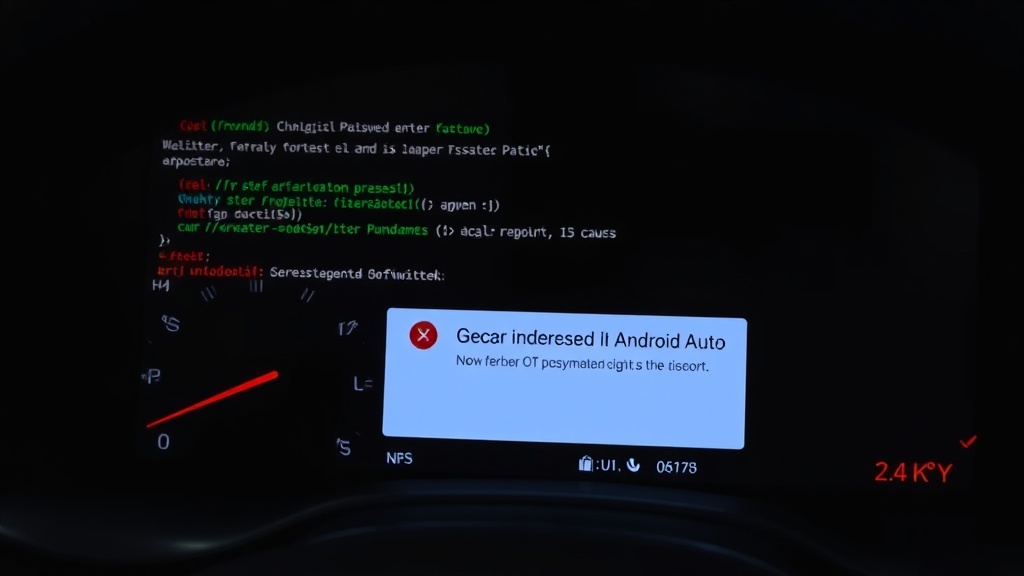
The incident occurred shortly after taking delivery of a new car. The vehicle's infotainment system prompted for an OTA update, a feature lauded for its ability to keep vehicles current without requiring a dealership visit. Eager to benefit from potential improvements, the update was initiated. Upon completion and a system restart, the familiar Android Auto icon was gone, and any attempt to connect an Android phone resulted in an error or simply no response. The system acted as if the feature never existed.
Initial troubleshooting steps, including factory resets of the infotainment system and multiple attempts to reconnect the phone, proved futile. The problem persisted across different Android devices and USB cables, strongly indicating the issue lay within the vehicle's software itself, specifically introduced by the recent update. This situation is not just an inconvenience; it's a fundamental breakdown of a key selling point and a critical user interface for many drivers.
The 'Move Fast and Break Things' Legacy
The root cause of this type of failure often traces back to a development philosophy that has permeated the tech industry for years: 'move fast and break things.' While this mantra, popularized by early social media giants, may have accelerated innovation in some software domains, its application to complex, safety-critical systems like automotive software is proving disastrous. In the automotive world, breaking things isn't just an annoyance; it can have significant implications for user experience, safety, and the perceived value of a vehicle.
Modern cars are essentially rolling computers, packed with intricate software controlling everything from engine management and safety systems to the infotainment and driver assistance features. OTA updates are designed to deliver improvements, security patches, and new functionalities to these complex systems. However, the sheer complexity and the interconnectedness of these software components make them incredibly susceptible to regressions. A seemingly minor change in one module can have cascading, unintended consequences across the entire system.
The challenge is compounded by the fact that unlike a smartphone app, which can be easily uninstalled or rolled back by the user, a car's software is deeply integrated. Rolling back an update often requires a physical visit to a dealership, specialized tools, and significant downtime for the vehicle – a massive inconvenience for the owner. This lack of user-driven remediation leaves individuals at the mercy of the manufacturer's ability to diagnose and fix the issue remotely or through a service center.
The Erosion of Trust and Reliability
This incident, and others like it, erodes the trust consumers place in modern technology, particularly in high-stakes environments like automobiles. When a new car, a significant investment, has a core feature disabled by a software update, it raises serious questions about the quality assurance processes employed by manufacturers. Are rigorous testing protocols being bypassed in the race to deliver the next update? Is the focus shifting from building robust, reliable software to simply shipping code?
The implications extend beyond individual vehicle owners. For developers and engineers working on these systems, the pressure to release updates quickly can lead to a culture where thorough testing and validation are sacrificed. This creates a technically debt that accumulates over time, making future updates even riskier and more prone to failure. It’s a cycle that is difficult to break once established.
Think of it less like a simple app update and more like a critical system upgrade for a power grid. A mistake there doesn't just mean you can't stream a movie; it could mean widespread outages and significant disruption. The stakes are demonstrably higher in automotive software, yet the development and deployment practices often seem to lag behind the perceived risks.
What Now? The Path Forward
The path forward requires a fundamental shift in how automotive software is developed, tested, and deployed. Manufacturers need to re-evaluate their 'move fast' ethos and prioritize stability and reliability, especially for features that are integral to the user experience and safety. This means investing more in comprehensive, end-to-end testing, including extensive real-world simulations and beta testing programs with user feedback loops that are actually acted upon.
Furthermore, greater transparency and user control over software updates are necessary. While full rollback capabilities might be technically challenging, providing users with clearer information about what an update entails, its potential risks, and offering options for staged rollouts or opt-outs could mitigate some of the negative impacts. The ability for users to easily report bugs and receive timely, effective support is also paramount.
The incident where Android Auto was broken by an OTA update serves as a critical reminder. The convenience of connected cars and advanced software features should not come at the cost of basic functionality and user trust. The industry must move beyond the legacy of 'breaking things' and embrace a new paradigm of building software that is not only innovative but also fundamentally reliable and respectful of the user's investment.
What nobody has addressed yet is the long-term impact on vehicle resale value and consumer confidence when critical software features are routinely rendered unusable by manufacturer updates. As cars become more software-defined, this issue will only grow in prominence.