
The OpenWrt One: A New Contender in Open Hardware Networking
The landscape of home networking is often dominated by proprietary hardware and closed-source firmware. This means users have limited visibility into their network's operations and even less control over its fundamental functions. Enter OpenWrt One, a new hardware router project aiming to change that by bringing the power and flexibility of the OpenWrt operating system to a dedicated, open-source hardware platform.
OpenWrt itself is a highly regarded Linux distribution for embedded devices, particularly routers. For years, developers and advanced users have flashed custom OpenWrt firmware onto off-the-shelf routers to gain granular control, enhanced security features, and the ability to run custom applications. The OpenWrt One project takes this a step further by designing hardware specifically to run OpenWrt natively, eliminating many of the compromises inherent in adapting existing hardware.
The core philosophy behind OpenWrt One is user empowerment. It's designed for individuals who want to understand, control, and optimize their home network without being locked into vendor ecosystems. This includes enthusiasts, developers, and security-conscious users who prioritize transparency and customization. The project's roots are firmly planted in the open-source community, emphasizing collaboration and the free exchange of ideas.
Hardware Specifications and Design Philosophy
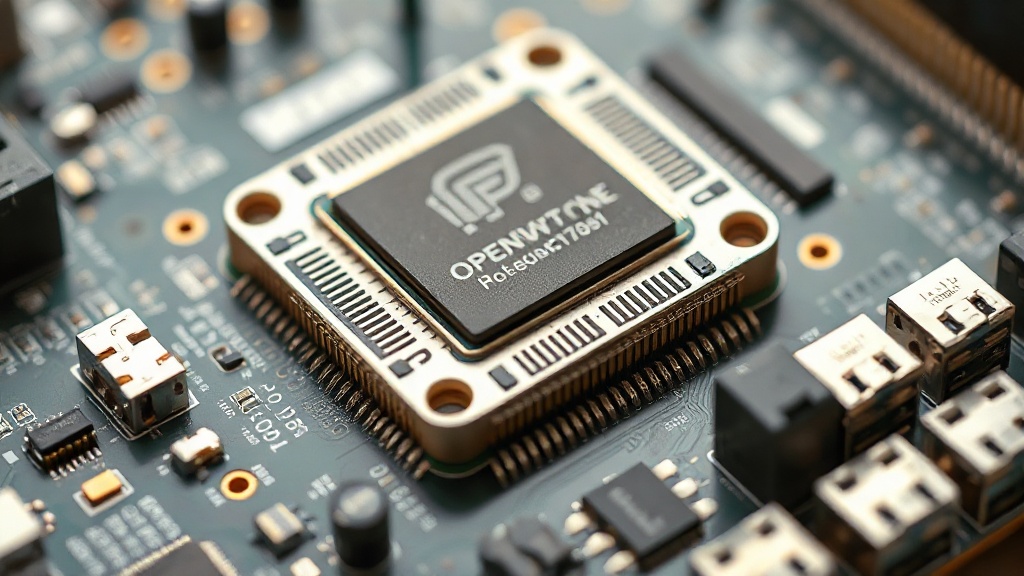
The OpenWrt One is built around a MediaTek MT7986 (Filogic 830) quad-core ARM Cortex-A53 processor, clocked at 1.5 GHz. This provides ample processing power for demanding network tasks, including running VPNs, ad-blocking services, and potentially even containerized applications directly on the router. The inclusion of 1GB of DDR4 RAM ensures smooth operation, even under heavy load, while 8GB of eMMC flash storage offers sufficient space for the operating system and user data.
Connectivity is robust, featuring 2.5 Gigabit Ethernet WAN and LAN ports, allowing for high-speed internet connections and internal network speeds that exceed the capabilities of many consumer-grade routers. It also includes Wi-Fi 6 (802.11ax) support, with a dedicated MT7976 GNSS module for dual-band 2x2 MIMO operation. The hardware design prioritizes ease of access for development and modification, with features like a debug header and accessible components.
The project's commitment to openness extends beyond software. While specific details on the exact bill of materials and schematics are still being finalized and released, the intent is to provide as much transparency as possible. This allows users to understand the hardware's capabilities and limitations, and for the community to contribute to its improvement and future iterations. Think of it less like a black box appliance and more like a highly capable, programmable network computer designed for your home.
Software and Customization Potential
The primary software advantage of OpenWrt One is its native compatibility with the OpenWrt operating system. This means users can immediately leverage the vast ecosystem of packages and configurations available for OpenWrt. From advanced firewall rules and Quality of Service (QoS) settings to network-wide ad-blocking (like Pi-hole or AdGuard Home) and VPN client/server configurations, the possibilities are extensive.
Beyond standard OpenWrt features, the powerful hardware opens doors for more advanced use cases. Developers might use it to host lightweight web services, run network monitoring tools, or experiment with IoT device management. The 1GB of RAM and quad-core processor can handle tasks that would typically require a dedicated server or a more powerful mini-PC, effectively consolidating network functions into a single, efficient device.
The project actively encourages community involvement. This includes contributing to the hardware design, improving software support, and developing new applications or plugins specifically for the OpenWrt One. This collaborative approach is a hallmark of successful open-source hardware initiatives and promises a future where the router evolves based on user needs and innovation.
Target Audience and Market Position
OpenWrt One is not aimed at the average consumer who simply wants to plug in a router and forget about it. Its target audience comprises tech enthusiasts, network administrators, developers, and anyone who values control and transparency in their network infrastructure. For these users, the ability to deeply customize their router's behavior, monitor traffic in detail, and run custom software is paramount.
In the market, OpenWrt One occupies a unique niche. It competes with both high-end consumer routers that offer some customization options and with mini-PCs or single-board computers that can be repurposed as routers. However, its advantage lies in being a purpose-built, open-source hardware solution designed from the ground up for OpenWrt. This integration promises a more stable, performant, and user-friendly experience compared to jury-rigged solutions.
The project's success will depend on its ability to foster a strong community, provide clear documentation, and ensure ongoing hardware and software support. If it can achieve these goals, OpenWrt One could become a benchmark for open-source networking hardware, empowering users to take full command of their digital lives.
The Unanswered Question: Long-Term Support and Availability
While the OpenWrt One project is exciting for its technical merits and commitment to openness, a significant question remains: what will its long-term availability and support look like? Open-source hardware projects can sometimes struggle with consistent production runs, supply chain issues, and sustained software maintenance. The community will be watching closely to see how OpenWrt One navigates these challenges to ensure it remains a viable and supported platform for years to come.