OpenScience: A New AI Workbench for Scientific Research
OpenScience has emerged on GitHub as a promising open-source AI workbench, attracting significant attention with over 2,167 stars. Developed primarily in TypeScript, the project aims to create a collaborative environment tailored for scientific research. Its core objective is to leverage AI tools to simplify and accelerate research workflows. The rapid adoption suggests a strong demand for such specialized tools within the scientific community. However, the project's reliance on specific technical choices and its ability to scale for complex scientific endeavors will be critical factors in its long-term success.
The emergence of OpenScience taps into a broader trend of open-source solutions gaining traction in academic and research settings. These platforms often foster transparency, reproducibility, and community-driven development, qualities highly valued in scientific pursuits. By providing a unified workbench, OpenScience seeks to reduce the friction researchers typically encounter when integrating various AI tools and managing complex datasets. This could mean faster experimentation cycles and more efficient collaboration among research teams.
Technical Foundation and Design Choices
OpenScience is built on TypeScript, a statically typed superset of JavaScript. This choice offers several advantages for a project of this nature. TypeScript enhances code reliability and maintainability, which are paramount in research where reproducibility and clear documentation are essential. The static typing catches many common errors during development, reducing debugging time and improving the overall robustness of the workbench. For researchers, this translates to a more stable and predictable environment for their AI-driven experiments.
However, the reliance on TypeScript also presents potential challenges, particularly concerning community participation and the integration of diverse libraries. While TypeScript offers a structured development experience, it can sometimes present a steeper learning curve for contributors coming from more dynamically typed backgrounds. Furthermore, the ecosystem of scientific computing and AI libraries is vast and diverse, with many tools historically developed in Python. Ensuring seamless interoperability and efficient integration with these existing Python-centric tools will be a key technical hurdle for OpenScience. The project's success will hinge on its ability to bridge this gap, potentially through robust API design or by incorporating Python execution environments.
The Promise of Streamlined AI Workflows
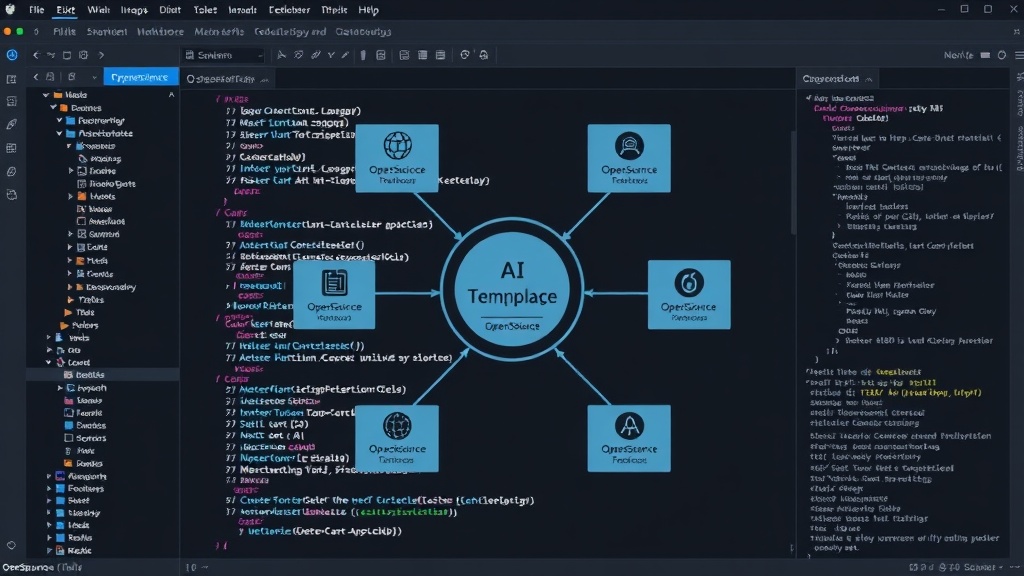
The primary goal of OpenScience is to streamline AI-driven research workflows. This involves providing a cohesive platform where researchers can perform tasks such as data preprocessing, model training, experimentation, and analysis without needing to stitch together disparate tools. The workbench aims to abstract away much of the underlying infrastructure complexity, allowing scientists to focus more on their research questions and less on the technical implementation details.
Consider the process of training a machine learning model for biological data analysis. Traditionally, a researcher might need to manage separate environments for data loading, feature engineering, model selection, hyperparameter tuning, and result visualization. Each step could involve different libraries, data formats, and computational requirements. OpenScience aspires to consolidate these steps into a more integrated experience. This could involve features like a unified data management system, a standardized interface for defining and running experiments, and integrated tools for visualizing results. The promise is a significant reduction in the time and effort required to move from raw data to actionable insights.
Open-Source Collaboration and Future Outlook
As an open-source project, OpenScience benefits from the potential for community contributions. Open-source models in scientific software development have a strong track record of fostering innovation and ensuring long-term accessibility. Researchers can inspect the code, suggest improvements, and even contribute new features, leading to a more robust and adaptable tool. The GitHub stars indicate a strong initial interest, suggesting that many in the community are keen to see this project mature.
However, the journey from a popular GitHub project to a widely adopted, robust scientific tool is long. The question remains whether OpenScience's current design and technical architecture are sufficiently flexible and performant to support the demands of cutting-edge scientific research. Advanced applications often push the boundaries of existing software, requiring high-performance computing, specialized data handling, and the ability to integrate with a wide array of legacy and novel tools. The project's ability to attract and retain a dedicated core development team, alongside a broader community of contributors, will be crucial. If OpenScience can successfully navigate these technical and community challenges, it could become an indispensable asset for researchers worldwide.