The Bottleneck: Human Verification in AI Code Deployment
AI coding agents can now write complex applications and generate comprehensive test suites. The final hurdle, however, remains deployment. Traditional cloud platforms and deployment targets are designed with the assumption that a human being is at the helm, interacting via a web browser. This assumption manifests as CAPTCHAs, "verify you're human" prompts, dashboard-only controls, and OAuth flows that often fail in headless environments. For an AI agent capable of shipping software, these bot-detection mechanisms act as insurmountable walls, preventing true end-to-end automation.
This friction point highlights a fundamental disconnect: AI agents operate programmatically, while current deployment infrastructure is built for human interaction. The ability of an AI to write code is severely hampered if it cannot then autonomously deploy that code. This is the problem that openpouch aims to solve, offering a direct pathway from AI-generated code to a live, deployed application without any human intervention.
Openpouch: Direct Deployment for AI Agents
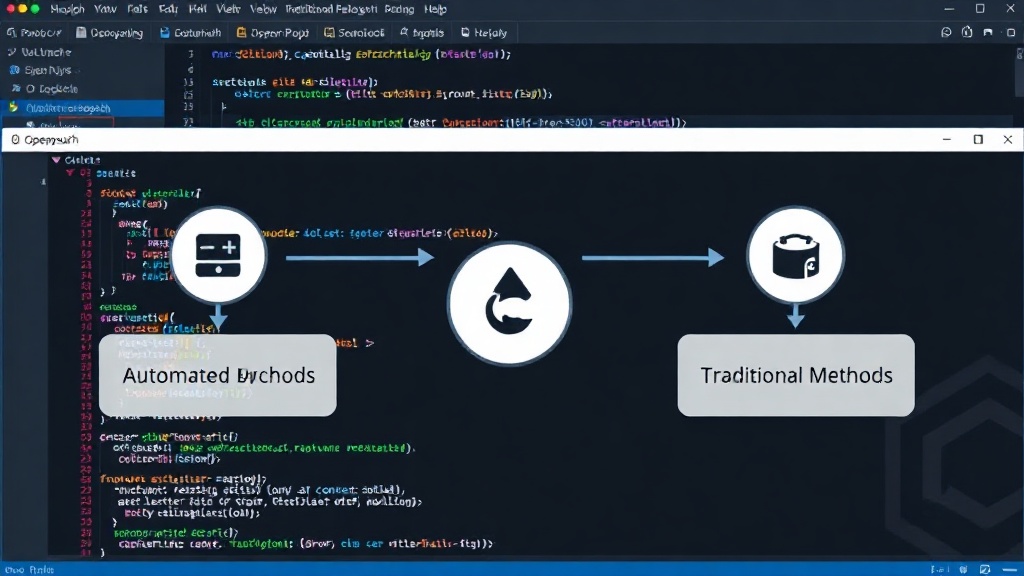
Openpouch is designed from the ground up to eliminate the human-in-the-loop requirement for application deployment. It provides a single command-line interface (CLI) and a compatible server (MCP server) that can be integrated directly into AI coding environments. Unlike existing solutions that funnel deployments through interactive web dashboards, openpouch facilitates a direct, programmatic deployment to a live URL. Crucially, it bypasses all forms of human verification, including CAPTCHAs and account sign-ups.
The core innovation lies in its architecture, which prioritizes machine-to-machine communication. By offering a stateless, API-driven approach to deployment, openpouch ensures that AI agents can trigger deployments seamlessly. This means an agent that has just finished writing and testing an application can immediately initiate its deployment without needing to simulate human browsing behavior or solve puzzles. The entire process, from code generation to a live, accessible application, is designed to be completed in under 60 seconds.
How it Works: CLI and MCP Server Integration
Openpouch offers two primary components: a CLI tool and an MCP (Machine-to-Machine Communication Protocol) server. The CLI allows developers or AI agents to initiate deployments directly from their terminal. The MCP server acts as the intermediary, receiving deployment commands from the AI agent or CLI and executing them on the target cloud infrastructure. This two-part system ensures flexibility and broad compatibility.
For AI coding agents like Claude Code, Cursor, Codex, or OpenClaw, the integration is straightforward. The agent can be configured to send deployment instructions to the openpouch MCP server. This server then handles the authentication with the cloud provider (e.g., AWS, Google Cloud, Azure) using pre-configured credentials and proceeds with the deployment process. The absence of any interactive steps means the AI agent can manage the entire lifecycle of an application, from writing the first line of code to pushing updates, without human oversight.
The speed is a key differentiator. The claim of a 60-second deployment is based on a streamlined process that removes all non-essential steps. This includes the elimination of build-time waits for human approval, the avoidance of manual configuration in cloud dashboards, and the complete sidestepping of security checks designed for humans. The openpouch MCP server is optimized for rapid processing of deployment requests, ensuring that the time from command to live application is minimized.
Technical Preview and Limitations
As a technical preview, openpouch is being released with a clear understanding of its current limitations. The maker, who is also the developer behind openpouch, emphasizes honesty and welcomes feedback. The primary goal is to establish a functional, automated deployment pipeline. This means that while the system can deploy applications, users should be aware that advanced features typically found in mature CI/CD platforms might be absent in this initial release.
The focus is squarely on the automation of the deployment step itself, specifically for AI-generated code. This means that features such as sophisticated rollback strategies, complex environment management, or granular access control might not be fully developed. The target audience for this preview is likely developers and teams experimenting with AI agents for code generation and seeking to automate the entire workflow, including deployment. They are expected to understand that this is a foundational tool designed to break down a specific barrier.
The openpouch project is open-source, encouraging community contribution and rapid iteration. The developer's transparency about the preview status and limitations is a deliberate strategy to foster trust and collaboration. This approach is critical for a tool that aims to fundamentally change how AI-generated code is managed and deployed.
The Future of AI-Driven Development
The advent of tools like openpouch signals a significant shift towards fully autonomous software development. If AI agents can not only write code but also deploy it without human intervention, the implications for development workflows are profound. Development cycles could shrink dramatically, allowing for faster iteration and experimentation. Startups could potentially launch Minimum Viable Products (MVPs) with minimal human effort, relying on AI for both creation and deployment.
This move towards autonomous deployment also raises questions about the evolving role of human developers. Rather than focusing on manual deployment tasks and infrastructure management, developers might shift towards higher-level concerns such as AI agent training, prompt engineering for complex deployments, and defining the strategic direction of AI-driven development projects. The ability to bypass traditional deployment bottlenecks is a critical step in unlocking the full potential of AI in software engineering.
What remains to be seen is how established cloud providers and CI/CD platforms will respond to this emerging need for machine-native deployment. Will they adapt their services to offer similar frictionless deployment options for AI agents, or will dedicated solutions like openpouch carve out a significant niche? The current landscape, built on human-centric interfaces, appears increasingly ill-suited for a future where AI agents are primary actors in the software development lifecycle.