What is OpenOPC?
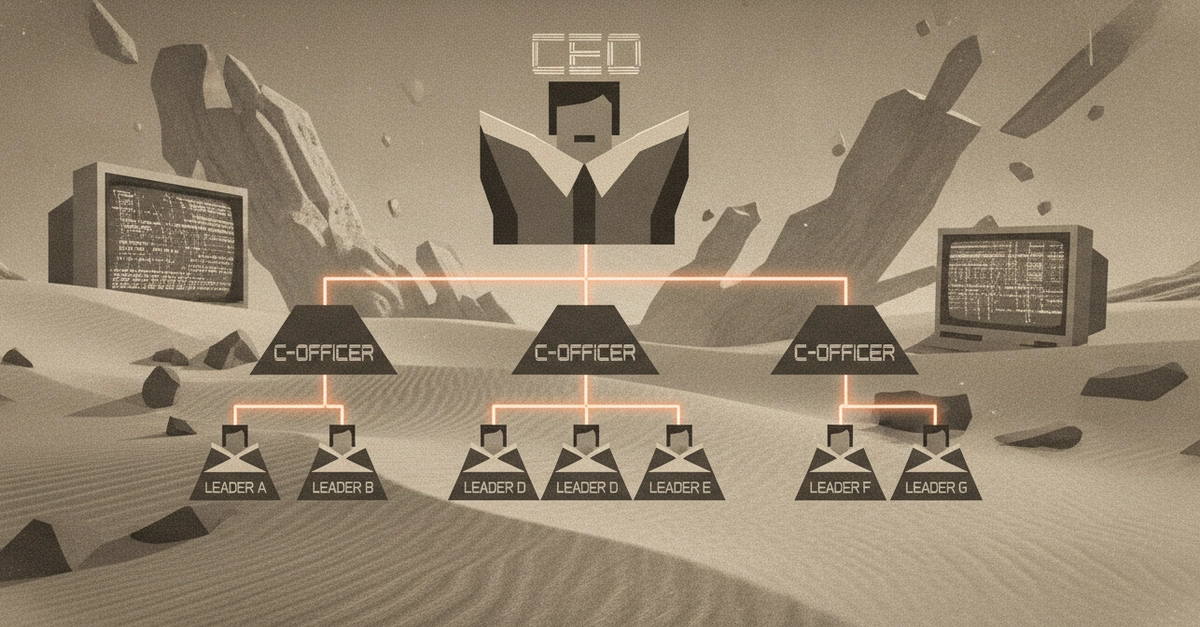
OpenOPC is not just another wrapper for LLMs. Developed by the HKUDS research group, it functions as a coordination runtime. You provide a goal, and OpenOPC constructs an organizational structure with defined roles and reporting lines. It then staffs these roles with AI employees, breaks down the work into manageable items, and operates the 'company' until the objective is met.
The framework operates through three core mechanisms:
- Self-Built Organization: AI agents autonomously create organizational structures, complete with roles, hierarchies, and communication channels, tailored to the task at hand. This emergent structure is not predefined but evolves based on the project's needs.
- AI Employees: Roles within the organization are filled by AI agents. These agents are capable of understanding their responsibilities, communicating with colleagues, and performing specific tasks. The selection and assignment of agents to roles are dynamically managed by the system.
- Work Decomposition and Execution: Large goals are broken down into smaller, actionable tasks. The system manages the workflow, assigning tasks to appropriate AI employees, tracking progress, and ensuring that work is handed off efficiently between agents and teams.
Installation and First Steps
Getting started with OpenOPC is streamlined using the uv package installer. The process involves setting up a Python environment and installing the necessary OpenOPC libraries. Once installed, users can define their first task, which serves as the primary objective for the AI team. This initial task setup is crucial as it guides the entire self-organization process.
The framework supports a command-line interface (CLI) for initiating and managing tasks. Users can specify the goal, provide any necessary context or constraints, and launch the AI company. The CLI provides feedback on the formation of the organization, the assignment of roles, and the progress of task execution.

Company Mode
OpenOPC introduces a 'Company Mode' that simulates a real business environment for AI agents. In this mode, agents operate with defined roles and objectives, much like human employees. They can communicate, delegate tasks, and collaborate to achieve the overarching company goal. This mode is essential for testing and understanding how AI agents can function within a structured organizational framework.
The system manages inter-agent communication, ensuring that information flows correctly through the defined reporting lines. This allows for complex problem-solving where different AI agents contribute their specialized skills. For instance, one agent might be responsible for research, another for coding, and a third for quality assurance, all coordinated within the company structure.
Office UI
To provide a more interactive and visual experience, OpenOPC offers an 'Office UI'. This graphical interface allows users to monitor the AI company's operations in real-time. It displays the organizational chart, the current tasks being worked on, the status of individual AI employees, and communication logs. The UI aims to make the complex internal workings of the AI organization more transparent and accessible.
The Office UI is designed to be intuitive, enabling users to observe the emergent behavior of the AI agents, identify bottlenecks, and even intervene if necessary. This visual feedback loop is invaluable for developers and researchers seeking to fine-tune the AI's performance and understand its decision-making processes. It transforms the abstract concept of AI coordination into a tangible, observable system.
One of the most surprising aspects of OpenOPC is its ability to foster emergent collaboration. Without explicit programming for every interaction, the AI agents, guided by their roles and the overarching goal, develop sophisticated communication patterns. It's less like a rigid assembly line and more like a dynamic startup where team members figure out the best way to work together.
The AI-Native One-Person Company Concept
The core idea behind OpenOPC, as articulated by the project, is to enable the creation of an 'AI-native one-person company.' This doesn't mean a single human is doing everything with AI assistance. Instead, it envisions a single human founder who orchestrates a fully autonomous AI team to execute business operations. The human's role shifts from direct execution to strategic direction, oversight, and high-level problem-solving.
This model democratizes entrepreneurship by lowering the barrier to entry for complex ventures. A solo founder can leverage OpenOPC to build and run a company that would traditionally require a large team. The AI agents handle the day-to-day operations, development, marketing, and customer support, allowing the human founder to focus on innovation and growth. The system’s ability to self-organize and adapt means the 'company' can scale its operations dynamically based on market demand and project complexity.
What remains to be seen is how intellectual property rights and legal liabilities will be managed in these AI-native companies. If an AI agent generates code or content, who owns it? If an AI-driven decision leads to a lawsuit, who is responsible? These are complex questions that the legal frameworks of today are not yet fully equipped to answer for autonomous AI entities.
Future Implications
OpenOPC represents a significant step towards more autonomous and self-managing AI systems. Its application extends beyond individual companies to potentially transforming collaborative research, complex project management, and even automated software development pipelines. The ability of AI agents to form adaptive organizations opens up new paradigms for how humans and AI can collaborate to achieve ambitious goals.
The framework's open-source nature encourages community contribution, promising rapid development and wider adoption. As the system matures, we can expect more sophisticated organizational structures, improved agent capabilities, and broader integration with external tools and services. This could lead to a future where creating and scaling businesses becomes a highly automated process, driven by human vision and AI execution.