From Local Agent to Cloud Infrastructure
OpenClaw, a project known for enabling local execution of AI agents, has taken a significant architectural leap. Two key commits signal a deliberate shift away from the "agent you run locally" paradigm towards "agent you run as infrastructure." This evolution is not merely an incremental update; it represents a fundamental change in how developers can deploy and manage AI agents, particularly for collaborative and production environments. The implications are profound for teams seeking to scale their AI agent operations beyond single-user, local setups.
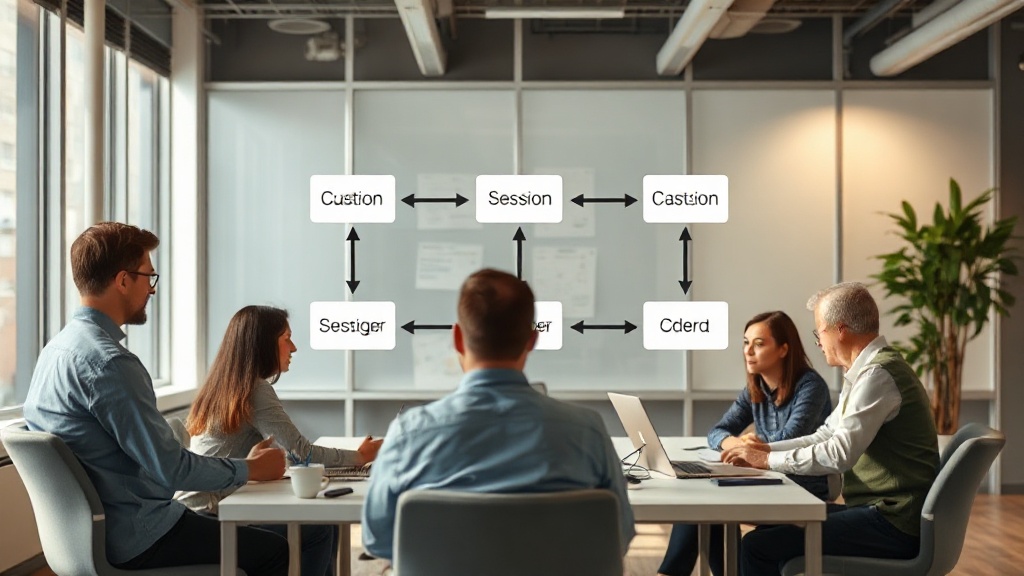
The first commit introduces a Claude session fleet. Historically, managing individual AI sessions, especially for complex tasks or team-wide deployments, has been a manual and often brittle process. A single session per user or task could quickly become unmanageable as the scale increased. The concept of a fleet addresses this directly. Instead of dealing with discrete, independent sessions, OpenClaw can now manage a pool of Claude sessions as a cohesive unit. This means developers can start, track, and tear down multiple sessions simultaneously, treating them as a single managed resource. For teams operating with multiple developers, or for agents that need to interact with various parts of a codebase or project, a fleet is the essential primitive. It lays the groundwork for critical features like queueing, ensuring fair scheduling across users, and providing robust isolation between different agent instances. This capability makes ambitious deployment strategies, such as "one agent per repository" or "one agent per pull request," not just feasible but manageable, removing the need for ad-hoc shell scripts and custom orchestration logic.
Production Cloud Workers Emerge
The second, and arguably more substantial, commit introduces cloud workers with production worker bundles, pinned SSH bootstrap, and an admission handshake. This suite of features moves OpenClaw firmly into the realm of production-ready infrastructure. Let's break down its components:
- Production worker bundles: Traditionally, deploying agents might involve checking out code from a repository and hoping the environment is correctly configured. This approach is prone to errors and inconsistencies. By shipping the worker as a built artifact, OpenClaw ensures that what is deployed is a stable, tested, and versioned executable. This is akin to how traditional software development deploys compiled binaries rather than source code. It drastically improves reliability and predictability in production environments.
- Pinned SSH bootstrap: Secure and reliable remote access is paramount for cloud-based workers. Pinned SSH bootstrap provides a hardened method for establishing initial connections. Instead of relying on dynamic or less secure authentication methods, this approach likely involves pre-configured, immutable SSH keys or certificates that are tied to specific worker instances. This reduces the attack surface and ensures that only authorized and intended workers can establish connections to the necessary infrastructure. It's a critical step towards securing the agent deployment pipeline.
- Admission handshake: This component adds a layer of security and control at the point of entry for new workers. An admission handshake implies a verification process that a worker must pass before it is fully accepted into the fleet or allowed to perform tasks. This could involve checking its identity, its configuration, its security posture, or even its resource requests. It acts as a gatekeeper, preventing unauthorized or misconfigured agents from joining the system and potentially causing disruptions or security breaches. This is a crucial element for managing a fleet of cloud workers in a production setting, ensuring that only legitimate and properly configured agents can operate.
These advancements collectively transform OpenClaw from a developer tool into a platform for deploying and managing AI agents at scale. The move towards infrastructure-as-code for AI agents is a growing trend, and these changes position OpenClaw as a serious contender in this space. The ability to manage fleets of sessions and deploy production-ready cloud workers with robust security measures addresses many of the pain points that have hindered the widespread adoption of sophisticated AI agent systems in enterprise and team environments. If you've been running agents locally and dreaming of scaling them for a team, this is the primitive you've been waiting for.
The implications extend beyond mere convenience. By abstracting away the complexities of session management and worker deployment, OpenClaw empowers developers to focus on the core logic of their AI agents. This architectural shift is comparable to how cloud infrastructure services like Kubernetes abstracted away the management of individual servers, allowing developers to focus on applications. OpenClaw is doing something similar for AI agents, providing the underlying orchestration and management capabilities needed for robust, scalable deployments. The transition from a local, user-centric model to a cloud-native, infrastructure-centric approach is a substantial undertaking. It requires careful consideration of networking, security, observability, and resource management. The inclusion of features like production bundles and admission handshakes suggests that OpenClaw's maintainers are keenly aware of these requirements.
What nobody has addressed yet is what happens to the thousands of developers who built local tooling and workflows around the previous, more rudimentary OpenClaw architecture. This pivot, while strategically sound for scaling, necessitates a migration path for existing users. The success of this transition will hinge not only on the technical merit of the new features but also on the clarity and support provided for migrating existing agent implementations. The journey towards treating AI agents as infrastructure components is well underway, and OpenClaw's latest updates are a significant marker on that path, promising greater reliability and scalability for AI agent deployments.