%22%20%2F%3E%0A%20%20%3C%2Fsvg%3E)
Introducing the OpenClaw Guard
OpenClaw, a player in the AI development space, has unveiled a new security feature named 'Guard.' This addition is designed to bolster the defenses of large language models (LLMs) against a growing array of cyber threats, most notably prompt injection attacks and unauthorized data exfiltration. In an era where LLMs are increasingly integrated into critical business processes, ensuring their security is paramount. The Guard aims to provide a robust layer of protection, allowing organizations to deploy AI with greater confidence.
Prompt injection attacks are a significant concern. These attacks involve crafting malicious inputs that manipulate an LLM into bypassing its intended safety guidelines or revealing sensitive information. Attackers can trick models into generating harmful content, executing unintended commands, or leaking proprietary data that the model has been trained on or has access to. The OpenClaw Guard is positioned as a direct countermeasure to these sophisticated threats.
How the Guard Works
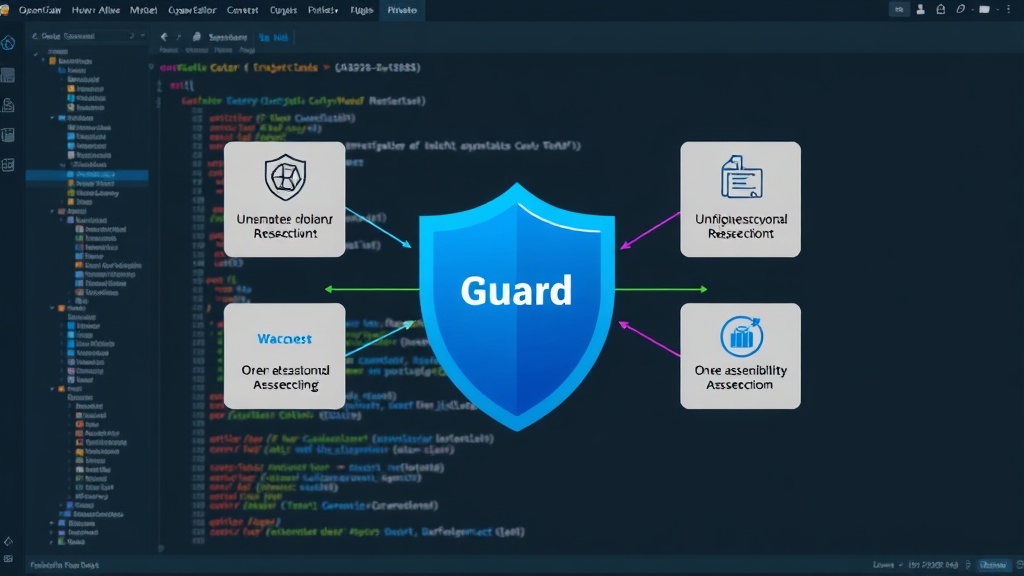
While specific technical details remain under wraps, OpenClaw indicates that the Guard operates by scrutinizing inputs and outputs. It functions as an intermediary, analyzing user prompts before they reach the LLM and evaluating the model's responses before they are delivered to the user. This dual-layer analysis is intended to identify and neutralize malicious patterns or data leaks.
The input analysis phase likely involves sophisticated natural language processing (NLP) techniques to detect adversarial prompts. This could include identifying attempts to embed hidden instructions, exploit known LLM vulnerabilities, or trigger unintended behaviors. By understanding the nuances of language and common attack vectors, the Guard can flag or sanitize suspicious inputs.
On the output side, the Guard is designed to prevent the leakage of sensitive information. This is crucial for models that have access to proprietary datasets or perform tasks involving confidential data. The system would likely employ data loss prevention (DLP) strategies, scanning model outputs for patterns that match sensitive data types (e.g., PII, financial information, intellectual property) or for attempts to reveal internal model configurations or training data snippets.
Addressing the LLM Security Landscape
The introduction of the Guard comes at a critical juncture for AI security. As LLMs become more powerful and widely adopted, they present an attractive target for malicious actors. Traditional security measures are often insufficient against the unique vulnerabilities of AI systems. The 'black box' nature of some LLMs, coupled with their complex interaction patterns, creates new attack surfaces.
OpenClaw's announcement suggests a proactive approach to securing AI deployments. The company is betting that a dedicated security layer, rather than relying solely on the inherent security of the LLM itself or basic input/output filtering, is necessary. This is akin to adding a dedicated firewall and intrusion detection system in front of a web server, rather than just relying on the web server's own security features.
The challenge for any such security solution is to remain effective against evolving threats while minimizing impact on performance and usability. Overly aggressive filtering can lead to false positives, blocking legitimate queries and frustrating users. Conversely, a system that is too permissive will fail to protect against sophisticated attacks. OpenClaw will need to demonstrate a balance between robust security and seamless user experience.
Implications for Developers and Businesses
For developers and businesses leveraging LLMs, the OpenClaw Guard represents a potential step forward in mitigating risks. The ability to deploy LLMs with a built-in security guard could simplify compliance efforts and reduce the likelihood of costly security breaches or reputational damage. It suggests a growing ecosystem of tools and services focused on making AI more production-ready and secure.
The success of the Guard will likely depend on its ability to adapt to new attack methodologies. The AI security landscape is in constant flux, with new vulnerabilities and exploitation techniques being discovered regularly. OpenClaw's commitment to ongoing updates and threat intelligence will be key to maintaining the Guard's efficacy over time. If the Guard can prove itself as a reliable defense, it could become an essential component for any organization serious about integrating LLMs into their operations.
This development underscores the increasing maturity of the AI industry, where foundational capabilities are now being complemented by critical infrastructure and security services. As AI becomes more integrated into the fabric of technology and business, the demand for specialized security solutions like the OpenClaw Guard will only grow.