The 3 AM Wake-Up Call
It’s 3:17 AM. Your phone buzzes, not with a casual message, but an error log from your deployed agent. This was the reality for one developer when their OpenClaw agent experienced a critical failure. The primary AI model, likely a high-performing but sometimes volatile provider, began returning 503 Service Unavailable errors. The agent, which had been operating flawlessly until 2:44 AM, ground to a complete halt. It remained unresponsive for a crucial 33 minutes before its configured fallback chain finally activated, bringing it back online autonomously.
This 33-minute outage, though disruptive, offered a profound, real-world lesson. It demonstrated the practical mechanics and immense value of OpenClaw's model fallback system far more effectively than any documentation could. The incident underscored a vital point: when your primary AI provider falters, a well-configured fallback chain isn't just a nice-to-have; it's the difference between a silent, extended failure and a temporary, recoverable disruption.

Understanding the Fallback Chain Mechanism
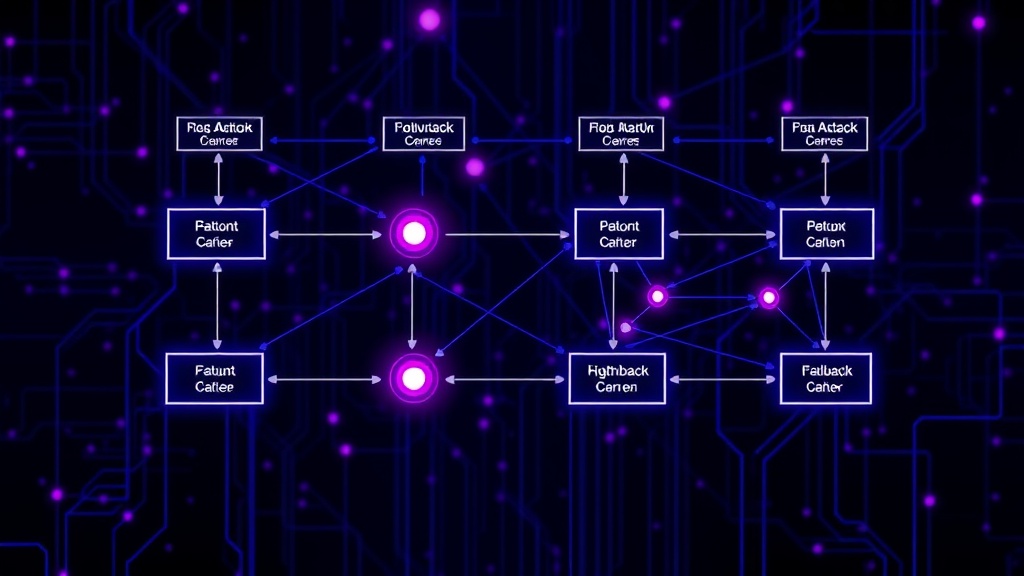
At its core, a fallback chain in OpenClaw is an ordered sequence of AI models. When a request is made, OpenClaw initiates contact with the first model in the chain. If that model responds successfully, the request is fulfilled. If the primary model fails, times out, or returns an error (like a 503), OpenClaw automatically moves to the next model in the predefined list. This process continues sequentially until a model successfully processes the request or the entire chain is exhausted.
The configuration is managed within the openclaw.json file, specifying the models and their order. A typical setup might look like this:
{
  "models": [
    {
      "name": "primary-model-provider",
      "provider": "openai",
      "model": "gpt-4o",
      "fallback_strategy": "sequential"
    },
    {
      "name": "secondary-model-provider",
      "provider": "anthropic",
      "model": "claude-3-opus-20240229",
      "fallback_strategy": "sequential"
    },
    {
      "name": "tertiary-model-provider",
      "provider": "google",
      "model": "gemini-1.5-pro-latest",
      "fallback_strategy": "sequential"
    }
  ]
}
In this example, OpenClaw first attempts to use OpenAI's GPT-4o. If that fails, it tries Anthropic's Claude 3 Opus. If Claude 3 also fails, it falls back to Google's Gemini 1.5 Pro. The fallback_strategy is set to sequential, ensuring that each model is tried in the order they appear in the list.
The 'Panic Attack': What Went Wrong
The incident at 3 AM wasn't a failure of the agent's logic but a failure of its primary external dependency: the AI model provider. The 503 error indicates that the server hosting the primary model was overloaded or experiencing internal issues, unable to process incoming requests. This is a common occurrence in the rapidly scaling world of AI services, where demand can spike unpredictably.
For 33 minutes, the agent was effectively blind. Without a functioning primary model, it couldn't generate responses, process new inputs, or perform its intended tasks. This duration highlights a critical gap in many deployment strategies: the assumption that primary services will always be available. The silent failure, where the agent simply stops working without any mechanism to recover, is far more damaging than a temporary outage.
The Fallback Chain's Heroic Intervention
The true hero of this story is the fallback chain's configuration. At 3:17 AM, after 33 minutes of the primary model's unavailability, the system detected the persistent failure. It then automatically initiated a request to the secondary model in the chain. This secondary model, presumably hosted by a different provider (e.g., Anthropic or Google) and potentially running a slightly different, yet capable, model version, successfully processed the request.
This seamless transition is the promise of a robust fallback strategy. It ensures that the agent remains operational, albeit potentially with a slight degradation in performance or a change in output characteristics depending on the fallback model. The key takeaway is that the agent did not require manual intervention. It diagnosed, reacted, and recovered on its own, minimizing downtime and maintaining service continuity. This is akin to a highly trained pilot navigating through unexpected turbulence; the training (fallback configuration) kicks in automatically to ensure a safe landing.
Configuring a Resilient Fallback Chain
The incident serves as a stark reminder for developers to proactively configure and test their fallback chains. Simply deploying a single, high-performance model is a gamble. A resilient architecture requires anticipating failure.
Considerations for building an effective fallback chain:
- Model Diversity: Do not rely on models from the same provider or even the same underlying architecture. Use models from different companies (e.g., OpenAI, Anthropic, Google, Cohere) to mitigate provider-wide outages.
- Performance vs. Availability: Your fallback models don't need to be the absolute top-tier performers. Prioritize models known for their reliability and availability, even if they offer slightly less sophisticated capabilities. A functional, slightly less capable model is infinitely better than a non-functional, cutting-edge one.
- Cost Implications: Be mindful of the costs associated with each model in your chain. Fallback models are typically invoked less frequently, but they still incur costs. Balance performance, reliability, and budget.
- Testing: Regularly test your fallback chain. Simulate outages of your primary model to ensure the chain activates correctly and that the fallback models perform adequately for your use case. This isn't a set-it-and-forget-it feature.
- Monitoring and Alerting: While the fallback chain handles recovery, you still need to know when it's being used. Configure alerts to notify you when the primary model is unavailable and when the fallback chain is engaged. This allows you to investigate the root cause of the primary model's failure and plan for its resolution.
The Unanswered Question: What About Silent Failures?
While this incident had a positive resolution thanks to the fallback chain, it raises a crucial question: How many agents are silently failing right now? Many developers might not have such a robust fallback mechanism in place. Their agents could be experiencing similar outages, but without an alert or a recovery system, they are simply down, potentially for days, with no one aware.
The 33-minute gap in this specific case, while concerning, was ultimately a sign of success. It was the period before the automated recovery kicked in. The real danger lies in the unknown, in agents that fail and never recover because no fallback was configured, or worse, because the failure was never detected.
Broader Implications for AI Agent Development
This event is a microcosm of the challenges in building reliable AI-powered applications. As we integrate increasingly complex and externalized AI models into our systems, the need for fault tolerance becomes paramount. The OpenClaw fallback chain is a sophisticated solution to a common problem, akin to building redundancy into critical infrastructure. It shifts the paradigm from