Beyond Text: Evaluating OpenAI API Alternatives
The allure of a single API key and a familiar chat-completions interface for chatbot development is strong. Companies like OpenAI, Anthropic, and Google offer powerful language models accessible through consistent APIs, simplifying initial development. However, this surface-level compatibility can mask significant divergences in functionality, performance, and adherence to data residency requirements, particularly for applications operating across the US and EU.
A production-ready chatbot often requires more than just accurate text generation. It might involve complex tool calls, precise token accounting, real-time streaming of responses, configurable data retention policies, and sophisticated regional routing. A chatbot that passes a demo by simply returning a sentence might fail in practice if it cannot correctly execute a tool, stream its output, or comply with data localization mandates.
Treating “cheapest” as a primary metric is a common pitfall. The actual cost is a workload result, influenced by token usage, latency, and the complexity of the prompts and responses. A thin routing layer that directs traffic to the most appropriate model based on specific needs, rather than a single provider, offers the least risk. This approach allows for flexibility and cost optimization without sacrificing essential functionality.
Building a Robust Evaluation Set
The key to navigating these complexities lies in a rigorous evaluation plan that goes beyond basic text output. For a US/EU chatbot, a deliberate data residency decision must precede any production deployment. This means understanding where user data will be processed and stored, and ensuring compliance with regulations like GDPR.
A comprehensive test plan should include metrics for:
- Function Calling: Does the model correctly identify, format, and execute tool calls? This includes verifying arguments passed to the tools and handling of tool responses.
- Streaming: For applications requiring real-time interaction, how effectively does the model stream its output? This involves checking for timely delivery of tokens and proper handling of streaming events.
- Data Retention and Privacy: Does the model adhere to configured retention settings? Are there mechanisms to ensure data is not stored longer than necessary or in prohibited regions?
- Regional Routing: If the application serves users in both the US and EU, can the API intelligently route requests to models hosted in the appropriate regions to minimize latency and comply with data residency laws?
- Latency and Throughput: Beyond raw response quality, how quickly does the model respond, and what is its capacity under load?
- Cost Efficiency: Measure the actual cost per interaction, taking into account token usage for both input and output, as well as any associated infrastructure costs.
The Technical Implementation: A Thin Routing Layer
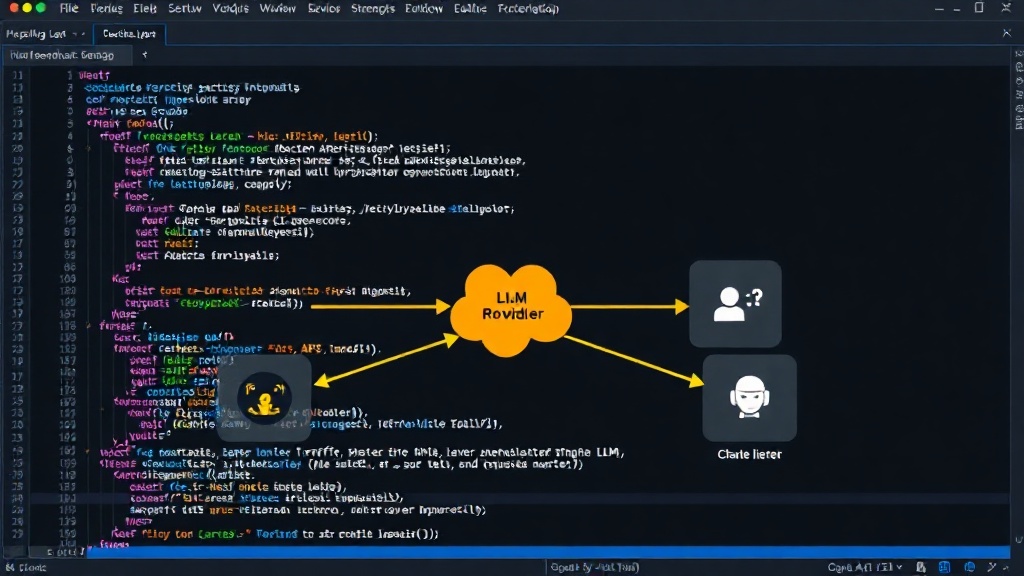
The least risky architecture involves a thin routing layer. This layer acts as an intermediary between your chatbot application and various language model providers. It should expose a single, internal contract that your application interacts with, abstracting away the specific nuances of each underlying API.
This routing layer can be implemented with a small adapter, such as one written in Python, which handles the translation between your internal contract and the external API calls. Each external provider will require its own adapter, translating your standardized requests into their specific formats and parsing their unique responses back into your internal format.
For instance, if your application needs to retrieve specific data from a knowledge base using a function call, your internal contract might look like:
{
  "messages": [{"role": "user", "content": "What are the latest Q3 earnings?"}],
  "tools": [{"type": "function", "function": {"name": "get_financial_report", "parameters": {"type": "object", "properties": {"report_type": {"type": "string", "enum": ["Q3 earnings", "Q2 earnings"]}}}}}
]
}
The Python adapter for OpenAI might then transform this into its specific `tool_calls` structure, while an adapter for another provider might use a different JSON schema or even a distinct mechanism for tool invocation. The adapter is also responsible for handling streaming responses and passing them back to your application in a consistent format.
The evaluation set is critical here. It should contain a diverse range of prompts that test not only the quality of the final answer but also the successful execution of all these features. A single prompt that requires a tool call, streaming output, and adherence to a privacy setting should be included. The eval set should measure answer quality *before* price, as a cheaper but non-functional solution is no solution at all.
Data Residency: A Non-Negotiable for EU Operations
For any chatbot application serving users in the European Union, data residency is not an option; it is a legal requirement. GDPR mandates that personal data of EU citizens must be processed and stored within the EU, or with adequate safeguards if transferred elsewhere. This means your choice of API provider and your routing strategy must account for this.
Providers may offer different regional endpoints or have specific data handling policies. Your routing layer must be intelligent enough to direct EU-bound requests to models and infrastructure located within the EU. If a provider does not offer a compliant EU endpoint, they may be unsuitable for your production needs, regardless of their API compatibility or cost.
This decision impacts not just the API choice but also the overall architecture. You might need separate infrastructure for US and EU traffic, or ensure your chosen provider has a robust, compliant presence in both regions. The “one API key” story crumbles when faced with these critical compliance and operational realities. Prioritizing a robust evaluation strategy that includes functional correctness, performance, and data residency compliance will safeguard your application against costly failures down the line.