Vercel Integrates OpenAI Agents API, Redefining AI Application Architecture

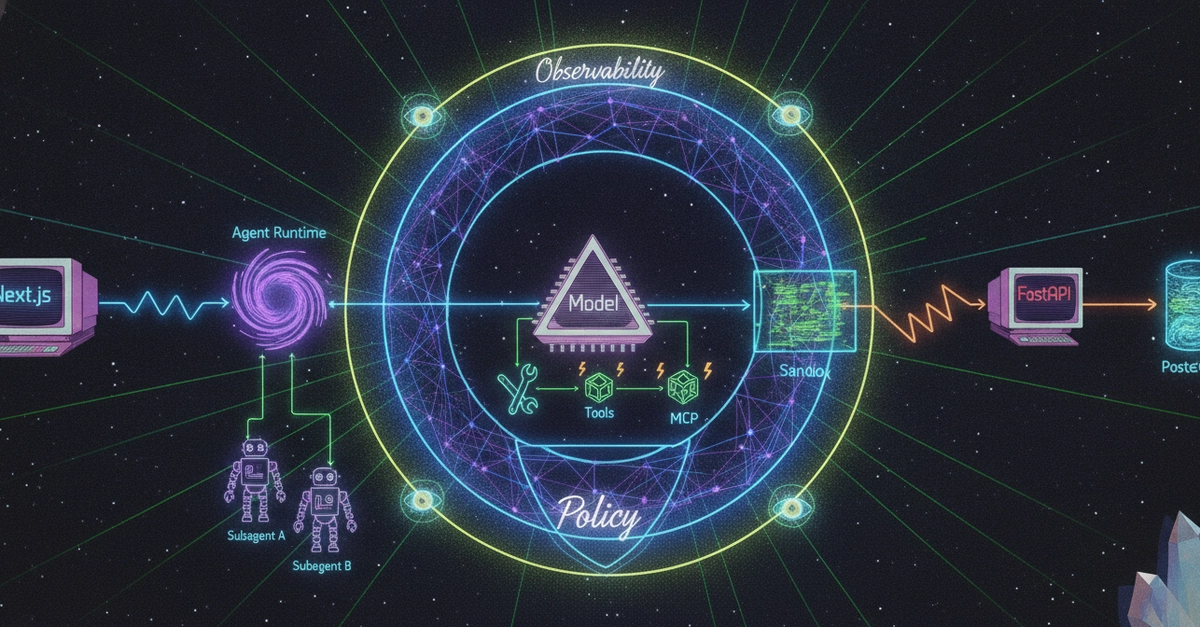
Vercel announced on September 10, 2026, a significant integration with OpenAI's Agents API. This move fundamentally alters how developers can build and deploy AI-powered applications, particularly those leveraging agentic behavior. The core innovation lies in decoupling the agent's execution loop and state management from persistent, always-on infrastructure, instead leaning on Vercel's serverless capabilities and its new Vercel Sandbox environment. Traditionally, running AI agents meant provisioning and maintaining always-on workers, containers, or even GPUs. This approach incurs continuous costs and complexity, even when the agent is idle. Vercel's new architecture flips this model. It positions OpenAI's platform to manage the agent's core logic and session state, while Vercel's infrastructure handles the ephemeral execution and workspace needs.
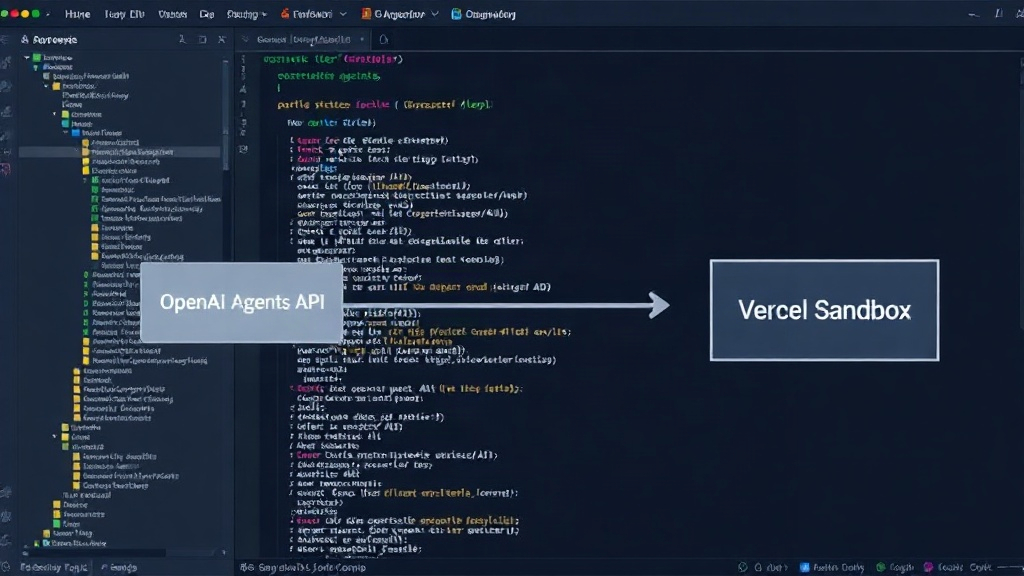
Diagram illustrating the flow from user request to OpenAI Agents API and Vercel Sandbox execution
### The New Architectural Flow The conceptual flow is straightforward: a user interacts with an application built on Next.js and deployed via Vercel. This request is routed to the OpenAI Agents API. OpenAI then manages the agent's logic and maintains the state for each specific session. Crucially, Vercel connects each active session to Vercel Sandbox. This sandbox provides isolated, ephemeral compute environments for code execution. It also offers persistent workspaces, ensuring that agent progress or necessary files are not lost between interactions, even though the underlying compute might scale to zero. This is a paradigm shift for full-stack engineers. It demonstrates how managed agent execution, serverless application infrastructure, and isolated compute can converge. The previous model required a constant digital footprint: always-on workers, always-on containers, and potentially always-on GPUs. The new approach moves toward a request-driven, scale-to-zero model where compute resources are spun up only when needed and scaled down aggressively when idle. This means developers pay for what they use, aligning infrastructure costs directly with actual AI agent activity. ### Vercel Sandbox: Isolated and Persistent Compute Vercel Sandbox is the linchpin of this new architecture. It addresses the inherent challenge of ephemeral compute in serverless environments. While serverless functions scale down to zero, agents often require a consistent environment to maintain context, access files, or execute multi-step processes. Vercel Sandbox provides this by offering: * Isolated Execution: Each agent session runs in a sandboxed environment, preventing interference between different users or different agent tasks. This enhances security and reliability. * Persistent Workspaces: Unlike traditional ephemeral serverless environments, Vercel Sandbox allows for persistent storage. This means an agent can write files, load dependencies, or store intermediate results, and have them available for subsequent execution within the same session or even across sessions if designed to do so. * Managed Environment: Vercel handles the provisioning, scaling, and management of these sandbox environments. Developers don't need to worry about the underlying infrastructure, only about defining the agent's behavior and its interaction with the sandbox. ### Implications for AI Application Development This integration has several critical implications: 1. Cost Efficiency: By moving to a scale-to-zero model, organizations can significantly reduce infrastructure costs associated with AI agents. This makes deploying sophisticated AI applications more economically viable, especially for startups and projects with variable usage patterns. 2. Developer Experience: Vercel's platform is known for its streamlined developer experience. Integrating OpenAI Agents seamlessly into this ecosystem means developers can focus more on building agent logic and less on infrastructure management. The familiar Next.js framework can be extended to orchestrate these agents. 3. New Application Possibilities: The combination of managed agent loops, persistent workspaces, and serverless execution opens doors for new types of AI applications. Think of AI assistants that can perform complex coding tasks, data analysis tools that maintain state across user queries, or automated workflows that require both intelligent decision-making and file manipulation. ### The Shift from Always-On to On-Demand The architectural shift away from always-on resources is not new to serverless, but applying it to complex AI agent loops is a notable advancement. Previously, the overhead of maintaining an active AI agent environment was a significant barrier. Now, the compute needed for an agent session—including code execution, file operations, and interaction with external tools—can be provisioned on-demand and scaled down when the agent is not actively processing requests. This is akin to a highly organized workshop that only powers up its specialized machinery when a specific project is active, rather than keeping everything running 24/7. OpenAI's role in managing the agent loop and session state simplifies the developer's task. They provide the