Decentralized Memory for AI Coding Agents
The landscape of AI-powered coding assistants is rapidly evolving, but a persistent challenge remains: managing the memory and state of these agents. Without effective memory, agents struggle to maintain context across sessions, learn from past interactions, or collaborate efficiently. Deja Vu emerges as an open-source solution designed to address this gap by providing a decentralized, version-controlled memory system for coding agents, with a unique focus on synchronization over SSH.
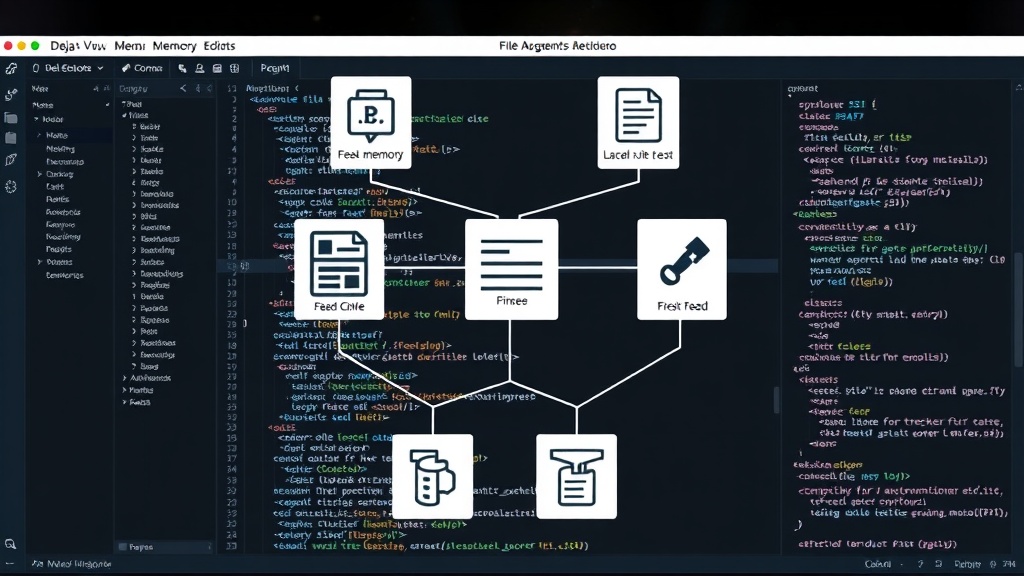
Traditional approaches often rely on centralized databases or cloud storage, creating single points of failure and limiting data privacy. Deja Vu takes a different path, treating an agent's memory as a collection of files. This file-based approach allows for robust version control, similar to how developers manage codebases with Git. Each interaction, each piece of learned information, and each state change can be treated as a commit in a history, offering a complete audit trail and the ability to revert to previous states.
The core innovation lies in its synchronization mechanism. Instead of relying on cloud services, Deja Vu leverages SSH to sync memory states across different agents or even different machines. This makes it particularly appealing for developers who already use SSH for remote development workflows and value data locality and security. Imagine an AI agent working on a project on your local machine, and then seamlessly continuing that work on a remote server, with its entire memory state preserved and synced. This is the promise of Deja Vu.
Version Control for AI State
The concept of treating AI memory like code is powerful. When an AI agent processes information, generates code, or makes decisions, these actions can be logged and stored as distinct entries within its memory. Deja Vu implements this by using a structured file system where each memory unit is a file, and changes are managed through a versioning system. This means an agent's entire history – its learning process, its decision trees, its generated outputs – is recorded and accessible.
This versioning capability offers several advantages:
- Reproducibility: Developers can revisit specific points in an agent's history to understand why it made a certain decision or generated particular code.
- Rollback: If an agent's memory becomes corrupted or leads to undesirable behavior, it can be rolled back to a known good state.
- Auditing: For critical applications, a detailed history of an agent's learning and operational state provides an invaluable audit trail.
- Collaboration: Multiple agents, or even multiple users interacting with the same agent instance, can share and contribute to a unified, versioned memory.
The synchronization over SSH is the key enabler for this collaborative and persistent memory. It allows agents to maintain a consistent view of their memory regardless of where they are running. This is particularly relevant for distributed AI systems or for individual developers who switch between different development environments.
The Contribution Story: Prashant Patil's Journey
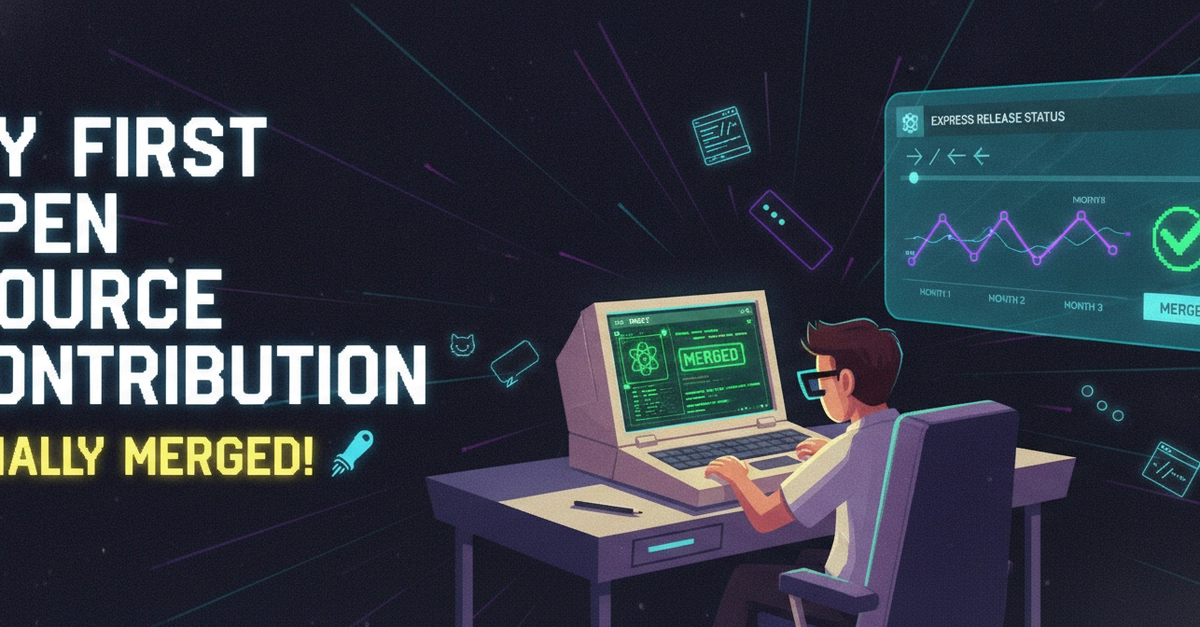
The development and open-sourcing of projects like Deja Vu are often fueled by contributions from individuals seeking to learn and make an impact. The story of Prashant Patil's first open-source contribution highlights this dynamic. Patil sought real-world experience beyond personal projects, aiming to understand how production software is built and maintained. His journey involved searching for suitable projects, facing initial setbacks with highly active repositories, and ultimately finding a niche where he could make a meaningful contribution.
He initially targeted active projects but found his pull requests were superseded. Instead of being discouraged, he pivoted to find an issue that better matched his skills and where he could add genuine value. This led him to the Express Release Status website, where he successfully implemented a fix for a clearly defined issue. While Patil's specific contribution was to Express Release Status, his experience underscores the community-driven nature of open-source development, where individuals learn, contribute, and collectively build tools like Deja Vu.
Projects like Deja Vu benefit immensely from such contributions. The need for robust, secure, and collaborative memory management for AI agents is pressing. By providing a file-based, SSH-synced solution, Deja Vu offers a compelling alternative to cloud-centric memory solutions. Its success will depend on its adoption by the AI agent development community and its ability to scale with increasingly complex agent architectures.
What's Next for AI Agent Memory?
Deja Vu's approach of treating memory as version-controlled files synced over SSH is a significant step towards more robust and collaborative AI agents. However, several questions remain. How will Deja Vu scale to handle the massive memory requirements of advanced, long-running AI agents? What are the performance implications of frequent SSH synchronizations for agents operating in highly dynamic environments? Furthermore, as AI agents become more autonomous, how will the security and access control of these versioned memory stores be managed to prevent malicious manipulation?
The move towards decentralized, developer-centric tools for AI infrastructure is a clear trend. Deja Vu taps into this by leveraging familiar developer workflows like SSH and version control. If it can address the scaling and security concerns, it has the potential to become a foundational piece of infrastructure for the next generation of AI coding agents.