The CUDA Dominance and Its Limitations
For over a decade, NVIDIA's CUDA platform has been the de facto standard for GPU-accelerated computing. Its comprehensive ecosystem, mature tools, and raw performance have made it indispensable for fields ranging from machine learning to scientific simulation. However, CUDA's proprietary nature creates significant vendor lock-in. Developers whose work relies on CUDA are largely confined to NVIDIA hardware, limiting their choices and potentially increasing costs. This dependency stifles innovation and prevents the broader adoption of GPU computing across diverse hardware architectures, including those from AMD and Intel.
The growing need for portability and vendor-agnostic solutions has spurred the development and adoption of open-source alternatives. These alternatives aim to provide a unified programming model that can target various GPU vendors, offering developers the flexibility to optimize performance across a heterogeneous computing landscape. This shift is critical for democratizing high-performance computing and enabling wider access to GPU acceleration.
SYCL: A C++ Abstraction for Heterogeneous Computing
SYCL, a Khronos Group standard, stands out as a leading open-source alternative. It provides a single-source C++ programming model that allows developers to write host and device code within the same application. SYCL acts as an abstraction layer over lower-level APIs like OpenCL, enabling code reuse across CPUs, GPUs, and other accelerators from different vendors. Its modern C++17 features make it approachable for developers familiar with contemporary C++ standards.
Key advantages of SYCL include its strong portability, allowing a single codebase to run on any SYCL-compliant backend. This significantly reduces development effort and maintenance overhead for applications targeting multiple hardware platforms. The SYCL ecosystem is growing, with implementations available from Intel (oneAPI DPC++), Codeplay (ComputeCpp), and others, actively supporting a range of hardware.
OpenCL: The Foundation for Cross-Vendor Parallelism
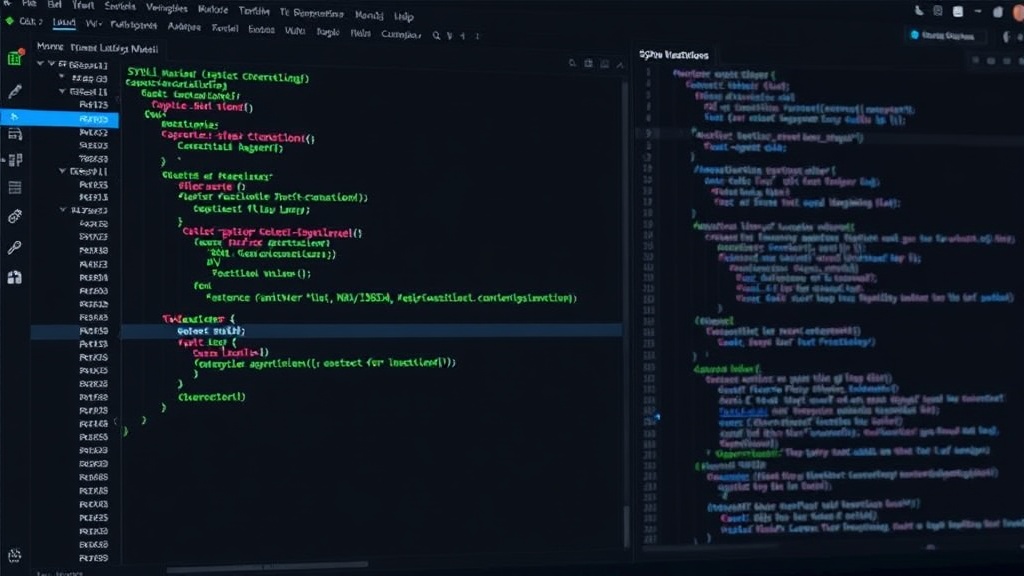
OpenCL (Open Computing Language) is another foundational open-source standard for parallel programming of heterogeneous systems. Unlike SYCL's C++ abstraction, OpenCL uses a C-based kernel language and a host API. While it offers broad hardware support across CPUs, GPUs, FPGAs, and DSPs from various manufacturers, its C-based kernel syntax can be less expressive than C++ for complex computations. The development of OpenCL has seen slower progress compared to newer standards, but it remains a robust and widely supported option for cross-platform GPU computing.
OpenCL's strength lies in its explicit control over hardware and its extensive vendor support. Many NVIDIA, AMD, and Intel GPUs have well-established OpenCL drivers. For developers who need fine-grained control or are working with legacy codebases, OpenCL continues to be a viable choice. However, managing host and device code separately and dealing with its more verbose API can present challenges compared to single-source solutions like SYCL.
Other Emerging Alternatives and Frameworks
Beyond SYCL and OpenCL, several other initiatives and frameworks are contributing to the open-source GPU ecosystem. Projects like Kokkos and RAJA provide C++ performance portability layers that can target various backends, including CUDA, OpenMP, and HIP. These libraries often offer higher-level abstractions, simplifying the process of writing portable parallel code for scientific applications.
HIP (Heterogeneous-compute Interface for Portability) is an AMD-backed initiative that aims to enable developers to port CUDA code to AMD GPUs. While not strictly open-source in the same vein as SYCL or OpenCL, HIP provides tools and a compatibility layer that allows much of the CUDA codebase to run on AMD hardware with minimal modifications. This offers a pragmatic path for users looking to migrate away from CUDA-specific environments without a complete rewrite.
The landscape is dynamic, with ongoing research and development focusing on improving performance, ease of use, and broader hardware compatibility. The ultimate goal is to provide developers with choices that balance performance, portability, and flexibility, reducing the reliance on any single vendor's proprietary technology.
The Advantages of Open Standards for Developers and Industry
Adopting open-source alternatives to CUDA offers several compelling benefits. Firstly, it eliminates vendor lock-in, allowing organizations to leverage the best hardware for their specific needs without being tied to a single supplier's roadmap or pricing. This fosters a more competitive market, potentially driving down costs and increasing innovation across the board.
Secondly, open standards promote interoperability and collaboration. Code written using SYCL or OpenCL can be shared and run on a wider range of systems, accelerating research and development. It allows for easier integration of third-party libraries and tools that adhere to these open standards. For companies, this means greater resilience in their technology stack and reduced risk associated with proprietary platform obsolescence.
The rise of these alternatives also signals a broader trend towards open hardware and software ecosystems. As the demand for computational power continues to grow, ensuring access and flexibility for all developers is paramount. Open-source solutions are key to achieving this goal, making advanced computing capabilities more accessible and fostering a more inclusive technological future.
Conclusion: A More Open Future for GPU Computing
While CUDA remains a powerful tool for NVIDIA hardware, the future of GPU computing is leaning towards open, portable standards. SYCL, OpenCL, and related frameworks offer compelling alternatives for developers seeking to optimize performance across diverse GPU architectures. By embracing these open solutions, the industry can break free from proprietary chains, foster greater innovation, and democratize access to high-performance computing for a wider range of users and applications.